
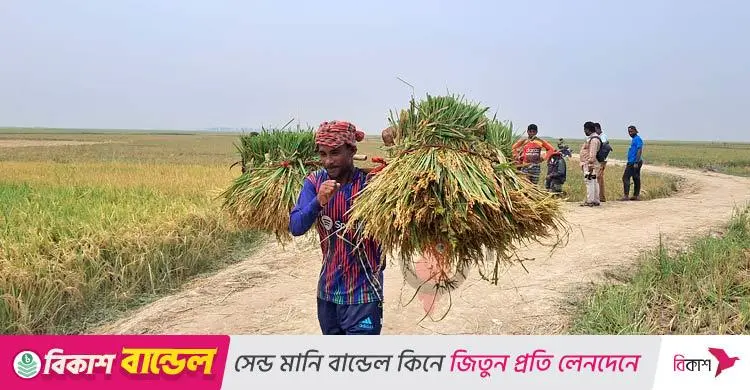
Golden paddy now stretches across the vast haor fields of Kishoreganj, the ripening ears swaying in the wind. Harvesting is in full swing, and farming men and women are busy from dawn to dusk bringing the crop home. But farmers are worried about the price of paddy.
According to the district office of the Department of Agricultural Extension (DAE), this year's boro target was 168,100 hectares. Cultivation exceeded it, reaching 168,115 hectares, of which 104,430 hectares are in the haors alone. The rice production target is 788,912 tonnes, with an estimated market value of about Tk 4,000 crore.
Government price and farmers' costs
Last year the government purchase price for paddy was set at Tk 1,200 a maund. This year it has been raised to Tk 1,440 a maund, which works out at Tk 36 a kg. It is also reported that the government will this year procure paddy from farmers at Tk 39 a kg and rice at Tk 48 a kg.
Farmers say many growers, needing to meet costs and repay loans, are selling paddy straight from the field at Tk 820 to Tk 900 a maund, while producing a maund of boro costs them Tk 850 to Tk 900. They are not very happy with this.
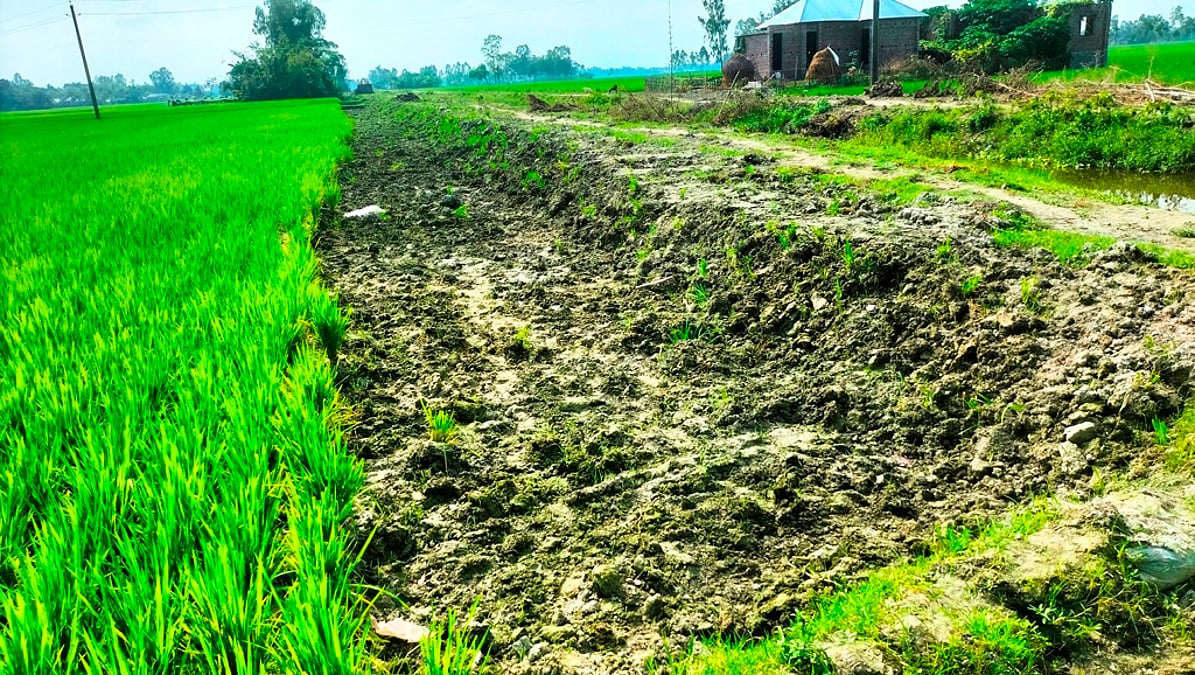
According to the Kishoreganj district office of the Water Development Board, 129 crop-protection embankments 150 km long have been built in the haor upazilas at a cost of Tk 23.34 crore this year to prevent crop losses from early flash floods from the hills.
Voices from the fields
Abdur Razzak, a farmer in Joanshahi, the largest haor in Nikli, said: "I am harvesting 2 acres of the boro 28 variety. The yield is good, but there is a shortage of farm labour in the area at harvest time, so I am cutting it with family members and local labourers. If we get a fair price for paddy we will profit. I had to borrow to cultivate the land, but if the paddy comes in safely I can repay all the loans."
Masud Mia, a farmer from Singpur village in Nikli, said: "We are farmers; we grew boro with borrowed money. The yield is good. If we get a good price now we will profit. Otherwise we will have to carry the burden of debt."
Haor farmer Abdul Mannan said hybrid Chhakka, Faijong and hybrid 29 had yielded well. "I have heard embankments have been built in the haor, so the fear of floods is less. I cannot put into words how painful it is when a hard-earned crop is lost. Now I look out over the haor and pray with both hands raised that the paddy still in the fields comes to no harm."
Ruhul Amin, leader of a 16-member labour team from Susang Durgapur in Netrokona district, said labour rates were higher last year and lower this year, because paddy in the haor is now cut by machine.
Harvester owner Mahbubur Rahman said cutting paddy with labourers takes a long time. "A harvester cuts 1 acre of paddy in just 1 hour, and farmers can easily take the paddy home," he said.
Official view
Dr Md Sadiqur Rahman, deputy director of the DAE (Khamarbari) in Kishoreganj, said boro has been grown on 168,115 hectares this year in the food-surplus district, exceeding the target. With good yields, the production target will also be exceeded. This year the government will procure paddy at Tk 39 a kg and rice at Tk 48 a kg from selected farmers.
To ease the farm labour shortage, 220 combine harvesters are cutting paddy in the haors, and more harvesters are arriving from other districts every day.
Source: Jagonews24. First published in Bengali on The Agro News.
Comments
(0)