
Hail driven by thunderstorms damaged boro paddy on about 4,000 hectares of land in Kishoreganj district on Tuesday, 24 March 2026, according to the district's agriculture department. The storms came in two spells, one in the afternoon and one at night, and struck hardest in the haor, the low-lying wetland in the east of the district where boro is the main crop of the year.
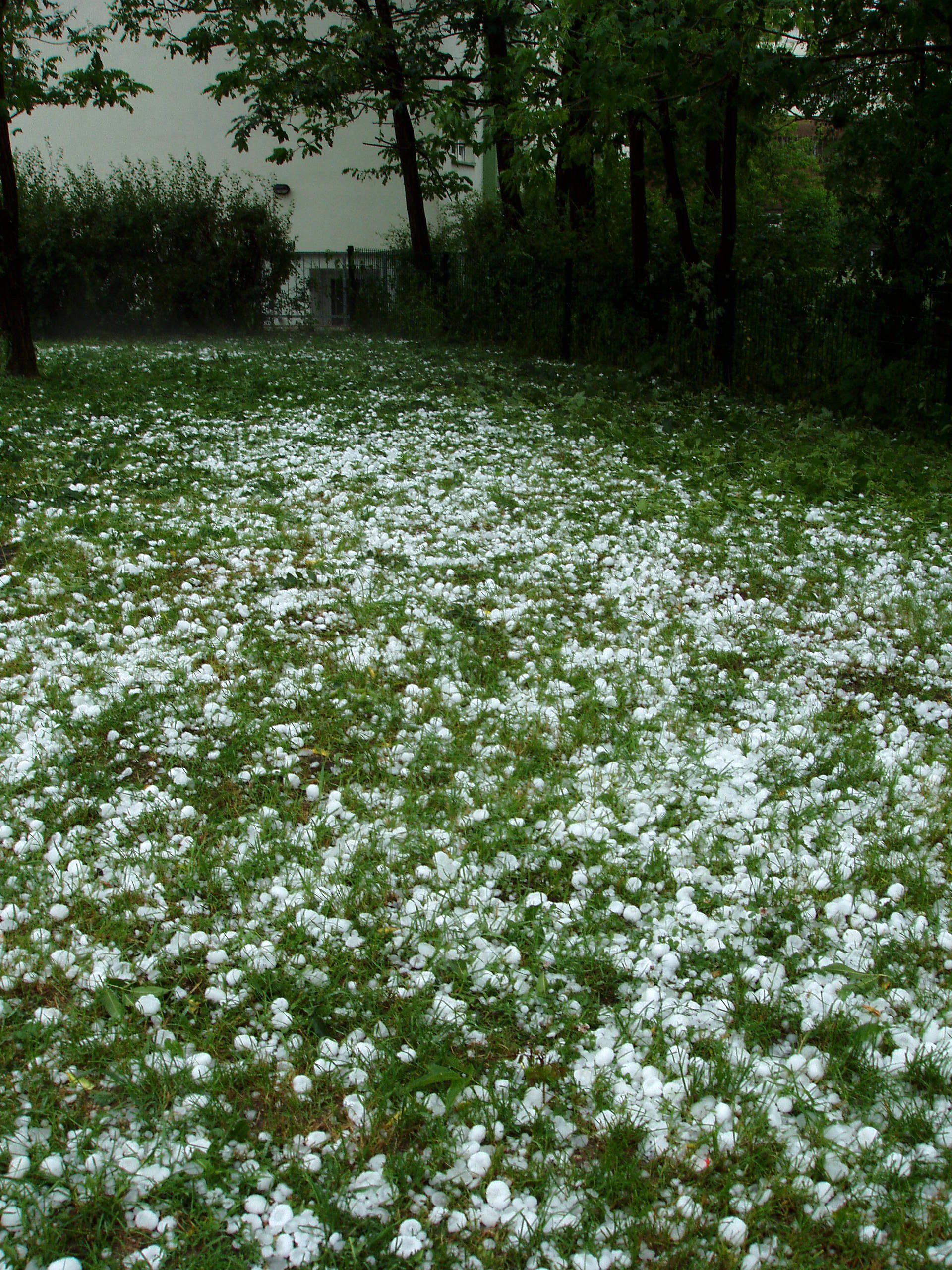
Hail fell in the haor upazilas of Itna, Mithamain, Austagram and Nikli, and in parts of Kishoreganj Sadar, Pakundia, Hossainpur, Katiadi and Bhairab. In many places so much ice fell that fields and roads turned white, Jagonews24 reported on 25 March. Damage to vegetable fields was also seen in several parts of Pakundia upazila.
Mithamain hit hardest, damage in eight upazilas
The figures that the district agriculture department gave on 25 March were the first count, made the morning after the storms. By that count Mithamain upazila suffered the most, with boro paddy damaged on about 2,500 hectares. It was followed by Itna, with 986 hectares, and Austagram, with 140 hectares. In Pakundia 120 hectares were damaged and in Nikli 100 hectares. Smaller patches were hit in Hossainpur (10 hectares), Kuliarchar (6 hectares) and Bhairab (2 hectares).
Mithamain, Itna and Austagram lie next to one another in the deep haor in the north-east of the district, and Nikli borders Mithamain to the west. Between them these four upazilas account for most of the damaged land on the department's list. The count covered paddy only: no figure was given on the day for the vegetable fields in Pakundia.
The timing matters for the crop. In the haor, boro is planted in the dry months after the monsoon water drains away and is cut before the rivers rise again, in April and early May. In mid-March, haor farmers quoted in Prothom Alo said the time for the panicles, the heads that carry the grain, to emerge was approaching. A week before the Kishoreganj storm, farmers in neighbouring Sunamganj told the paper that their plants had not yet reached the booting stage and were still soft, which, they said, made the hail damage worse.
What the agriculture and weather officials said
Dr Sadikur Rahman, deputy director of the Department of Agricultural Extension (DAE) in Kishoreganj, told Jagonews24 that boro paddy had suffered the most from the hail and that the damage was heaviest in the haor. Affected farmers were being advised on what to do, he said, and he was himself going to visit the damaged haor areas.
Altaf Hossain, balloon maker at the weather office in Nikli, said 19.3 millimetres of rain was recorded at Nikli during the night, and that hail fell along with the rain.
The DAE is the extension arm of the Ministry of Agriculture. Its district office in Kishoreganj, headed by the deputy director, sets each season's crop targets for the district and reports crop damage after a storm or flood. In November 2025 the same office was dealing with a shortage of fertiliser ahead of the boro season: Dr Rahman, who is also member secretary of the District Fertiliser-Seed Monitoring Committee, told The Daily Star then that the district had received 4,877 tonnes of urea against a demand of 10,164 tonnes, 215 tonnes of TSP against 2,677 tonnes, 4,391 tonnes of DAP against 7,655 tonnes and 3,120 tonnes of MOP against 7,436 tonnes. A farmer in Nikli told the paper that he had been given only two bags of fertiliser for the 12 acres he planned to plant with boro.
Kishoreganj and its haor upazilas
Kishoreganj is a district of Dhaka division covering 2,688.59 square kilometres. It is bounded by Netrokona and Mymensingh districts to the north, Narsingdi and Brahmanbaria to the south, Sunamganj and Habiganj to the east, and Gazipur and Mymensingh to the west, according to Banglapedia, the national encyclopedia. Its main rivers are the Old Brahmaputra, the Meghna, the Kalni, the Ghorautra and the Dhanu. Kishoreganj became a subdivision of Mymensingh district in 1860 and a district in 1984. It has 13 upazilas, 8 municipalities and 108 unions, and the 2011 census counted 2,911,907 people there.
The east of the district belongs to the great haor basin of north-eastern Bangladesh. Banglapedia lists the Humaipur, Bara Digha, Dhakir, Gopedighi, Badla, Sonabandha and Dhanpur haors among the major wetlands of Kishoreganj. The four upazilas hit hardest by the hail are largely haor land:
- Itna (401.93 sq km, population 164,127 in 2011) is the largest upazila of the district by area. The Dhanu, Baulai and Kalni rivers flow through it, along with Haular Haor and several beels. Agriculture was the main source of income for 77.84 per cent of households, and paddy, potato, mustard, peanut and vegetables are its main crops. Floods in 1974, 1988 and 1998 caused heavy damage there.
- Mithamain (222.91 sq km, population 122,026) lies between Itna to the north and Austagram to the south. Its rivers are the Dhanu and the Kalai, and Baragop, Gazaria, Deudori, Sreghor, Rati and Nikli are its notable beels. Agriculture was the main income of 82.48 per cent of households; paddy, mustard, potato, kherai, groundnut and vegetables are the main crops, and Dhaki is one of its seven unions and a noted bazar.
- Austagram (355.53 sq km, population 152,523) is crossed by the Meghna, the Kalni and the Ghorautra. Agriculture was the main income of 82.40 per cent of households, and the upazila grows paddy, potato, mustard, peanut, garlic, onion, chilli, turmeric and coriander.
- Nikli (214.39 sq km, population 133,729) lies on the Baulai, Dhanu, Shingua and Ghorautra rivers. Agriculture was the main income of 72.06 per cent of households; paddy, wheat, maize, potato, mustard, groundnut and vegetables are its main crops.
All of these figures come from the 2011 census as Banglapedia gives them. An all-weather road now links Itna, Mithamain and Austagram across the haor, while Banglapedia records 150 kilometres of waterway in Itna and 32 kilometres in Mithamain, the routes boats take when the haor fills.

A wetland that grows one crop
A haor is a large, bowl-shaped depression of tectonic origin, Banglapedia explains. It collects runoff from rivers and canals, becomes a wide sheet of water in the monsoon and largely dries out after it. Haors are found mainly in greater Sylhet and greater Mymensingh. The basin holds about 47 major haors and some 6,300 beels, of which about 3,500 are permanent and 2,800 seasonal. Rivers rising in the hills of India flood the plains to a depth of up to six metres, and the land stays under water for seven to eight months, when villages stand like islands.
When the water drains in the dry season, it leaves one or more shallow beels and exposes rich alluvial soil that is widely planted with rice. As the population grew, Banglapedia notes, boro cultivation spread onto the haor rim-lands that were once used for grazing. Parts of the Kishoreganj haor, like those of Sunamganj, Netrokona and Habiganj, also have peat soils near the surface.
The haor calendar leaves little room for error. By March the water in the lowlands has drained to its lowest level; in April the thunderstorms begin and the lowlands start to fill again. Rain over several days in this period can bring flash floods down the north-eastern rivers. Where the floodwater rises above the submersible embankments built to protect the crop, it can drown boro fields over vast areas, Banglapedia warns.
According to data from the Bangladesh Fisheries Research Institute (BFRI) cited by The Daily Star in January 2026, Bangladesh has 373 haors spread across 47 upazilas of seven districts: Sylhet, Sunamganj, Moulvibazar, Habiganj, Netrokona, Kishoreganj and Brahmanbaria. They cover nearly 263,000 hectares. A Department of Fisheries official told the paper that the haor ecosystem supports about 22 per cent of the country's livestock and 24 per cent of its ducks, and the Ministry of Fisheries and Livestock was then planning a programme to curb pesticide use in the seven districts during the boro season.

The boro season and this season's targets
Rice is grown in Bangladesh in three seasons, aus, aman and boro. Boro is the dry-season crop, planted in winter, and it is now the largest of the three harvests. According to the Bangladesh Bureau of Statistics (BBS), as reported by The Daily Star in November 2025, boro production in the 2024-25 fiscal year rose by 1.2 per cent to 2.13 crore tonnes, the largest dry-season harvest on record, from 48.89 lakh hectares. Hybrid varieties covered 12.96 lakh hectares of that area. Aman produced 1.64 crore tonnes that year, and total rice production was 4.06 crore tonnes.
For the 2025-26 season the DAE set a national target of 2.27 crore tonnes of boro rice. In Kishoreganj, the district's DAE office said in November 2025 that boro was to be grown on 1,68,260 hectares with a production goal of 7.96 lakh tonnes of rice, while maize was planned on 11,780 hectares. Against that target, the hail-hit area of about 4,000 hectares counted on 25 March was a small share of the district's boro land, but the damage was concentrated in a few haor upazilas where, according to the 2011 census, agriculture was the main source of income for more than seven in ten households.
In the haor the crop is a race against the water. Writing in Prothom Alo on 15 March 2026, the writer and researcher Gawher Nayeem Wahra noted that most boro varieties in use take 140 to 160 days, and that BINA dhan-17 and BRAC dhan-2 had been developed so that the crop could be cut 100 to 110 days after transplanting, before April. He also cited an estimate that about 30 per cent of the country's boro comes from the haor region.
In early January 2026 Prothom Alo photographed farmers planting boro in the drying haors of Sylhet Sadar, and in February The Daily Star found farmers in Sunamganj's Shanir Haor still transplanting seedlings. Rice there is planted in late Magh, in early to mid-February, and harvested before the monsoon, in late Baishakh, in early May, the paper reported.
Hail and the nor'wester season
The storms that hit Kishoreganj belong to the pre-monsoon season of thunderstorms that Bangladesh knows as kalbaishakhi, or the nor'wester. Banglapedia describes the nor'wester as a thunderstorm that usually blows from the north-west in April and May. From mid-March temperatures in Bangladesh rise sharply. Warm, moist air from the south-east rises and mixes with cold, dry air arriving from the north-west and west, and as the atmosphere becomes unstable, towering cumulonimbus clouds build up into a storm.
Because of the steep fall of temperature with height, the high water content of the clouds and the strong updrafts, hail is common in a nor'wester, Banglapedia says, and the size of the hailstones depends on how fast the air rises inside the cloud. In the west of the country these storms usually come in the late afternoon, but in the east they generally arrive after evening. The average wind speed is 40 to 60 kilometres an hour, sometimes more than 100, and a storm usually lasts less than an hour. Thunderstorms of this kind also come in late monsoon, in October and November.
Hailstones form inside cumulonimbus clouds, The Daily Star explained in a June 2024 report on the science of hail. Strong rising winds carry raindrops up into air below freezing, where they turn to ice and grow as they collect more water, until they become too heavy for the updraft and fall. Hailstones driven sideways by strong winds can do serious damage. Hailstones weighing as much as one kilogram have been recorded in Bangladesh; when such hail fell in Gopalganj in 1986, 92 people died, the paper noted.
A month of storms across the haor districts
The Kishoreganj hail came after several weeks of storms in the north-east. On the night of Saturday, 14 March 2026, hail and nor'wester winds swept through Netrokona Sadar, Purbadhala, Barhatta, Kalmakanda, Atpara and Madan upazilas of Netrokona between 11pm and 1:30am, The Daily Star reported. Rakibul Hasan, additional deputy director of the DAE in Netrokona, said that where large hailstones fell around 10 to 15 per cent of the paddy saplings could be damaged, and that about 150 hectares of rabi crops had been damaged by preliminary reports.
In Sunamganj, heavy rain, storms and hail in mid-March left water standing in many haors. Mohammad Omar Faruk, deputy director of the DAE in Sunamganj, told Prothom Alo on 19 March that boro had been planted on 2,23,500 hectares in the district that season and that, by the department's count, 370 hectares had been damaged by hail. Farmers in some haors cut embankments to drain the water, while others were afraid to do so in case of early floods.
Rain then spread across the country around Eid-ul-Fitr. On 21 March the Bangladesh Meteorological Department said a rain belt about 1,000 kilometres long, stretching from Afghanistan through Pakistan into India, was bringing rain to Bangladesh. The meteorologist Muhammad Abul Kalam Mallik told Prothom Alo that such cloud bands are usually seen from December to mid-March, but that this season there had been almost no rain from December to February, which made the activity of the western disturbance somewhat unusual.
Hail on a nearly ripe crop can be worse. In the early hours of 26 April 2025, a hailstorm with a nor'wester that lasted 30 to 40 minutes struck 15 villages of Kalmakanda upazila in Netrokona, The Daily Star reported. The upazila agriculture officer said around 2,000 paddy fields had been destroyed and that about 10 per cent crop damage had been recorded across the upazila, and residents said the hailstones punctured tin roofs.
Embankments and the fear of flash floods
For haor farmers the greatest fear is the pahari dhal, the pre-monsoon flash flood that comes down from the Meghalaya hills in India after heavy rain and can wipe out standing crops within hours, The Daily Star reported from Sunamganj in February 2026. Farmers there told the paper that successive flash floods in 2016 and 2017 had forced many to sell land. In 2017, heavy rain and hill runoff from 28 March broke embankments and flooded the haors of Sunamganj and Sylhet into the first week of April, causing wide damage to boro, Gawher Nayeem Wahra recalled in his March 2026 column.
The crop is protected by submersible embankments that are rebuilt every dry season through local project implementation committees. Under the rules, the committees are to be formed by 30 November, work is to begin by 15 December and to be finished by 28 February, the column explained. In Sunamganj, the Water Development Board said 710 projects were under way in 42 haors across 12 upazilas, covering the repair and construction of 602 kilometres of embankments, with the allocation raised from Tk 130 crore the year before to Tk 145 crore; project officials put progress at about 68 per cent as the deadline neared, and Haor Bachao Andolon leaders alleged that work had barely begun in some places, The Daily Star said in an editorial on 21 February 2026. The editorial added that rice is grown on roughly 225,000 hectares of haor land in Sunamganj every year, protected by more than 1,700 kilometres of embankments.
By mid-March the work in Sunamganj was still not finished, and the deadline had been extended to 15 March; officials blamed the delay on the national election, the column said, citing Bonik Barta.
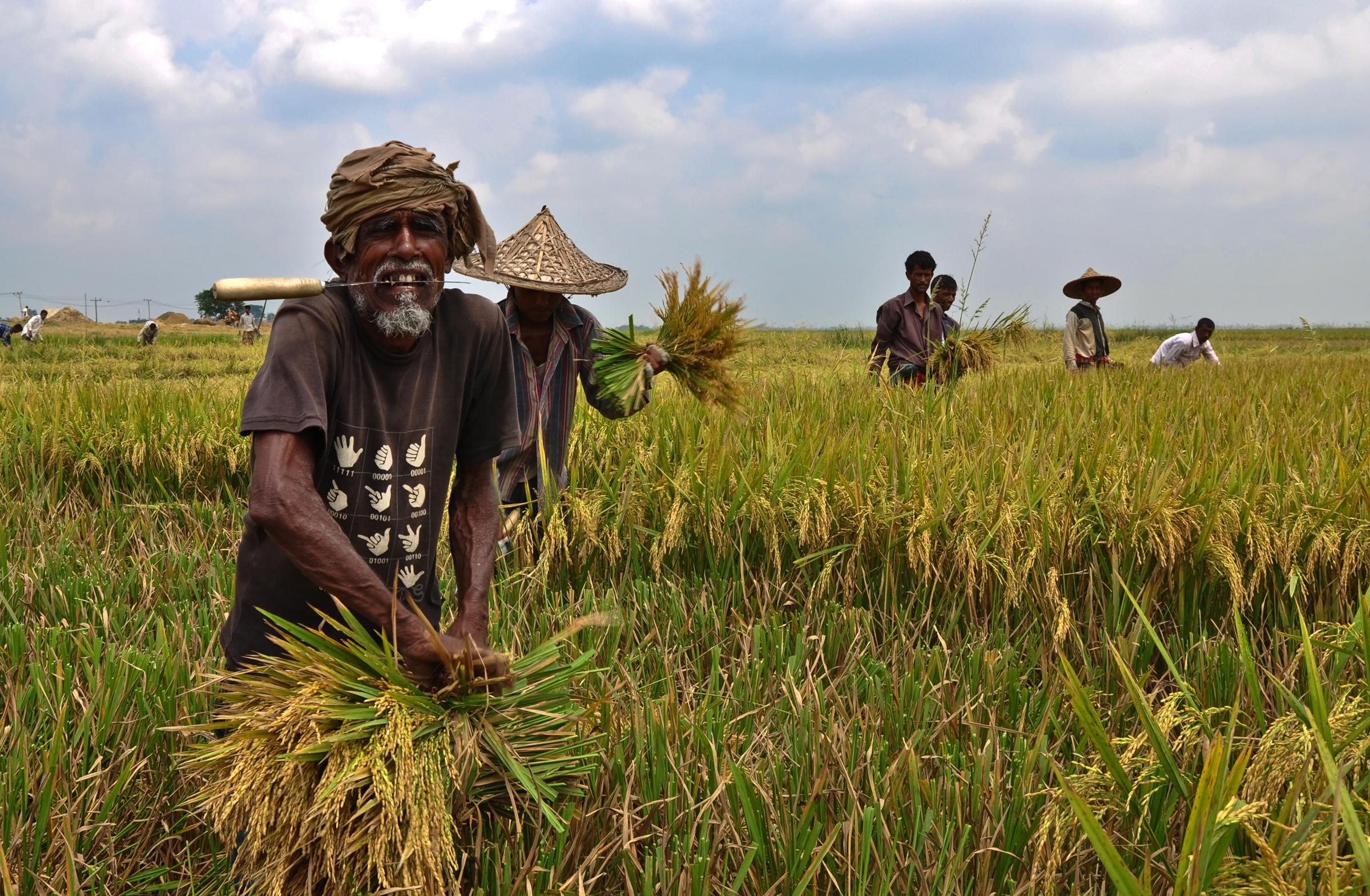
Photo: Balaram Mahalder / Wikimedia Commons (CC BY-SA 3.0)
Sources: Jagonews24, Banglapedia, The Daily Star, Prothom Alo, Bangladesh Bureau of Statistics (as reported by The Daily Star), Bangladesh Fisheries Research Institute (as reported by The Daily Star)
Comments
(0)