
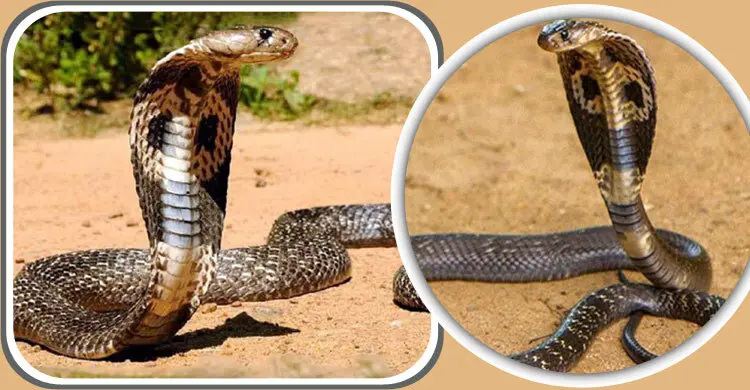
The king cobra, known in Bengali as raj gokhra, is one of the world's most venomous snakes. It is also a mysterious and endangered species in the natural world. Its scientific name is Ophiophagus hannah, and it is known for its great size, potent venom and distinctive behaviour.
The snake lives in the dense forests of South and South-East Asia and is also found in the Chattogram and Chattogram Hill Tracts regions of Bangladesh. Its physical features, diet and breeding matter for our natural diversity.
A king cobra is usually 10 to 15 feet long but can grow to 18 feet. Its body is green, brown or black, and there is a distinctive vein-like marking on the back of its head.
Diet and breeding
The king cobra mainly eats other snakes, as its scientific name Ophiophagus hannah ("snake eater") suggests. It also eats small animals, insects and reptiles, which helps control crop damage. Research is also being done on making important medicines from its venom, which can help in treating various diseases.
King cobras usually lay eggs in winter. The female builds a large nest from leaves and soil and usually lays 20 to 40 eggs. The mother guards the nest until the eggs hatch, which can take about two months.
A rare snake in Bangladesh
King cobras are very few in number in Bangladesh. There is evidence of their presence in the forests of the Chattogram Hill Tracts, but forest destruction has become the main reason for their decline.
Their presence in a forest is a sign of a healthy environment. Forests must therefore be conserved, and research and awareness increased, so that this rare snake species can survive.
Citing National Geographic, BBC Wildlife and Wikipedia.
Source: Jagonews24. First published in Bengali on The Agro News.



Comments
(0)