
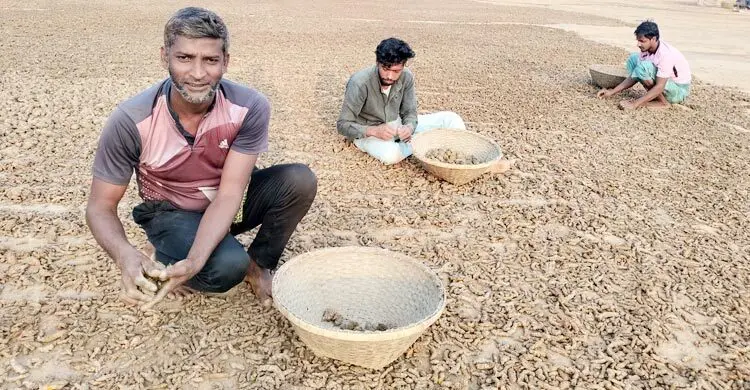
A field stretching to the horizon. At one end, fires burn under drums to boil raw turmeric. At the other, turmeric lies spread out in the sweet Falgun sunshine, waiting to dry. Once dry, it is fed into a large polishing machine that strips off the outer layer, and then taken out and prepared for sale.
This is the spread of turmeric in the green hills. The hills have always excelled at turmeric. Turmeric grown on fallow hillocks is famous across the country and tops the list of hill farm produce. That is why wholesalers from Dhaka, Chattogram, Jashore, Feni, Noakhali and Cumilla crowd the markets of Khagrachhari to buy it.
With favourable weather, the hills met their turmeric production target again this year. Raw turmeric that sold for Tk 400 a maund last year has risen to Tk 1,100 this year, while dried turmeric is selling at Tk 8,000-9,000. Prices have more than doubled compared with other years. The leftover parts of dried turmeric are also bought at Tk 500-550 a maund as raw material for mosquito coils.
This was learnt on recent visits to Muslimpara and Tabalchhari in Matiranga and Borpilak, Sindhukchhari and Hafchhari in Guimara, Khagrachhari, and from talking to marginal farmers and to retail and wholesale traders at Guimara, the biggest turmeric market.
Traders and farmers recover losses
Md Delowar Hossain, a turmeric trader of Muslimpara in Matiranga, has been in the business for two decades and it is his livelihood. Speaking of losses in past years, he said he has sold turmeric worth about Tk 50-60 lakh this year. With good prices, he hopes to make up last year's losses and see a profit.
Farmer Md Abdul Karim, who came to sell at Guimara market, said: "I sold turmeric at a maximum of Tk 1,100 a maund. With good prices this year, last year's losses will be recovered." Jibon Tripura and Athuipru Marma, turmeric farmers of the Sindhukchhari area, said: "Last year many gave up growing turmeric because the price fell. But with good prices this year, hill farmers are dreaming of changing their fortunes through turmeric."
Md Dulal Hossain and Helal Uddin, long in the turmeric trade, called for reduced dependence on imports. "Hill turmeric is extremely good and famous across the country. The government must do more to build a market for it," they said.
Grown without chemical fertiliser
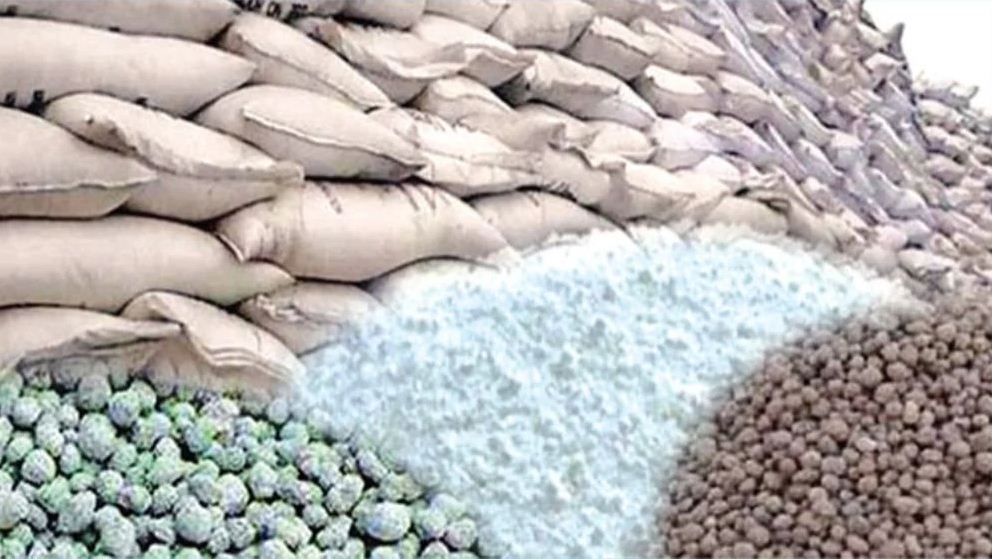
Guimara upazila agriculture officer Agriculturist Onkar Biswas said: "No chemical fertiliser at all is used in hill turmeric farming, which helps preserve its nutrients, taste and colour. In some hill areas turmeric is produced entirely naturally. Because it is grown fully organically, turmeric from this region is very healthy."
Matiranga upazila agriculture officer Agriculturist Md Sabuj Ali said turmeric does well on uncultivated and fallow land. "If imports are cut by giving priority to local turmeric in the domestic market, local farmers will be more interested in growing it," he said. He also believes farmers are seeing a profit because prices are higher than last time.
Those involved hope that, given the great potential of hill turmeric across the country, dependence on foreign turmeric will be reduced, market management strengthened and processing industries built. Only then, they say, will marginal hill farmers be encouraged to grow turmeric.
Source: Jagonews24. First published in Bengali on The Agro News.
Comments
(0)