
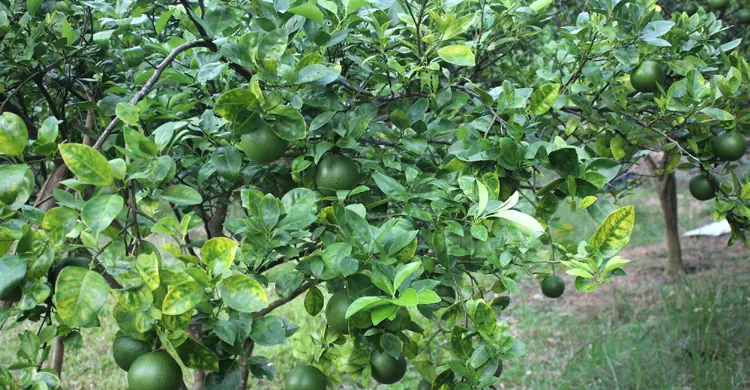
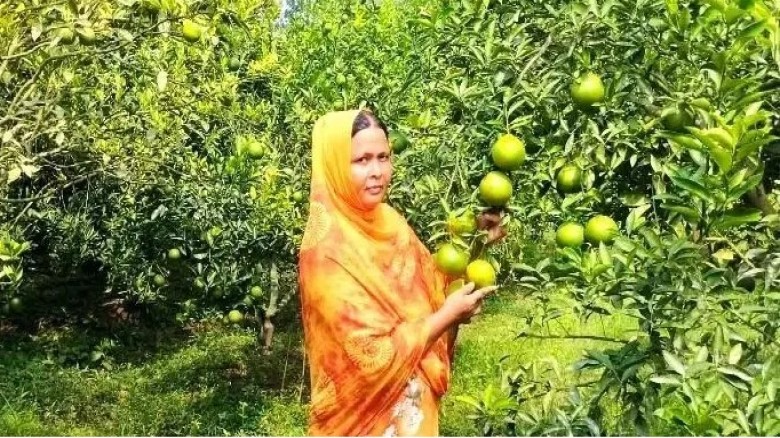
Commercial cultivation of malta is growing in the hills because it pays well and yields well. In Khagrachhari, malta is spreading on both flat land and hill slopes faster than other fruit, and many hill farmers have become self-reliant by growing it. Led by grassroots orchard owners, malta farming is changing the hill economy.
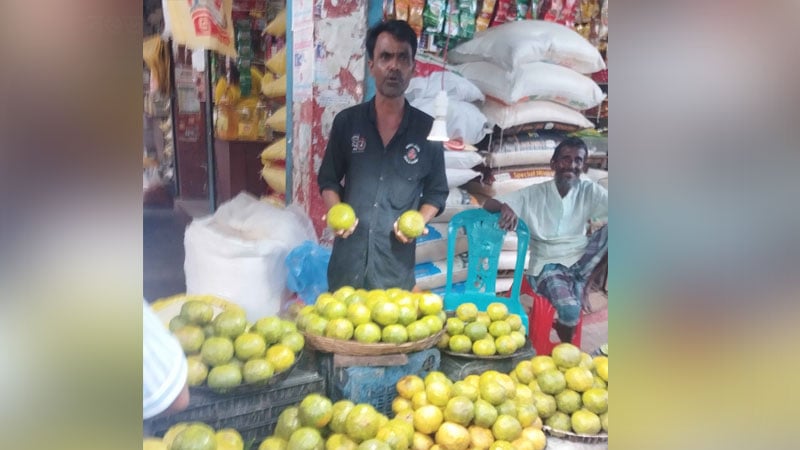
Khagrachhari malta has earned a name across the country. Besides local markets, the fruit now goes to different parts of Bangladesh. Trading has already begun in hill markets, where malta is selling at Tk 80 to 100 a kg at the start of the season, and local growers are happy with the price.
Planting, flowering and harvest
According to the Department of Agricultural Extension (DAE) in Khagrachhari, mid-Baishakh to mid-Bhadra (May to August) is normally the right time to plant malta seedlings, though with irrigation they can be planted at any time of year. Trees bear fruit within four to five years of planting. Flowering begins in Falgun and Chaitra, and harvesting runs for two months.
The fruit is ready from the last week of September into October, but many farmers pick immature fruit in the hope of higher profits, which spoils the taste, quality and sweetness. Each tree produces at least 250 to 300 fruits. Hill-grown malta is quite large, and because the fruit stays sound for about two weeks after picking, marketing is not a problem.
BARI Malta-1
According to the Hill Agricultural Research Station, BARI Malta-1 was first released from the station in 2009. Farmers have succeeded with malta on hills and flat land in Khagrachhari, the other two hill districts and across the country. Mixed-fruit growers in the hill region grow malta together with Amrapali mango orchards, and commercial cultivation of BARI malta is rising across the hills. About 20,000 to 30,000 grafted malta seedlings are sold each year.
Agricultural research sources say BARI Malta-1 is a high-yielding variety that bears regularly. The tree is small but bushy, which gives a higher yield. Although seedlings can be planted all year with irrigation, the rainy season is the best time. Grafted seedlings need regular care through leafing, flowering and fruiting. If leaf miners, fruit flies and fungal diseases are controlled, there is little chance of fruit being lost.
Munshi Abdus Rashid, chief scientific officer of the Hill Agricultural Research Station, said: "Since BARI Malta-1 was developed in 2009, its cultivation has increased at farm level. A great deal of malta is being grown in orchards across the district, and there is heavy demand for grafted seedlings every year. Not only from the Chittagong Hill Tracts, but farmers from Sylhet, Chapainawabganj and other parts of the country are coming to Khagrachhari to collect grafted seedlings."
According to the DAE in Khagrachhari, BARI malta is being grown on about 290 hectares of hill slopes and flat land in the district this year. Because it can be grown alongside other fruit trees, the area under malta is expanding day by day, and hill orchard owners are dreaming of prosperity through it.
Source: Jagonews24. First published in Bengali on The Agro News.
Comments
(0)