
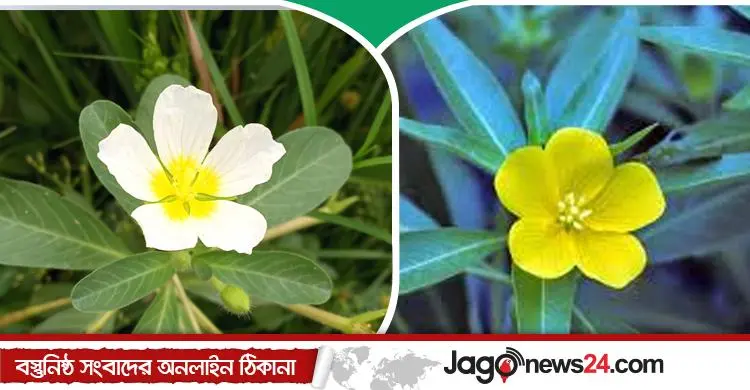
Plants whose roots grow on land but whose stems and branches spread over water are called amphibious plants. Keshordam is one such plant. Because its branches lie on the water, many people think it is an aquatic plant, but it is in fact amphibious.
This amphibious plant is found in all regions of Bangladesh. Keshordam usually grows in freshwater areas, and it thrives in ponds and neglected waterbodies, especially those whose weeds have not been cleared for a long time.
In some areas keshordam is also known as malcha. Its flowers are white and yellow, with yellow in the centre of the white flowers. Keshordam floats on the water. The plant has aerenchyma cells, which are filled with oxygen, and this keeps it afloat. Its spongy roots also keep the plant steady on the water.
The plant usually reproduces from seed. Its fruit and seed capsule are balloon-shaped, and the seeds are brown or pale brown. The stem is green or light brown and the leaves are green. In some areas it is eaten as a leafy vegetable, and some people eat it as a salad.
Although keshordam is known as a weed, it is a medicinal plant with wide herbal properties. It works as a remedy for itching, rashes, gastric complaints, colds, sore throats and skin diseases.
Source: Jagonews24. First published in Bengali on The Agro News.

Comments
(0)