
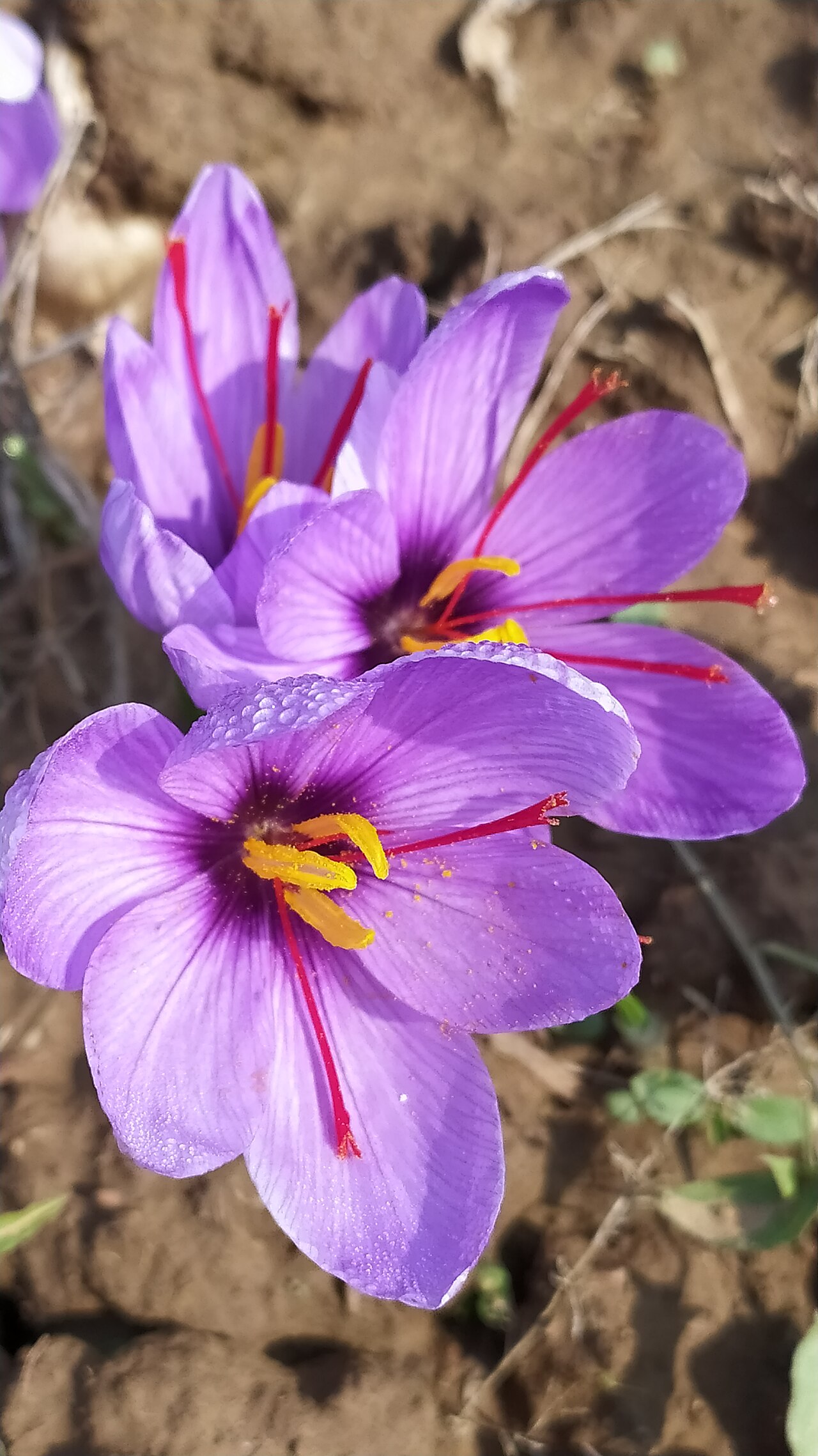
Saffron growers in Pampore, Kashmir, expect a strong recovery this season. Total output in the area could reach 4,000-5,000 kg, five to six times last year's level, according to Riyaz Ahmad Mir, a Pampore grower and director of the Agro Farmers company, speaking to Rural Voice.
The reason is the night. Saffron flowers open mainly at night, Mir says, so night temperatures matter more than daytime ones, and this year's drop in night temperatures has helped flowering. Below-normal rainfall has limited the number of flowers, but the crop is still much better than last year's. Mir's family has grown saffron for nearly 200 years, across five generations.
The harvest is short and comes in rounds. Flowering runs from late October to the first or second week of November, about 15 days in all. Flowers in a field do not open together, so growers pick up to four times, about four days apart. Mir had finished three rounds when he spoke; the final figure will only be known once the red stigmas are separated and dried. One kanal of land yields about 500 grams of dried saffron on average, depending on the field, the weather and the planting material.
Corms decide much of the yield. A large, healthy corm can give four to six flowers, while smaller ones yield less in the early years, and a plantation usually starts paying better about three years after planting. Corms go into the ground in August and September, sit two to three inches deep, stay productive for five to seven years and multiply underground, so new corms can be lifted and planted elsewhere.
Price is the growers' main worry. Mir expects more than Rs 3 lakh per kg this year, and saffron sold under the GI tag could earn about five per cent more. But many growers need cash at once for household costs and weddings, and sell to buyers who pay on the spot rather than wait for the GI-tagged marketing process.
Two or three years of low output and poor returns had shaken confidence, and some farmers dug out their corms for other crops. About 8,000-9,000 farmers in Pampore grow saffron. Mir names two threats: rodents and insects damaging corms in open fields, which he says needs regular monitoring and timely help from the agriculture department, and houses and shops being built on saffron land, which he wants restricted to protect the area's centuries-old crop.
Photo: Yasir Yousuf Ahanger / Wikimedia Commons (CC BY-SA 4.0)
Source: Rural Voice

Comments
(0)