
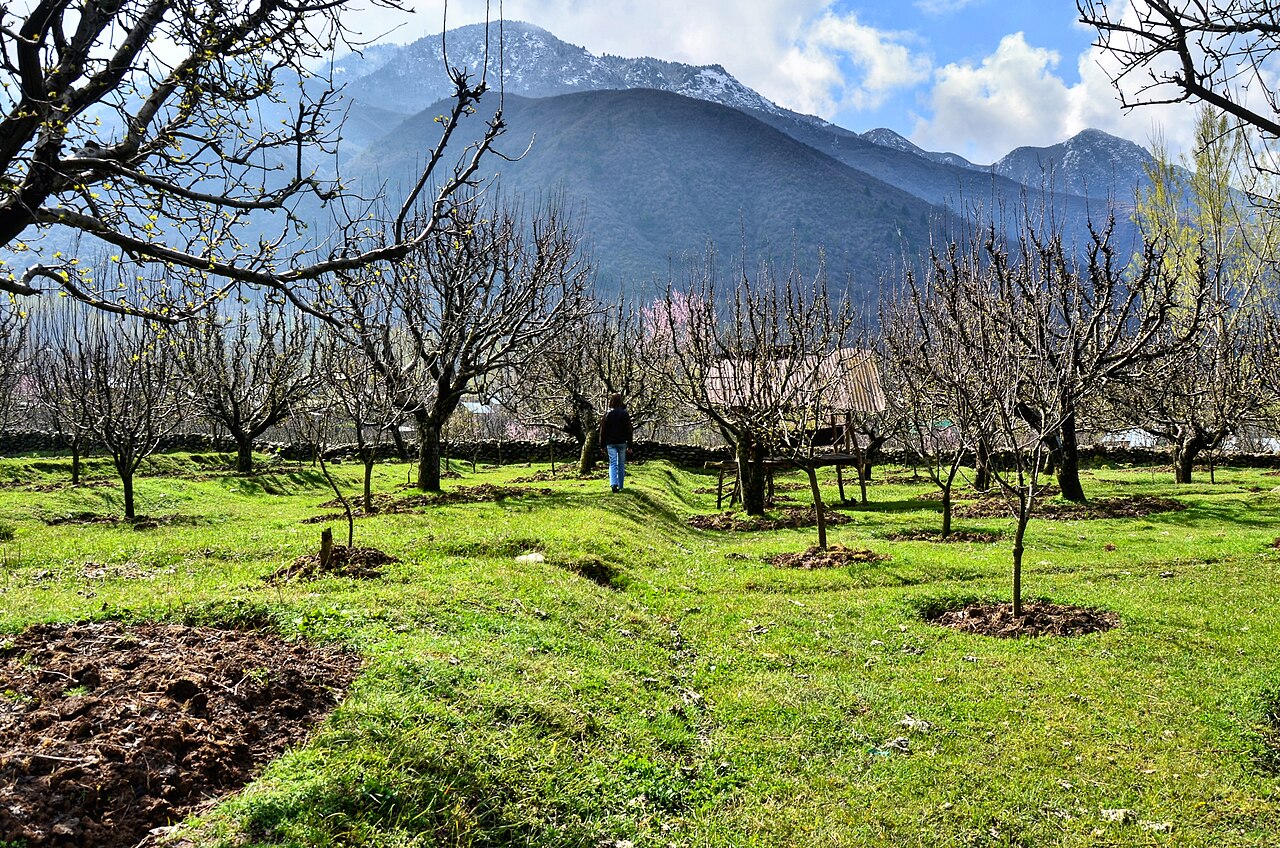
The All India Kisan Sabha (AIKS) has asked India's central government and the governments of Jammu and Kashmir, Himachal Pradesh and Uttarakhand to intervene in the apple market, warning that prices have fallen sharply at the peak of harvest just as trade agreements are set to bring in more imports.
In Kashmir's markets a 15 to 16 kg carton now sells for about Rs 700 to 1,000, against Rs 1,100 to 1,700 a few weeks ago, or roughly Rs 44 to 67 a kilogram for growers, the farmers' organisation said. The Valley grows about 2.1 million tonnes of apples a year, more than 70% of India's crop, but has controlled-atmosphere storage for only about 292,000 tonnes against a need of about 600,000 tonnes, so small growers must sell on the day they pick.
The Market Intervention Scheme, under which NAFED paid Rs 60, 44 and 24 a kilogram for A, B and C grade apples in Kashmir from 2019, has not been revived, AIKS said. In Himachal Pradesh, where the crop is estimated at about 2 crore boxes against about 3.5 crore last year, culled apples get a support price of only Rs 12 a kilogram and past dues are unpaid. Crop insurance for horticulture has never been implemented in Jammu and Kashmir; tenders were scrapped again in June 2026 when insurers asked for premiums above 30%.
The India-New Zealand free trade agreement, due to take effect on 20 October, cuts the duty on New Zealand apples from 50% to 25% for a quota of 32,500 tonnes, rising to 45,000 tonnes, imported between April and August, when Indian growers sell stored fruit. AIKS also cited the India-EU agreement (20% duty on a quota rising from 50,000 to 100,000 tonnes) and a planned quota for US apples at 25% duty. "If the Market Intervention Scheme is not announced before 20 October, the apple belt will be on the streets," said AIKS president Rajan Kshirsagar.
AIKS wants the scheme restarted at Rs 90, 65 and 50 a kilogram for A, B and C grades, pending dues paid with interest, a statutory minimum support price based on C2 costs plus 50%, apples excluded from the three trade deals, a 100% import duty, public and cooperative cold storage, government-funded crop insurance and relief for orchards hit by August hailstorms. It has called an All India Apple Growers' Protest Day on 19 October.
The report is by Ajeet Singh for Rural Voice.
Photo: Revoshots / Wikimedia Commons (CC BY-SA 4.0)
Source: Rural Voice
Comments
(0)