
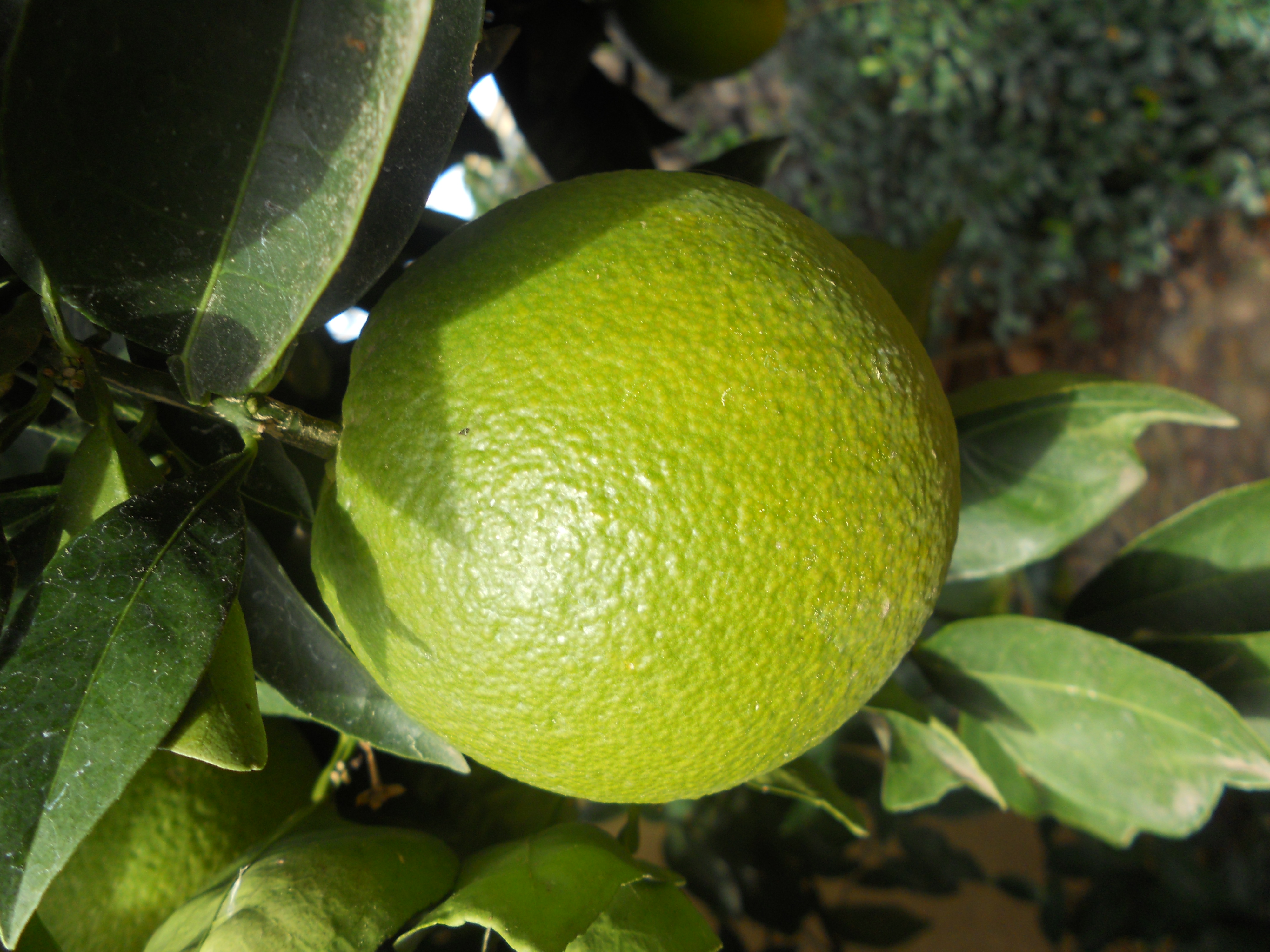
About 1,200 orange trees belonging to a single family were cut down during a joint eviction drive in the Rajkandi reserved forest at Kamalganj in Moulvibazar on 16 July 2026. The family says the orchard was destroyed because it had stopped making regular monthly payments, locally called masohara, to a forest official, and it accuses the Forest Department of acting out of that grievance just as the trees were about to fruit. The Forest Department says fruit orchards on reserved forest land are wholly illegal and that the drive was carried out under the law to recover encroached state forest. Branches of the felled trees, many of them about two months from ripening, lay scattered across the hillside, and the ruined orchard drew wide public attention.
The eviction drive of 16 July
The drive took place on Thursday, 16 July 2026, in the Kalinji locality of the Adampur beat, which falls under the Rajkandi range in Kamalganj upazila. According to the Forest Department, officials carried it out jointly with the upazila administration and Kamalganj police, in the presence of the upazila assistant commissioner (land), over about four hours. The department said roughly five acres of reserved forest land, recorded under Section 20 of the Forest Act, were recovered from occupation by local influential people.
In its own account of the operation, the Forest Department said the recovered land held commercial plantations of orange, pineapple, lemon and areca nut. Two sheds built of bamboo and polythene and a watcher's hut were demolished, and a pond made by damming a natural stream was breached so that the water could flow naturally again. Officials said a forest case was being processed under forest law against those held responsible, and that the land would be brought back under tree cover through the government's tree-planting programme. They described the work as part of a continuing, zero-tolerance effort against encroachment that sees several such drives each month.
At the centre of the recovered land stood the orchard. The family that planted it says about 1,200 orange trees were felled, along with papaya and bottle gourd, on roughly three acres. Some reports put the number of trees lower, at more than six hundred; the exact count has been disputed. What is not disputed is that a mature, fruiting orchard was cut down in a single afternoon.
The Kamalganj drive was not the area's only recent enforcement. Earlier in July 2026 the Forest Department cleared illegally raised betel-leaf plantations from reserved forest land in the Kurma beat of the same Rajkandi range, where a forest case was also being processed. Officials point to such actions as evidence that the department moves against encroachment across the range rather than against a single family, and they say the recovered Kamalganj land will be replanted under the government's priority programme to plant 250 million trees across the country over five years.
The family's allegation of monthly payments
The orchard's owner, Salma Begum, and her husband, Alim Ulla, say they spent eight years building the garden on about three acres of forest land, investing between Tk 15 lakh and Tk 20 lakh, most of it borrowed at high interest from non-governmental microcredit organisations. They say they had planned to sell between Tk 25 lakh and Tk 26 lakh worth of fruit in about three months' time and to repay a large part of those loans from the proceeds.
The family alleges that from the beginning it had been paying money regularly to the forest beat officer, and that this year, when financial hardship at home meant it could not pay, the whole orchard was cut down. 'We spent Tk 15 lakh to Tk 20 lakh building this orchard over eight years,' Salma Begum said. 'It was not our own money; we took loans at high interest from various NGOs and put them into this garden. We thought we would repay the loans by selling this year's fruit. Instead the Forest Department has finished us. Where will we go now with this debt, and how will we repay it?' The family also says the team did not stop at cutting the trees but broke its only irrigation pump, so that the few remaining plants could not be kept alive.
These are the family's claims, made to reporters at the site, and none has been established. The Forest Department has not accepted that any money was ever taken, and the officials' responses are set out below. On a visit after the drive, branches of the cut orange trees lay scattered across the ground, and members of the family sat among them, facing deep uncertainty over loan instalments and their livelihood.
Why residents call the drive one-sided
Local residents quoted in the original report called the operation one-sided and said that, while it was carried out in the name of recovering government land, it singled out one family. They asked why, if the orchard was illegal, no step had been taken when the trees were planted or within the first year or two, and why the drive came only after eight years, exactly when the trees were bearing fruit.
Some residents also linked the timing to recent news coverage. They said that a few days before the drive, reports alleging lease trading and the taking of monthly payments by forest staff had appeared in several outlets, and claimed the family was targeted out of the resentment those reports caused. They further alleged that forest land elsewhere had for years been let out informally, for money, for betel leaf and jhum cultivation, yet no drive had touched those plots while this family's orchard was destroyed. All of these are allegations by residents and by the affected family; none has been established, and the Forest Department rejects the suggestion that the drive was anything other than lawful enforcement.
The Forest Department's account
Pritam Barua, assistant conservator of forests and officer of the Rajkandi range, said any occupation inside a reserved forest, whether for betel leaf, orange or pineapple, is completely unacceptable and unlawful, and that the department's work to free forest land is continuous. 'This is an occupation, whether it is eight years old or ten, however many years, it is illegal,' he said. 'The Forest Department is always determined to evict any kind of occupation. We are gradually trying to free all the occupied land under the Rajkandi range, and several such drives are carried out every month.' Asked how an orchard could be treated as legal for eight years and then become illegal once payments stopped, the officer gave no direct answer.
The Sylhet divisional forest officer, Mohammad Abdur Rahman, set the dispute against the history of how families came to live inside these forests. He said that when the forest villager system was first introduced, around 1920, each family was given land only for growing paddy in the valleys, the low ground, and that forest law contains no provision allowing fruit orchards on hills or hillocks. There was, he said, no basis for when or by whom permission to plant this orchard had been given. Under the policy that forest land should carry trees rather than fruit orchards, he said, the orchard was cleared and the land recovered for afforestation. He added that if anyone in the Forest Department was found to be involved in irregularities, action would be taken once evidence was available.
Rajkandi reserved forest and the Adampur beat
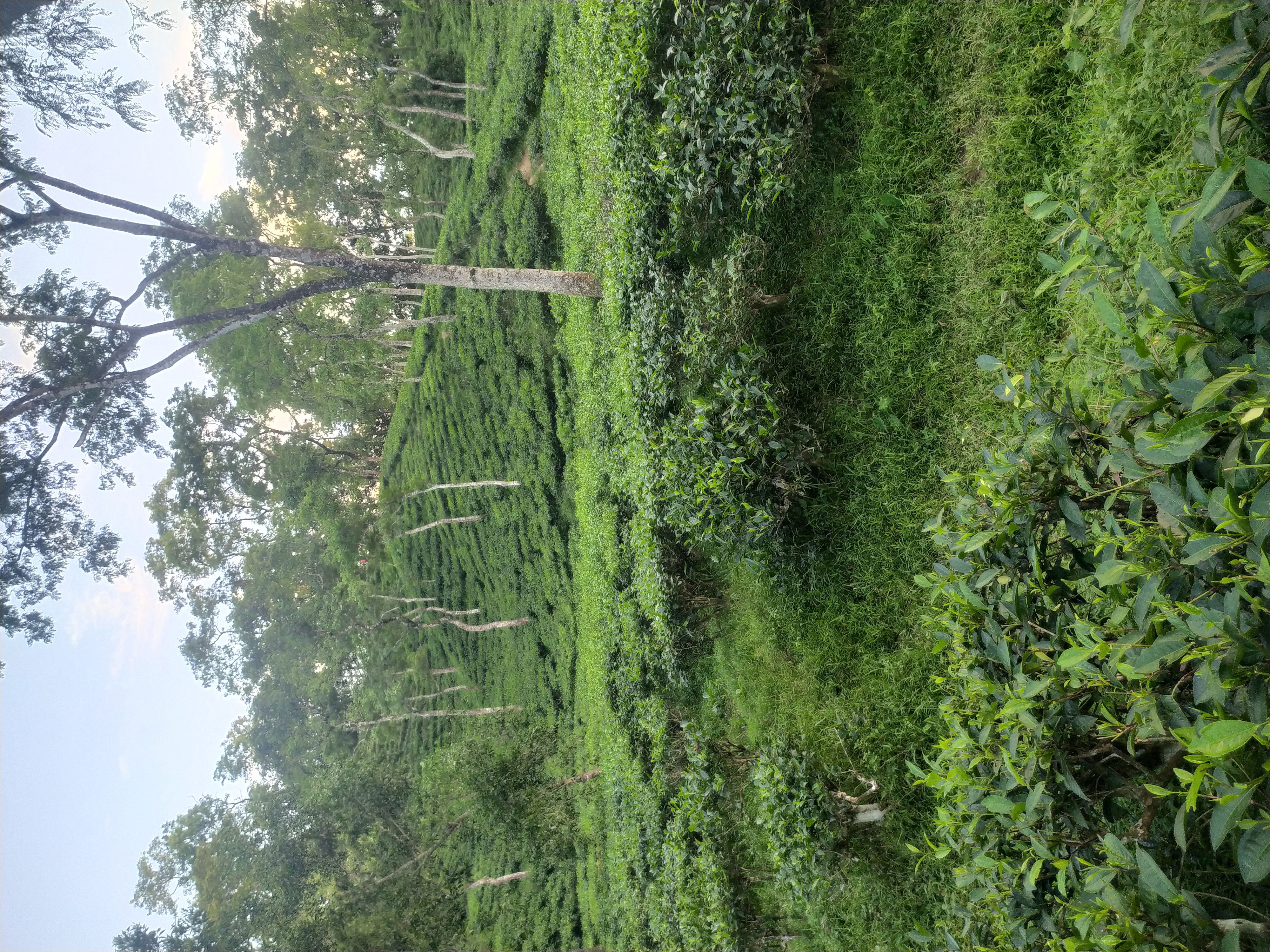
The Adampur beat, where the drive took place, is one of the forest units of the Rajkandi reserved forest, which lies in the Sylhet Division within Kamalganj upazila of Moulvibazar. The beat, also known as Kauargola, covers roughly 13,080 acres, about 5,290 hectares, and sits around ten kilometres from the upazila town, close to the border with the Indian state of Tripura. It is a hilly, largely secluded tract crossed by walking trails, with a Khasi village nearby and a forest inspection bungalow inside it; the Jhiripath route through it leads to the Hum Hum waterfall.
The forest's vegetation includes large groves of bamboo, among them the muli, mitenga, dolu and rupai kinds, together with native timber trees such as sal, garjan, chapalish, jarul and champa, as well as agarwood plantations near the entrance. Its wildlife is reported to include hoolock gibbons, whose calls carry from deep in the forest, along with capped langurs, civets, fishing cats, barking deer and birds such as hill mynas and parakeets. These are the natural assets the Forest Department says its eviction work is meant to protect.
Kamalganj itself is an upazila of about 485 square kilometres with a population of 290,108 at the 2022 census. It is known for its roughly fourteen tea gardens and for Lawachara National Park, which sits within the West Bhanugach reserved forest and is one of the better-known patches of semi-evergreen forest in the north-east. Reservation of forests in the greater Sylhet region began long ago: the process was started in 1914 and the first management plan came into effect in 1938, part of a system of state forestry that dates in Bengal to the creation of a separate forest department in 1876.
What a reserved forest is, and the Forest Act
The land in dispute is governed by the Forest Act of 1927, which remains the main law for state forests in Bangladesh. The Act divides state forests into categories, of which the reserved forest carries the strongest protection. A reserved forest is created through a formal process: the government first issues a notification of its intention, a forest settlement officer then invites and settles any claims of private right over the land, and finally the forest is declared reserved by a notification under Section 20 of the Act. The land recovered in the Kamalganj drive was described by officials as falling under that Section 20 status.
Before a forest is finally declared reserved, the Act requires a public step meant to protect existing rights. After the first notification of intent, a forest settlement officer publishes a proclamation in the neighbourhood of the forest and fixes a period, of at least three months, within which anyone claiming a right over the land must come forward; the officer then inquires into and settles those claims, and only the land left after that is declared reserved under Section 20. Officials say no such private right was ever recognised over the hillside where the orchard stood.
Once land is a reserved forest, the Act treats it as fully state-owned and closed to private use unless specifically permitted. Clearing or breaking up the land for cultivation, trespassing or pasturing cattle, and felling, girdling or otherwise damaging trees are among the acts the Act prohibits inside a reserved forest, and they are punishable offences. This is the legal basis on which the Forest Department says a fruit orchard, however old, cannot acquire any right over reserved forest land.
The forest villager system the divisional officer referred to is a separate, older arrangement under which some families were settled inside or at the edge of forests, historically to supply labour for forestry work, and allowed to cultivate only limited plots. Officials say that arrangement never extended to commercial fruit orchards on the hills. The afforestation the department has promised for the recovered land fits a national drive to expand tree cover, under which large numbers of saplings are being planted across the country over a period of years.
Orange and mandarin growing in Moulvibazar
The crop at the heart of the dispute is one for which the Moulvibazar hills are well known. The 'kamala' grown here is the mandarin, Citrus reticulata, one of several members of the citrus group in the family Rutaceae; the sweeter 'malta' is the sweet orange, Citrus sinensis. In Bangladesh, oranges and mandarins are grown mainly in parts of Sylhet, the Chittagong Hill Tracts and the far north around Panchagarh and Rangpur, on sloping and hilly land that suits the trees.
The orange belongs to the genus Citrus and is thought to have originated in China, where it was cultivated some 4,000 years ago; a mandarin fruit has a loose skin and eight to ten easily separated segments. Bangladesh's own commercial orange output was still small not long ago, recorded at about 1,000 tonnes in 2005-06, which is part of why so much citrus has been imported and why the extension service has pushed to raise home production.
Within Moulvibazar, mandarin growing is concentrated in the hilly upazilas of Juri, Kulaura and Baralekha. The Department of Agricultural Extension has recorded the spread of the crop over the years: Juri upazila alone had 415 mandarin orchards across its six unions, and about 99 hectares of the Moulvibazar area were under orchards, according to the department's deputy director there, with the crop introduced to the area through extension projects between 2001 and 2008. Output in Juri rose from about 145 tonnes in the 2014-15 season to 300 tonnes in 2015-16, and successful growers were reported to earn well over Tk 3 lakh in a season.
Nationally the citrus area has grown quickly. Department of Agricultural Extension data showed orange orchards covering more than 4,000 hectares in the 2019-20 financial year and, counting tangerines and other citrus, about 7,500 hectares, up from roughly 2,000 hectares six years earlier; citrus imports stood at about 250,700 tonnes in 2018-19. Officials attributed the rise to growing health awareness, strong demand and relatively high fruit prices, and to the extension service's work in producing grafted saplings and training farmers.
In the orchard villages of Moulvibazar, individual farmers have built up sizeable plantings over the years. One grower in the district was reported to have started with about 50 plants some fifteen years ago and to tend around 1,200 today, with each household in his village keeping more than 300 plants. The mandarin flowers in spring and its fruit takes roughly eight months to mature, so the harvest falls in the autumn and early winter; growers in the district have also reported losses to pests, to monkeys raiding the ripening fruit and to competition from imported mandarins.
The way the crop is grown explains why the timing of the drive mattered so much to the family. Orange and mandarin plants are propagated by grafting or budding rather than from seed, and a young tree generally begins to bear fruit only four to five years after planting; a mature plant of the released variety BARI Kamala Lebu 1, developed by the Bangladesh Agricultural Research Institute, can carry 300 to 400 fruits averaging about 190 grams each. A fruit takes months to mature after flowering. An eight-year-old orchard is therefore at or near its productive peak, which is why the family said the trees were cut just as years of investment were about to return a harvest.

Photo: AerobicFox / Wikimedia Commons (CC0). The lead picture shows an unripe orange still on the tree, used as a background image of the crop.
Sources: Jagonews24, The Daily Inqilab, The Daily Star, Banglapedia, the Forest Act 1927 (bdlaws.minlaw.gov.bd), Wikipedia. First published in Bengali on The Agro News.
Comments
(0)