
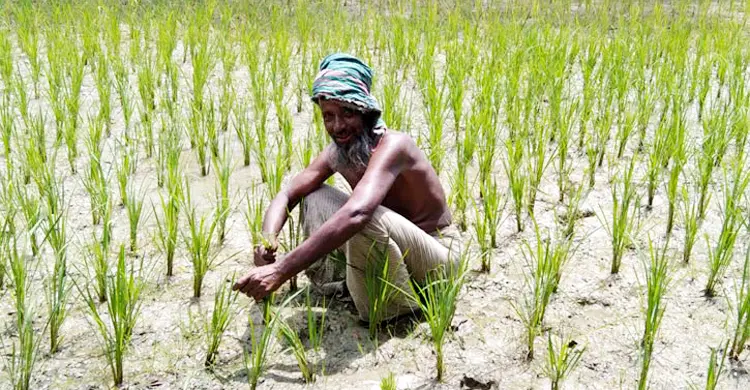
Rainfall in July this year was about 50 percent below normal, and temperatures set records worldwide. Meteorologists forecast that temperatures may stay above normal in August too. At this time of year crop fields should be brimming with water; instead they are cracked and parched, and in places farming is going on with irrigation. Farmers are distraught over Aman and Aus cultivation.
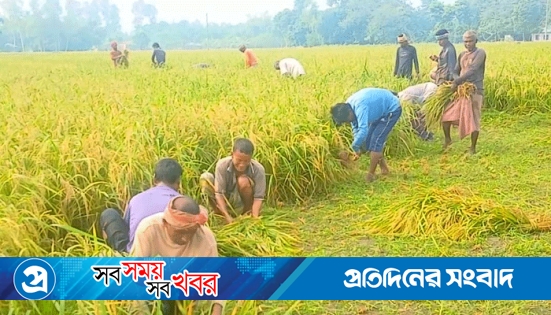
About half the country's total rice production comes from the Boro season. Aman contributes 38 percent and Aus 7 to 8 percent. Of the three rice seasons, the rainy period from March to June is counted as the Aus season, and broadcast and transplanted Aman are grown from July to September.
Farmers say this is mainly the time for transplanting Aman seedlings. Yet more than half the month of Srabon has passed and there is no water in the fields. There has been no rain even in the full monsoon, and Aman cultivation is being hampered for lack of water.
Targets and shortfalls
Department of Agricultural Extension (DAE) data show that Aus cultivation also fell because of drought and floods in April and May. Last season Aus was grown on 11 lakh hectares; this year it fell to 10 lakh 45 thousand hectares.
The target for Aman seedbeds this time was 3 lakh 4 thousand hectares, and seedbeds were made on 2 lakh 85 thousand hectares. By July, only 16 percent of transplanting was complete, well below the same time last year. The target for Aman this year is 56 lakh hectares.
DAE director general Badal Chandra Biswas spoke of several steps to offset the effect of drought on overall production. He told Jago News: "Because of low rainfall, we held a meeting to ensure electricity and fuel supply for irrigation. Last year too, when drought appeared, it was decided that all government authorities would work in coordination. Accordingly, a meeting was held yesterday this time as well. We had already written earlier for uninterrupted electricity and fuel, and we will write again tomorrow."
"We are trying to make sure farmers have no problem transplanting seedlings," he said. "There was a little rain early on this time, and some Aman was planted then. At that point progress was better than last year. There is still time, until September. I don't think there will be any problem."
On Aus production he said that against this year's target, many in Sylhet could not plant because of early rain, so the target was not met, though only slightly.
Aus area and production have been declining steadily over the past half-decade because of drought and untimely floods. Data show that five years ago Aus was grown on 13 lakh hectares; it has now fallen to around 10 lakh. Production this year will be at least 2 percent lower than last year, and overall output could fall by 6 to 7 lakh tonnes year on year.
Farmers' costs rise
Several farmers spoke about the current Aman crop. Mizan Chowdhury, a farmer from the Jamalpur area of Joypurhat Sadar, said he has planted Aman on 15.5 bighas. With no rain, he has already spent more than Tk 9,000 on irrigation, paying Tk 3,000 to Tk 3,500 a bigha for water.
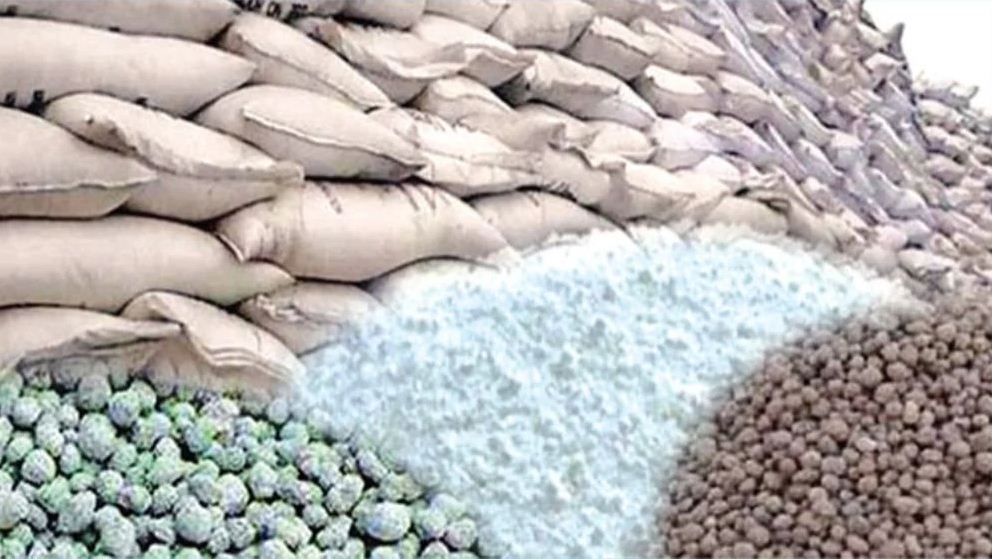
Mizan Chowdhury said that with irrigation costs on one hand and higher fertiliser prices this year on the other, many are not growing Aman, because with transport and labour, costs will rise by 20 to 25 percent overall, and there is a risk of loss.
Farmers say that although it rained at the start of the Aman season, a severe water shortage has hit at transplanting time. Those who can irrigate are doing so, while those who cannot are still looking to the sky for rain. Many seedbeds are being ruined for lack of water, and if transplanting cannot be finished on time, yields may fall.
Saidur Rahman, a farmer from Kola village in Badalgachhi upazila of Naogaon, said: "The Aus crop was poor because of the drought. I borrowed money in advance to grow Aman, but the Aman seedlings are also being ruined for lack of water. I can't plant them. The field is cracked and parched."
Economists' warning
Agricultural economist Dr Jahangir Alam Khan told Jago News that the cultivation target has not been met this year. More important, the long drought has disrupted irrigation, and higher fertiliser and fuel prices have raised farming costs and created a crisis that will hurt overall Aman production.
When production costs rise, farmers cannot apply inputs properly, and yields fall as a result, the economist said. Secondly, Aman transplanting has been delayed this time, which is also a major reason for lower yields.
Another agricultural economist, Professor Gazi M Jalil, said that due to global warming, drought has become severe in recent years. The government should frame policies to cope with the changing climate for the crops being damaged, because both droughts and floods will increase day by day and seriously affect summer crops, he said.
Source: Jagonews24. First published in Bengali on The Agro News.

Comments
(0)