
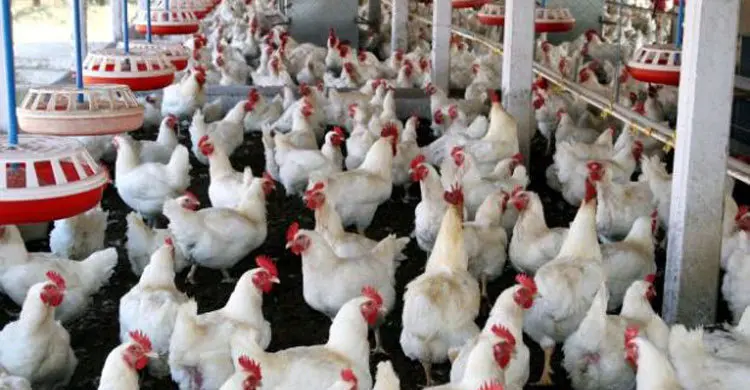
Most of Joypurhat's 10,000 chicken farms make a profit one season and a loss the next. Because of this instability, the earnings of the more than one lakh people who work directly or indirectly in the industry are also uncertain.
According to the district livestock office, the district now has about 10,000 large and small chicken farms, including 2,500 registered ones. Each month they produce on average more than one crore eggs and 10,000 tonnes of meat. After meeting the protein needs of the district's 10 lakh people, 15 to 20 truck and pick-up loads of chickens are sent every day to other parts of the country. To meet the growing demand for chicks, one government hatchery and 39 private hatcheries have been set up. The 40 hatcheries produce about 40 lakh chicks a month.
Poultry feed makers, including Mahmudul Haque, managing director of Joypurhat Purobi Agro Industries Ltd, and Manjur Hossain Jahangir, proprietor of Palli Feed Industries, said 11 feed mills have grown up in the district to serve its large number of farms, producing an average of 14,000 tonnes of feed a month. But since the poultry zone grew up around the Jamalganj government poultry farm in Joypurhat, the industry has faced a range of setbacks over a long period.
Why the market is unstable
Anowarul Haque Anu, managing director of Padma Feed and Chicks Ltd, Saiful Islam Alam, chairman of Shefali Poultry Farm Private Ltd, and others in the industry listed the causes. About 80 per cent of raw materials are imported, making production costly; chickens and eggs are not exported; production is not matched to demand; and there is no proper market management.
They also cited repeated price rises for feed, medicines and vitamins; low-quality feed, medicine and vitamins that sometimes raise death rates or leave birds underweight at the set time; the grip of middlemen and brokers; a wide gap between wholesale and retail prices; supplies of chickens and eggs to other parts of the country halting when natural disasters disrupt transport; chicks, feed and medicine being bought and sold on credit; and the falling purchasing power of poor and low-income people. With the market confined within the country, the extra pressure on local markets keeps chicken and egg prices unstable most of the time.
Many medium-sized farmers, among them Babu Hossain of Adarshapara in Joypurhat town, Sahadat Hossain of Jamalganj and Khorshed Alam of Puranapoil, said it costs Tk 120–125 to produce a kilogram of broiler, but farmers get only Tk 2–4 more or less than that, while the retail price reaches Tk 145–150 a kg. Producing a kilogram of Sonali chicken costs Tk 190–195, but farmers are selling at a loss for Tk 150–160, while it retails at Tk 200–220.
Hatcheries hit too
With the chicken market in a slump, hatchery owners are also in trouble. Rasheduzzaman, director of Joypurhat Padma Feeds and Chicks Ltd, said each chick now costs Tk 14–15 to produce but sells for Tk 6–7, and even that on credit. With no demand, many hatchery owners like him are in great difficulty with large numbers of day-old chicks.
Ziaul Haque Zia, vice-president of the Joypurhat Chamber of Commerce and Industry and proprietor of Kishan Poultry Hatchery and Feed Ltd, and others in the industry told Jagonews that about Tk 1,000 crore has been invested in the sector. "If the present situation continues, the poultry industry may stall or even collapse. Then about one lakh people in the district, and more than 30 lakh men and women across the country, working in the industry will lose their jobs. To save the industry from this plight, a chicken meat processing plant and cold storage are needed here."
They also called for government subsidies and government steps towards exports to keep the industry alive.
District livestock officer Dr Abdus Salam Sonar acknowledged some limitations and told Jagonews: "The government is now working to solve this problem. The industry will regain its vigour in the near future."
Source: Jagonews24. First published in Bengali on The Agro News.

Comments
(0)