
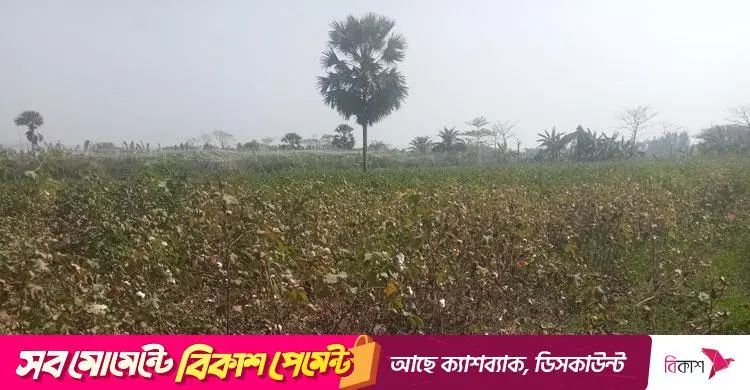
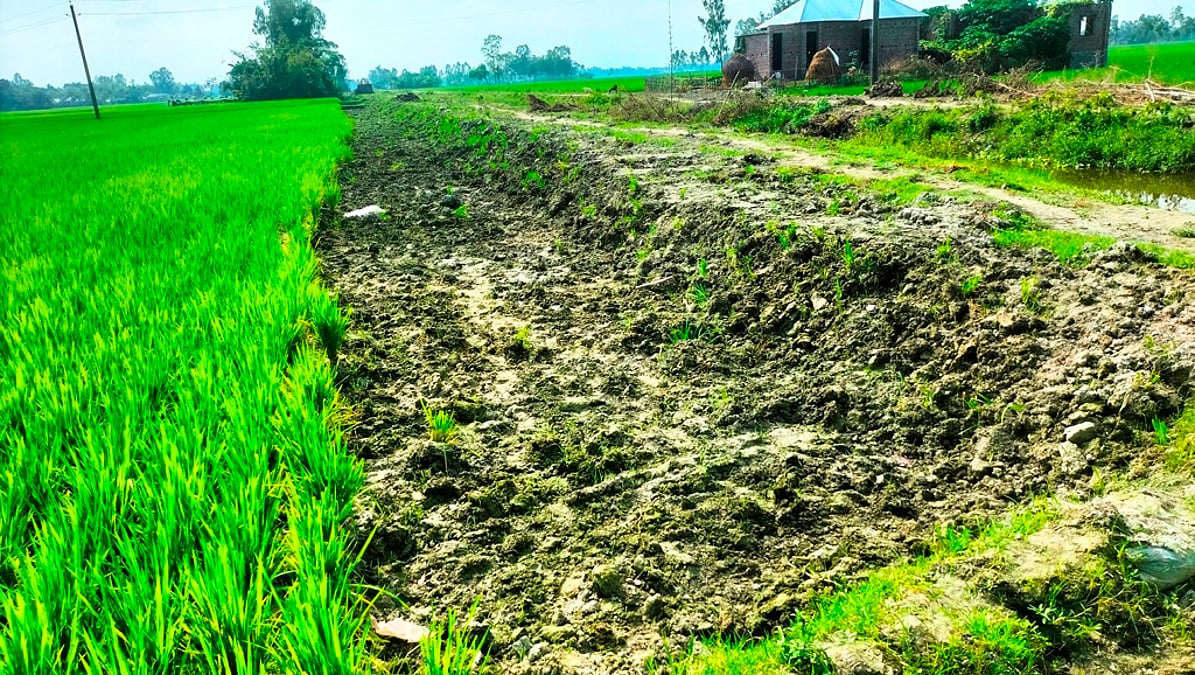
Cotton is being grown on 8 bighas of abandoned Water Development Board land on the bank of the Gabkhan river, known as the Suez Canal of Bengal. With help from the Cotton Development Board, several farmers have leased the land and have been farming it successfully for 15 years.
The Water Development Board owns several acres of land on the south side of the east-west road through Gabkhan, running from Rupsia village at the western end of the Fifth China Friendship Bridge to Shekherhat. Entrepreneurs have leased this land and brought it under cultivation, and the wide area of farming has earned it a name as an agricultural zone. Cotton, guava, malta, jujube, banana, Saudi Arabian dates and other fruits are grown there, under the overall supervision of the district agriculture department.
Fifteen years of cotton
With support from the Jashore Cotton Development Board, cultivation of the Rupali-1 and White Gold cotton varieties began on a trial basis in 2011 in the farming village of Gabkhan in Gabkhan-Dhansiri union of Sadar upazila. Over the 15 years since, garden owners, farmers and labourers have become financially better off from cotton.
Because mills buy the cotton directly, profits are higher, and many local farmers are becoming interested. Cotton growers said seeds are sown in the months of Asharh and Shraban on slightly raised land using the kandi (ridge) method. The plants flower 55-60 days after sowing, and cotton emerges from the flowers. By the Bengali calendar, they pick the cotton from the fields in Chaitra and Baishakh. In past years the yield was 10-15 maunds per acre.
On 27 May last year the cotton fields were submerged because of Remal and many plants were destroyed, so the crop had to be replanted this year. Even so, there has been no shortfall in yield. Farmers believe that if the government paid a little attention to cotton, many people would find work, and with strong demand for cotton there would be no worry about the market.
Voices from the field
Abdul Halim, a farmer who leased the land, said: "In 2011 I leased land from the Water Development Board and started cultivation on 8 bighas under the Jashore Cotton Development Board. Since then I have kept farming, adapting to good and bad conditions. When the weather is good there is no loss."
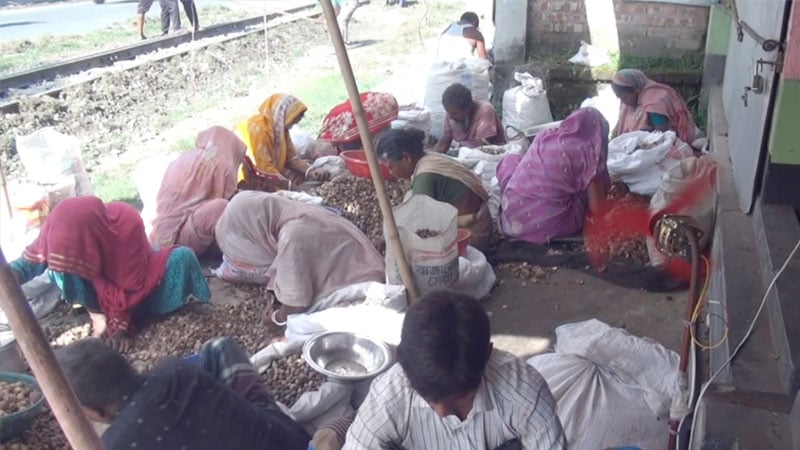
He said: "I use local unemployed and elderly people to pick the cotton from the field, which helps them meet their household costs well in this season. I sell straight from the field to mill owners in Jashore and elsewhere. Not just cotton: extra income is also possible by making oil and oil cake from the seeds."
Day labourer Lal Mia Hawladar said: "The flowers are bursting and the cotton is coming out. We have started picking. I have worked in this garden for several years. I plant the seeds and tend the field for a daily wage. For picking cotton I get Tk 30 a kg, and I can pick 20-25 kg a day. I am old now and nobody else takes me on for work. Because cotton is grown here, I can earn money."
Henara Begum said: "I have worked every year since cotton farming began in Gabkhan. I don't do the planting, only the picking. My husband is also a day labourer and it is very hard to run the household on his income. So I use the money I get from picking cotton for the household and my children's expenses."
S.M. Zakir Bin Alam, cotton development officer in Jashore, said: "The cotton from Gabkhan in Jhalokathi is bought and taken to a private factory in Jhikargachha, Jashore. There it is processed by machine and sold to various cotton mills. Cotton farming has created work for local marginal farmers in Jhalokathi. With a lot of fallow land in Jhalokathi, the area is suitable for cotton."
Source: Jagonews24. First published in Bengali on The Agro News.

Comments
(0)