
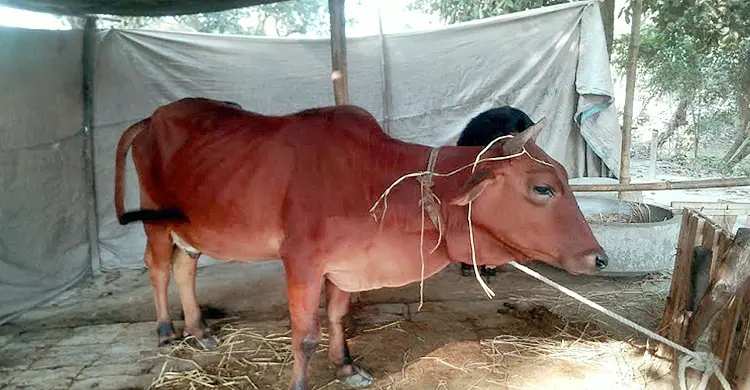
Foot-and-mouth disease has suddenly broken out on a large scale among cattle in the four upazilas of Jhalakathi district. Several thousand cattle on farms and belonging to farmers in villages across the district have been infected.
Calves and pregnant cows are at serious risk. However, no cattle have died so far, according to the district livestock office.
The district livestock office said farmers are advised to vaccinate every six months to protect against foot-and-mouth disease, a contagious viral disease. The source said guidance is also given on nursing infected animals back to health by normal methods.
Farmers and livestock keepers said the high cost of treating infected animals is causing them financial losses and leaving them at their wits' end.
Advice from officials
Jhalakathi Sadar upazila veterinary surgeon (acting livestock officer) Dr Md Sarowar Hasan said the disease had started because of weather conditions. "We are giving advice and support on treating the infected animals. Because foot-and-mouth disease is caused by a virus, there is no way to cure it instantly. Healthy cattle are also being given vaccine to protect them against the disease," he said.
He said foot-and-mouth disease is a highly acute, contagious viral disease. Infected animals develop sores in the mouth and on the feet, so they cannot eat and walk with a limp.
Because the disease is so contagious, when it appears in an area every animal there becomes infected. The virus can be carried by the wind to areas 60-70 km away. In rural areas, infected animals are often taken to distant markets to be sold, spreading the virus to different places and causing outbreaks. It can also spread through the clothes and shoes of the people who look after infected animals.
Jhalakathi district livestock officer Md Saheb Ali, an agriculturist, said anthrax, black quarter, haemorrhagic septicaemia and foot-and-mouth disease in cattle are contagious viral diseases, and the virus spreads from animal to animal through the air. "We are giving farmers and livestock keepers all possible advice and help," he said.
Vacant posts
Meanwhile, a shortage of doctors and other staff in the livestock department in Jhalakathi means treatment of livestock is limping along. With important posts in the livestock office vacant for a long time, several thousand ducks, chickens and cattle in the district are going without treatment.
Of 58 posts, 21 are vacant, and the office is running with 37 officers and staff. The district's four upazilas have three livestock officers, and there are two veterinary surgeons in place of five. Officers are struggling to carry out their normal work because of the shortfall.
According to the livestock office, the district has a government district livestock office, four upazila livestock offices, four artificial insemination centres and a duck rearing centre.
An average of 100-150 people used to come every day for services such as artificial insemination, treatment of goats' colds and coughs, and vaccines. Now, unable to get proper treatment, farmers are having to turn to village quacks.
The hospital also once gave free vaccines for ducks and chickens one day a week. That has now stopped, leaving ordinary people in difficulty, because on the market no vaccine for 20-25 ducks or chickens can be found for under Tk 1,000.
District livestock officer Md Saheb Ali said that with most posts vacant, staff are struggling to provide livestock treatment for a large population. Although senior authorities have been told about the staff shortage in writing more than once, it has been of no use, he said.
Source: Jagonews24. First published in Bengali on The Agro News.
Comments
(0)