
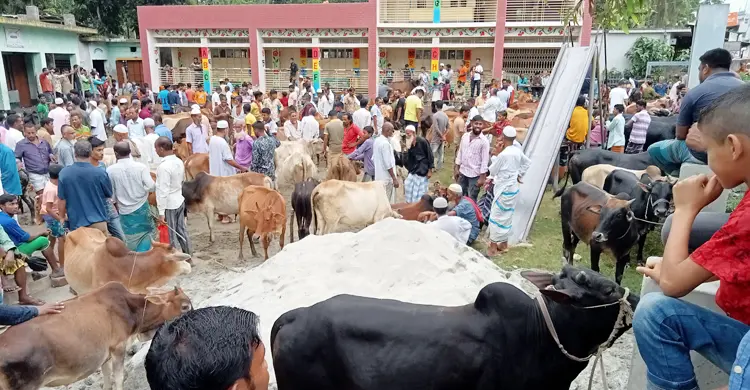
Sacrificial animals are arriving at haats across Jhalakathi ahead of Eid-ul-Azha. The haats are full of animals, but buyers are extremely few. Some who come walk around, check prices and leave.
The administration has approved 17 temporary qurbani cattle haats for this Eid. They are in addition to the 86 existing haats and bazaars in the district's four upazilas: seven in Rajapur upazila, the most, five in Jhalakathi Sadar, three in Nalchity and two in Kathalia.
Farmers are worried about imports of Indian cattle and about pox disease, and buyers of sacrificial animals are also concerned about both.
Costs and fears
Farm owners said that with feed, medicine and electricity prices up and labour wages higher, animal prices will be higher than last year. If Indian cattle are not imported, farmers will make a profit. But pox has appeared in cattle in many places, leaving farmers anxious.
According to the district livestock department, Jhalakathi's demand for sacrificial animals is 18,121, and 18,862 are ready.
Farmers said they are fattening the animals in home cowsheds or on family farms. Besides straw, many feed oil cake, wheat bran, maize meal, rice bran, mung bean husk and gram husk. Small and large family farms in the district have created jobs for many people, who hope to earn extra by selling the animals at Eid. But if Indian cattle are imported or pox strikes the animals, farmers will face heavy losses.
Waliur Rahman of Darakhan village in Sadar upazila said ten bulls, local and foreign, are being fattened on his family farm, with animals priced from Tk 80,000 to Tk 1 lakh 20 thousand.
Konkon Bepari of the Dumuria area in Sadar upazila said he has built a family farm with 12 cattle: four dairy cows, five cattle for sale at the sacrifice, and the rest not yet fit for sale. With cattle feed prices where they are, covering costs and making a profit is very hard, he said.
Sujon Sarkar, who runs a family farm, said cattle feed prices have gone up. "I worked hard for about a year to prepare cattle for the sacrifice. But the worry is that if Indian cattle enter the country, our prices will fall and we will not be able to sell at the prices we want. And pox has appeared on many people's animals. If an animal ready for sale at the sacrifice catches pox, all our effort, hope and plans will be finished."
Buyers wait
Buyer Shamsul Alam said he lives in town and has no space to keep cattle, yet every year he would buy a cow before the sacrifice and hire someone to look after it. "This year I hear about pox. If I buy early and the animal gets sick, it cannot be sacrificed and I will have to buy again. But I have not budgeted double."
Another buyer, Nurul Huda, said local cattle are in higher demand and so cost more than others. "If Indian cattle come, pressure on local cattle will ease and prices will fall. I am waiting for that."
District Livestock Officer Agriculturist Dr Md Saheb Ali told Jago News the department expects about 19,000 animals to be bought and sold in the district. Officials are visiting every farm in the four upazilas and providing advice and medicines, he said. "But we must make sure that Indian cattle do not enter the country illegally and push our farmers into losses."
Source: Jagonews24. First published in Bengali on The Agro News.

Comments
(0)