
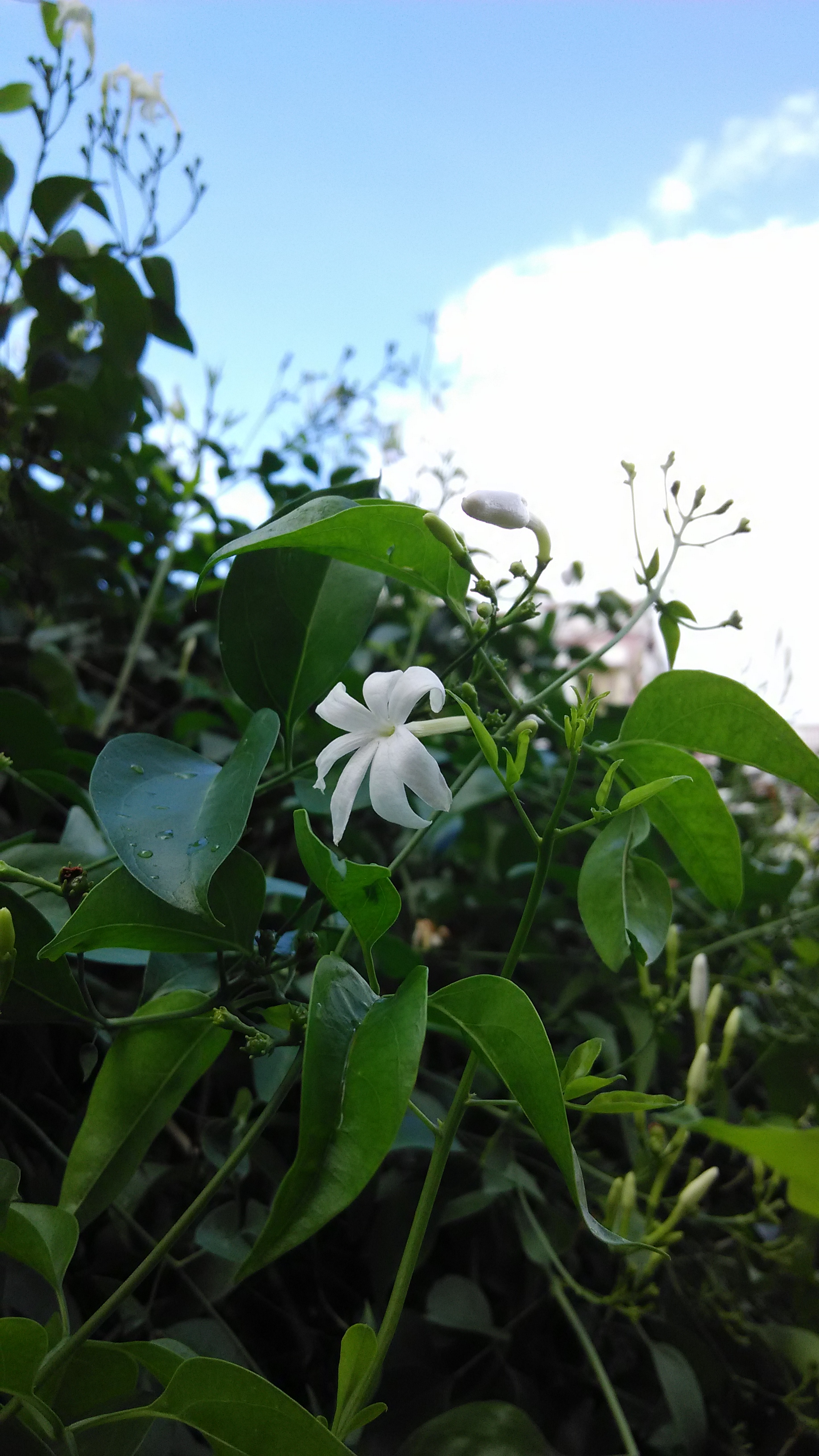
Jui, the sweet-scented jasmine Bengalis have long loved, is more than a garden flower. Steady year-round demand for garlands, flower decoration and offering trays for worship has turned it into a commercial crop in Bangladesh. In March 2025 The Agro News published a guide to growing it the easy way. Here that method is set out in full and checked against the cultivation guide of Tamil Nadu Agricultural University (TNAU) and botanical references.
What jui is
Jasmines belong to the genus Jasminum in the olive family, Oleaceae. The genus has around 200 species, native to tropical and warm temperate parts of Asia, Africa and Oceania, with its centre of diversity in South and Southeast Asia. The species known in South Asia as jui or juhi is Jasminum auriculatum. It is native to India, Nepal, Sri Lanka, Bhutan and the Andaman Islands, and the eFlora of India also records it in Bangladesh.
It is a twining, woody-stemmed shrub. The leaves are mostly simple and ovate, about 3 cm long, often with two small leaflets at the base; these "ears" give the species its name, auriculatum. The pure white, intensely fragrant flowers open in clusters, each about 16 mm across with usually five petals. Because the flowers contain an essential oil, the plant is grown commercially in India and Thailand. According to The Agro News, its scent is used in attar and to perfume soap, cream, oil and shampoo.
Soil, land preparation and planting
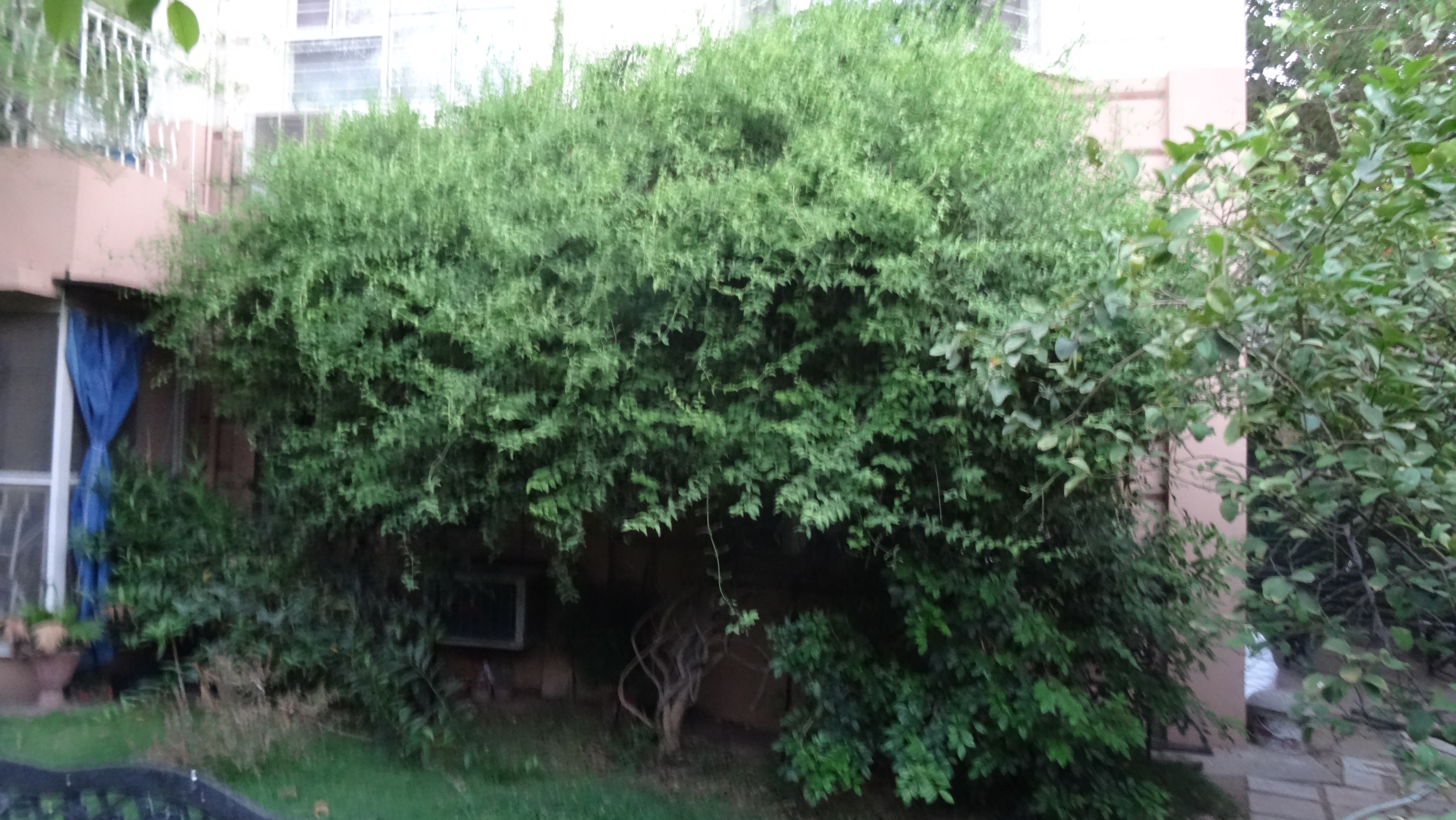
Jui grows in almost any soil, though gravelly ground is best avoided. It does best in well-drained sandy loam rich in organic matter; TNAU likewise recommends well-drained red and sandy loam soils under tropical conditions. Plants are raised from layers or from rooted semi-hardwood cuttings 15 to 20 cm long. The planting steps are:
- Clear the field of weeds with one or two initial ploughings.
- A month before planting, dig pits 30 cm long, 30 cm wide and 30 cm deep and leave them open to the sun.
- Mix about 10 kg of well-rotted cow dung with the soil of each pit and refill it.
- Plant between June and November.
- The Agro News recommended an average spacing of 1.8 by 1.8 metres; TNAU advises 1.5 by 1.5 metres, which fits about 4,400 plants per hectare.
Fertiliser, pruning and care
TNAU recommends 120 g of nitrogen, 240 g of phosphorus and 120 g of potash per plant per year, given in six split doses two months apart. It also advises 2 kg each of the biofertilisers Azospirillum and phosphobacteria per hectare, mixed with 100 kg of farmyard manure. To correct micronutrient shortages, the leaves can be sprayed with 0.25 per cent zinc sulphate and 0.5 per cent each of magnesium sulphate and ferrous sulphate.
Pruning keeps the bushes productive: cutting them back to about 45 cm above the ground in the last week of January encourages new shoots that carry more flowers. The main pests are the bud worm, red spider mites and leaf-eating caterpillars; when they appear, control measures should be taken on the advice of a local agricultural extension officer.
Picking, yield and market
According to TNAU, jui flowers from April to November. For garlands and the market, fully developed but unopened buds are picked in the early morning. The university's varieties include CO 1, CO 2 and Parimullai, and a well-managed crop yields about 10 tonnes of flowers per hectare. For the perfume industry, the concentrated extract, or concrete, recovered from the flowers amounts to 0.25 to 0.28 per cent of their weight.
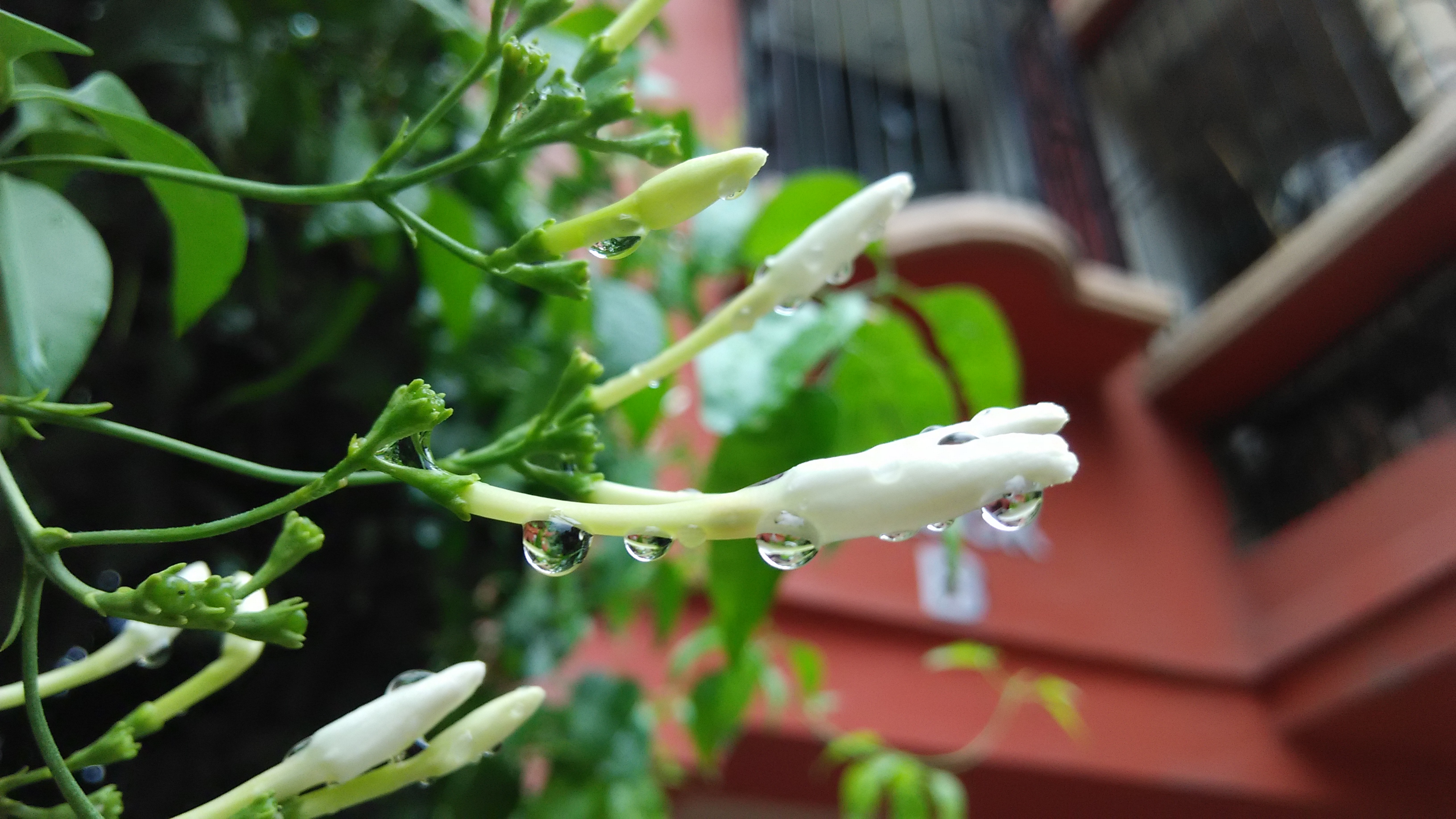
Strung garlands and bunches of jasmine are a familiar sight in South Asian flower markets. The Agro News reported that with demand all year round, farmers were earning well from selling jui, a crop that needs comparatively little labour.

Photo: Sumita Roy Dutta / Wikimedia Commons (CC BY-SA 4.0)
Sources: The Agro News (Staff Correspondent), Tamil Nadu Agricultural University (TNAU Agritech Portal: Mullai cultivation), eFlora of India, Wikipedia (Jasmine and Jasminum auriculatum)


Comments
(0)