
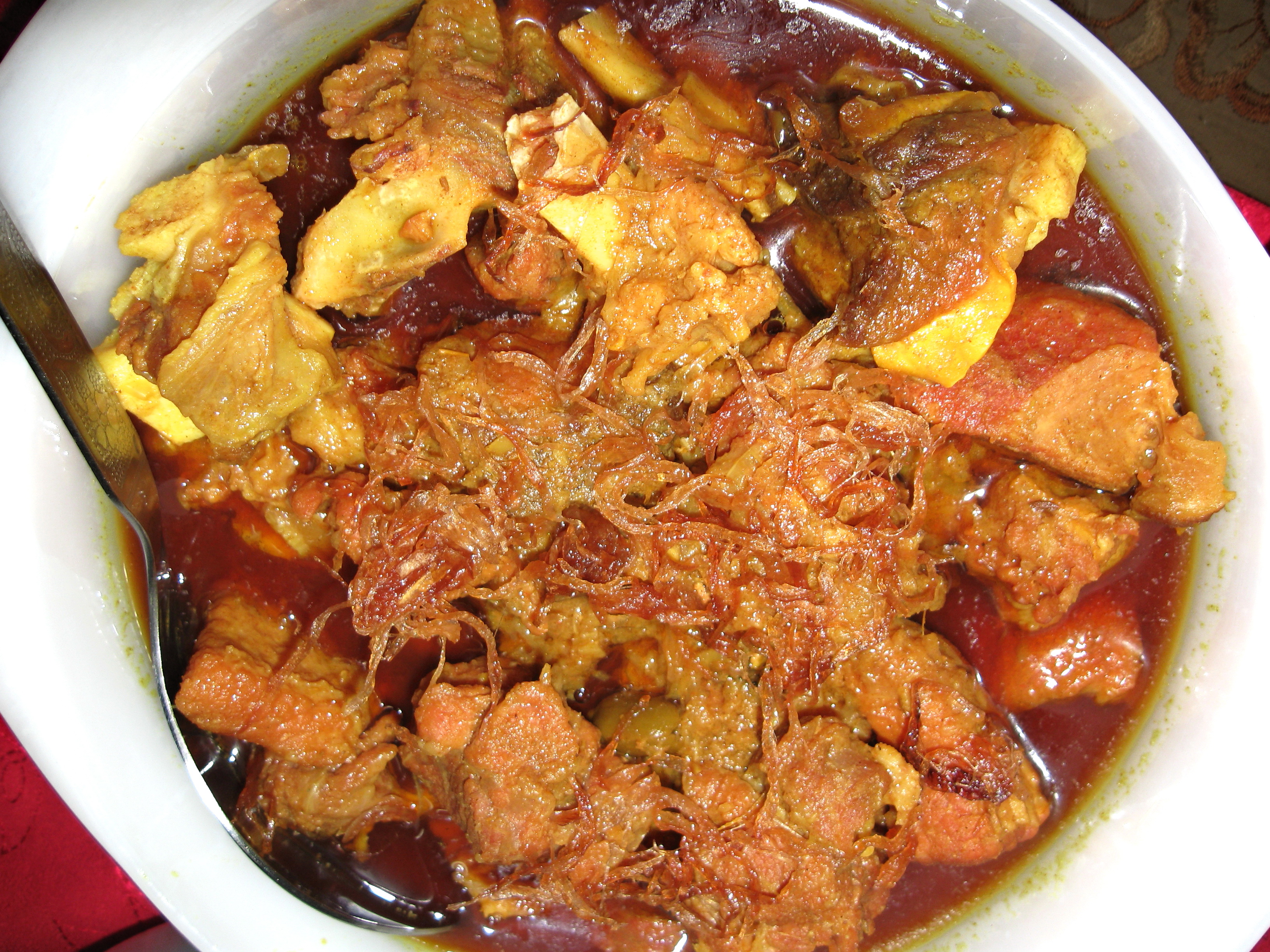
A 14-year-old boy died in Islampur upazila of Jamalpur district on Thursday, 28 May 2026, the day of Eid-ul-Azha, after a piece of sacrificial beef became stuck in his throat while he was eating with his family. The incident happened at around 3pm in the Nayapara area of Porarchar union, Jagonews24 reported that night. Family members rushed him to Islampur Upazila Health Complex, where the doctor on duty declared him dead. The news site Dhaka Post also reported the death on the same day.
How the death happened on Eid day
According to local people and the boy's family, as quoted by Jagonews24, the household had performed its sacrifice at midday on Eid-ul-Azha. Afterwards the boy sat down to eat with other members of the family. Part of the way through the meal a piece of beef suddenly lodged in his throat. He began to struggle for breath and became distressed.
Family members picked him up and took him quickly to Islampur Upazila Health Complex. When he was brought in, the doctor on duty declared him dead.
The death was confirmed at around 9pm by Dr Abu Taher, the upazila health and family planning officer at Islampur Upazila Health Complex. He told Jagonews24 that the boy had died before he was brought to the hospital, and that it was initially thought he had died of suffocation after the meat became stuck in his throat. The report gave no other medical findings.
The boy was a Class Six student at a local lower secondary school and lived with his family in Porarchar Nayapara. In keeping with The Agro News's policy on reporting the deaths of children, this report does not name him or his family.
Islampur, a river upazila of Jamalpur
Islampur is one of the seven upazilas of Jamalpur district. Banglapedia, the national encyclopedia published by the Asiatic Society of Bangladesh, gives its area as 353.31 square kilometres and records a population of 298,429 at the 2011 census. It is bounded by Dewanganj and Bakshiganj upazilas to the north, Madarganj and Melandaha to the south, Sherpur Sadar and Sreebardi to the east, and Saghata, Fulchhari and Sariakandi upazilas to the west, across the Jamuna.
Rivers shape the upazila. Banglapedia names the Jamuna, the Old Brahmaputra and the Bangali as its main rivers, and lists a string of beels, among them Bamna Beel, Bakar Beel, Shingbhanga Beel and Hasal Beel, together with the Katakhali and Dashani canals. Islampur thana was formed in 1914 and became an upazila in 1983. The encyclopedia records the belief that the place is named after Islam Khan, the Subedar of Bengal under Emperor Jahangir, who is said to have lived in the region for some time.
Most families in Islampur live from the land. Banglapedia puts agriculture as the main source of income for 68.83 per cent of households, followed by commerce at 10.69 per cent. Its main crops are paddy, jute, wheat, mustard, sugarcane, potato, pulses, brinjal and other vegetables, and mango, jackfruit, coconut, papaya and banana are the main fruits. The upazila also has a number of fisheries, dairies and poultry farms. Among its cottage industries are weaving, goldsmithing, blacksmithing, brass work, pottery and bamboo and cane work; Dharmakura, Guthail and Islampur are its best-known markets.

Jamalpur district as a whole covers 2,115.16 square kilometres and had a population of 2,292,674 at the 2011 census, according to Banglapedia. The district was established in 1978. It borders the Indian state of Meghalaya to the north, Kurigram and Sherpur districts to the north and east, Mymensingh to the east and Tangail to the south, while the Jamuna separates it from Bogra, Sirajganj and Gaibandha to the west. Its main rivers are the Jamuna, the Old Brahmaputra, the Banar and the Jhinai.
For health care, Banglapedia lists one upazila health complex in Islampur, along with 12 family planning centres, three satellite clinics, six clinics and 40 community clinics. Dr Abu Taher, who confirmed this death, is the upazila health and family planning officer at the upazila health complex.
Eid-ul-Azha and the sacrificial animals of 2026
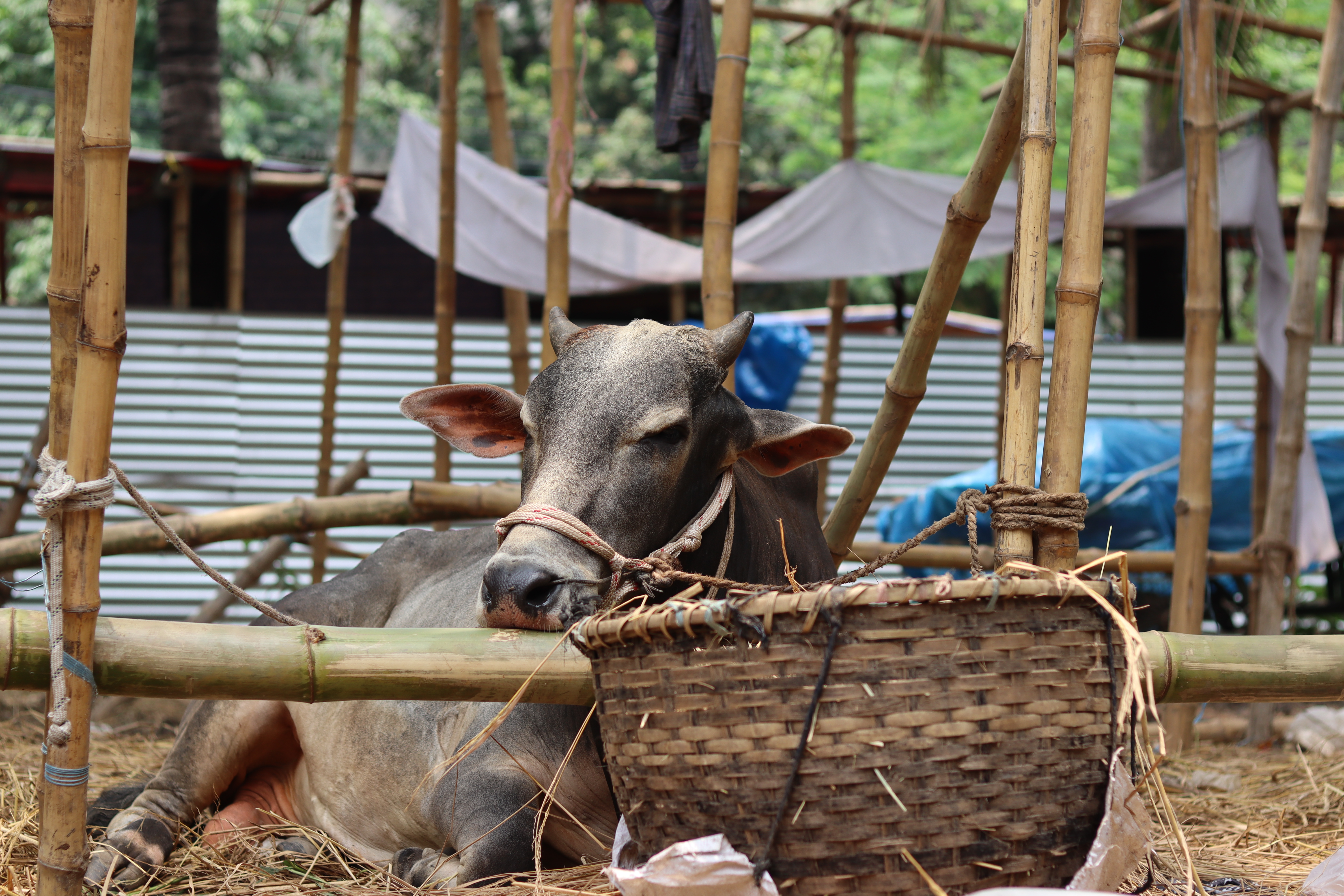
Eid-ul-Azha is one of the two main Muslim religious festivals. Banglapedia notes that in Bangladesh it is popularly called Kurbanir Eid or Bakra Eid, and that the Arabic words Eid and Azha mean festival and sacrifice. It falls on the tenth day of the month of Dhul Hijjah. The sacrifice begins after the Eid prayer and may continue until sunset on the following two or, according to some, three days. Cows, goats and buffaloes are the animals usually sacrificed in Bangladesh, and some people also bring in camels. By custom, Banglapedia says, one third of the meat is kept by the family that offers the sacrifice, one third goes to relatives and the rest is given to the poor, so that sacrificial meat is shared and eaten in very many homes on the day itself.
On 18 May 2026, after the moon of Zilhajj was sighted, it was announced that Bangladesh would celebrate Eid-ul-Azha on 28 May, The Daily Star and the state news agency BSS reported. The day of this death in Islampur was therefore the first day of Eid, when families across the country were slaughtering animals and cooking the meat.
The scale of the sacrifice is large. On 3 May 2026 the fisheries and livestock minister told a press conference at the secretariat that, according to the latest data from the Department of Livestock Services (DLS), 1,23,33,840 animals were ready in the country for sacrifice that year, against a projected demand of 10,106,334, which would leave about 22,27,506 animals surplus, Dhaka Tribune reported. The animals available included 56,95,878 cattle and buffaloes and 66,32,307 goats and sheep, along with 5,655 animals of other species such as camels and dumba, the fat-tailed sheep.
The minister compared this with the previous Eid. In 2025, he said, 1,24,47,337 sacrificial animals had been available, and actual figures showed that 91,36,734 animals were sacrificed.
What choking is and why meat is a known danger
MedlinePlus, the consumer health service of the United States National Library of Medicine, defines choking as a person having a very hard time breathing because food, a toy or another object is blocking the throat or the windpipe, which doctors call the airway. When the airway is blocked, not enough oxygen reaches the lungs. MedlinePlus warns that without oxygen, brain damage can occur in as little as four minutes, and that rapid first aid for choking can save a life.
Among the causes MedlinePlus lists are eating too fast, not chewing food well, and eating with dentures that do not fit; chunks of food and sticky foods; drinking alcohol; and swallowing problems after a stroke or because of disease of the throat or the food pipe.
Pieces of meat are a well-documented hazard. Forensic doctors use the terms "bolus death" or "café coronary" for death caused when the entrance to the larynx, the voice box at the top of the windpipe, is blocked by a foreign body, in most cases an unchewed piece of food such as meat, sausage or fruit. A study published in 2016 in the Journal of Forensic and Legal Medicine by researchers at the institutes of legal medicine in Rostock and Munich, Germany, reviewed 31,647 autopsies and identified 59 such deaths, all of them in adults aged 26 to 89. In 86 per cent of the cases the bolus was meat, sausage or a meat-like chunk. The authors noted that children, people who have drunk alcohol, people with brain damage and people with poor teeth belong to the group at risk.
An earlier study from the Institute of Legal Medicine in Düsseldorf, published in the journal Dysphagia in 1992, found 78 bolus deaths among 12,982 forensic autopsies carried out between 1947 and 1988. In every case the food blocked the entry to the larynx, and the most common bolus was meat or a meat product that had not been chewed. In 45 of the cases the event was seen by other people, and the authors wrote that this justified the hope that many lives could have been saved with the right diagnosis and immediate treatment.
Choking among children and teenagers
Choking is a recognised cause of death in children, though the youngest are at greatest risk. In a 2010 policy statement in the journal Pediatrics, the American Academy of Pediatrics called choking a leading cause of illness and death among children, especially those aged three years or younger, and named food, coins and toys as the primary causes. It said the shape, size and consistency of certain foods increase their potential to cause choking, and asked doctors and other child health workers to give parents advice on preventing it.
Hospital studies point the same way. The European ESFBI study, which examined hospital records from 19 European countries for 2000 to 2002, found that foreign bodies lodged in children's airways were more common in boys, at 63 per cent of cases, and that the most common objects were nuts, seeds, berries, corn and beans. A review at Jordan University Hospital of children treated for inhaled foreign bodies between 1999 and 2014 counted 103 children, 27 of whom died; most were boys under three, and most of the objects were food.
Deaths among older children are rarer but do occur, and they usually involve healthy children and ordinary food. A review of autopsies at Great Ormond Street Hospital for Children in London, published in 2014, covered children aged from seven days to 18 years over 16 years. It identified ten deaths from inhaled foreign bodies among 2,165 autopsies; all but one involved food, and only one child had an underlying condition that might have contributed. The authors concluded that fatal aspiration is rare and that the cases involve normal children who inhale food.
How to recognise a person who is choking
MedlinePlus advises that an older child or adult who is choking will often grab the throat with a hand. If the person does not do this, it lists these danger signs:
- inability to speak
- difficulty breathing
- noisy breathing or high-pitched sounds while breathing in
- weak, ineffective coughing
- bluish skin colour
- loss of consciousness if the blockage is not cleared
The first step, according to MedlinePlus, is to ask: "Are you choking? Can you speak?" If the person is coughing forcefully and can speak, first aid should not be given, because a strong cough can dislodge the object; the person should be encouraged to keep coughing, while those nearby stay ready to act at once if the symptoms get worse.
First aid for choking, as health authorities describe it
If the person cannot speak or is having a hard time breathing, MedlinePlus says helpers need to act fast. Someone should be told to call the local emergency number at once, and the person should be taken to a hospital. The method it describes for adults and for children over one year who are still conscious is repeated cycles of five back blows followed by five abdominal thrusts, until the object comes out or the person becomes unconscious. The American Heart Association and the American Academy of Pediatrics gave the same sequence for children with severe airway obstruction in their 2025 guidelines: repeated cycles of five back blows alternating with five abdominal thrusts. For infants under one year the guidelines replace abdominal thrusts with chest thrusts.
MedlinePlus describes the back blows in these steps:
- Stand behind the person; for a child, you may have to kneel.
- Wrap one arm around to support the person's upper body, and lean the person forward until the chest is about parallel to the ground.
- With the heel of the other hand, give a firm blow between the person's shoulder blades.
- Check whether the object has come out, and continue until five back blows have been given.
It describes the abdominal thrusts, also called the Heimlich manoeuvre, as follows:
- Stand behind the person and wrap your arms around the waist; for a child, you may have to kneel.
- Make a fist with one hand and place the thumb side just above the navel, well below the breastbone.
- Grasp the fist tightly with the other hand and make a quick, upward and inward thrust.
- Check whether the object has come out, and continue until five abdominal thrusts have been given.
For pregnant women and people who are obese, MedlinePlus advises chest thrusts instead of abdominal thrusts: the arms go around the chest, the fist is placed on the middle of the breastbone, and firm backward thrusts are given. The rounds continue until the object comes out or the person loses consciousness.
If the person faints, MedlinePlus says to shout for help and have someone call the emergency number, lay the person carefully on a firm, flat surface and begin cardiopulmonary resuscitation (CPR), checking the mouth for the object before giving breaths, because chest compressions may help dislodge it. A loose object that can be seen may be removed, but an object lodged in the throat should not be grasped, as this can push it farther into the airway. CPR and checks of the mouth should continue until medical help arrives or the person starts breathing again. MedlinePlus also warns against forcing open the mouth of a conscious person to pull out the object, and against interfering while the person can cough forcefully, speak, or breathe in and out adequately.
After the object comes out, and how choking can be prevented
Even when the blockage clears, MedlinePlus says the person should be kept still and should get medical help, because complications can follow both the choking and the first aid itself. In the days after a choking episode, a doctor should be contacted at once if the person develops a cough that does not go away, fever, difficulty swallowing or speaking, shortness of breath or wheezing. These signs may mean that the object went into the lung instead of being expelled, or that the voice box was injured.
For prevention, MedlinePlus advises:
- eating slowly and chewing food thoroughly
- cutting large pieces of food into sizes that are easy to chew
- discouraging talking, laughing or playing while there is food in the mouth
- making sure dentures fit properly
- not drinking too much alcohol before or during a meal
- keeping small objects away from young children
Anyone who has been choking should see a doctor, and in an emergency the person should be taken without delay to the nearest hospital, such as the upazila health complex.
Photo: Mohammed Tawsif Salam / Wikimedia Commons (CC BY-SA 3.0)
Sources: Jagonews24, Dhaka Post, Banglapedia (Asiatic Society of Bangladesh), Dhaka Tribune, The Daily Star, BSS, MedlinePlus (US National Library of Medicine), American Heart Association and American Academy of Pediatrics (Circulation, 2025), Pediatrics (2010), Journal of Forensic and Legal Medicine (2016), Dysphagia (1992), European Archives of Oto-Rhino-Laryngology (2008), International Journal of Pediatric Otorhinolaryngology (2017), Fetal and Pediatric Pathology (2014)


Comments
(0)