
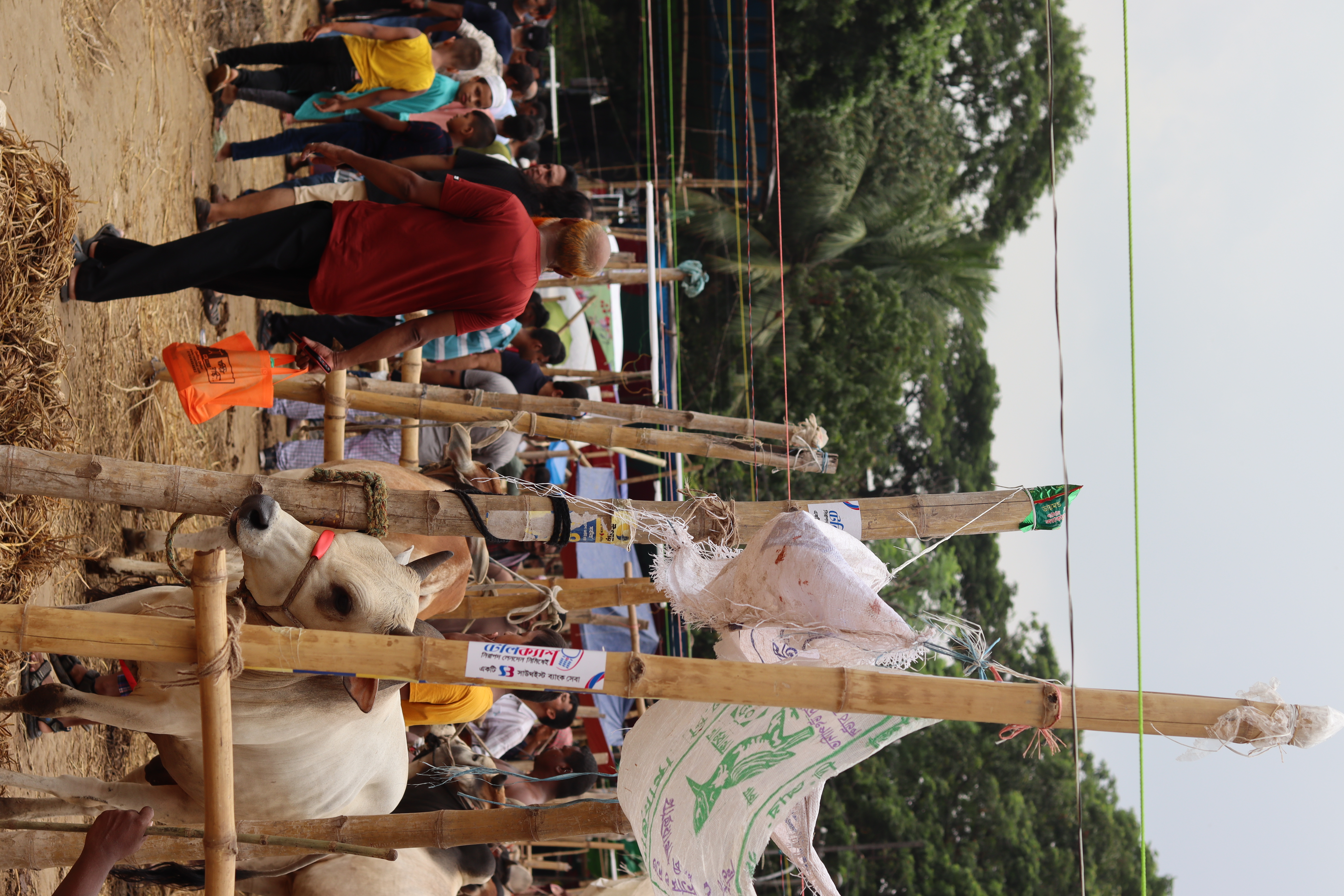
A buffalo brought for sale at the Sanandabari sacrificial animal market in Dewanganj upazila of Jamalpur suddenly became agitated on Sunday, 24 May 2026, broke out of control and ran through the market, goring people in its path. At least six people were injured. One of them died that day on the way to hospital, and a second died the next day, Monday 25 May, while under treatment at Jamalpur General Hospital. Police at Dewanganj Model Police Station confirmed the two deaths. The incident took place four days before Eid al-Adha, when cattle markets across Bangladesh, Jamalpur included, were busy with sacrificial animal trading. Jagonews24 published its report on the morning of 26 May.
What happened at Sanandabari market
Citing police and local sources, Jagonews24 reported that the incident took place at the Sanandabari market in the upazila's Char Amkhawa union. A man from the nearby village of Akandapara had brought several buffaloes to the market that day to sell. After it arrived, one of the buffaloes suddenly became agitated and went out of control. It then began running around the market and goring the people in front of it.
Jamalpur News, a local online outlet, reported in the early hours of 25 May that the Sanandabari market sits every Sunday and that the incident happened on Sunday evening. Quoting local people, it wrote that the buffalo began behaving abnormally soon after it was brought in, ran through the market and charged at people. The Daily Ittefaq gave the same account, also citing local people, on the night of 25 May.
People at the market ran in panic to escape the animal. By Jagonews24's count at least six people were injured. Jamalpur News, in its first report, quoted the chairman of Char Amkhawa union parishad, Md Ziaul Islam, as saying that at least seven people had been hurt and that one of them had died. Those with lighter injuries were given first aid, the outlet said.
The two deaths: who, and where
One of the two men who died was Ruhul Amin, a resident of Karaidangipara village in Jauniar, in Rajibpur upazila of neighbouring Kurigram district. He had come to the market and was seriously injured in the buffalo's attack. He died on the way to hospital.
The other was Mojibur Rahman, son of the late Nur Mohammad of Char Madar village in the Sanandabari area. Seriously injured, he was first taken to Dewanganj Upazila Health Complex. According to Ittefaq, the doctor on duty there referred him to Jamalpur General Hospital for better treatment. Jagonews24 reported that he was sent there as his condition worsened and that he died while under treatment on Monday, 25 May.
The reports differ slightly on the time of his death. Jagonews24 gives Monday night in its opening and Monday evening further down; Ittefaq and Jamalpur News say Monday afternoon. Jamalpur News's first report said he had been sent to Jamalpur Medical College Hospital, but its later report and the other reports name the hospital as Jamalpur General Hospital.
What the police said
Anwar Hossain, officer-in-charge (OC) of Dewanganj Model Police Station, told Jagonews24 that Mojibur Rahman, injured when the buffalo suddenly gored him, had died while under treatment, and that two people had so far lost their lives in the incident. He added that no one had filed a complaint with the police.
On Sunday night the OC, Md Anwar Hossain, had told Jamalpur News that the buffalo suddenly began behaving as if it had gone mad and that one person had died in its attack. After the second death he told Ittefaq that with Mojibur Rahman's death the toll from the buffalo's attack had risen to two.
The reports published up to the morning of 26 May give no explanation of why the buffalo suddenly became agitated. None of them carries a statement from the animal's owner or from the people running the market. According to the police, no party had filed a complaint by then.
Dewanganj and the Sanandabari market
Dewanganj is an upazila on the northern edge of Jamalpur district in Mymensingh division. According to Banglapedia it covers 267.51 square kilometres. It borders Char Rajibpur upazila of Kurigram to the north, Islampur to the south, Bakshiganj upazila and the Indian state of Meghalaya to the east, and Gaibandha Sadar and Fulchhari upazilas to the west. Its main rivers are the Brahmaputra, the Old Brahmaputra, the Jamuna and the Jinjiram. Dewanganj thana was formed in 1874 and became an upazila in 1983.
According to the 2022 census figures cited by Wikipedia, Dewanganj had a population of 288,166 in 62,687 households. It has one municipality and eight unions: Bahadurabad, Char Amkhawa, Chikajani, Chukaibari, Dangdhara, Dewanganj, Hatebhanga and Par Ramrampur. The railway from Narayanganj to Bahadurabad Ghat runs through the upazila. Wikipedia records that the area was once called Paddat Nagar, and that it was under Rangpur district in 1772, moved to Bogura in 1821 and to Mymensingh in 1866.
Most people here live from farming. Banglapedia puts agriculture as the main source of income for 68.49 percent of the upazila's people, and commerce for 9.07 percent. The main crops are paddy, jute, wheat, mustard, sugarcane, potato, gram, lentil and vegetables, and jute, rice, mustard and potato are sent out of the area. The upazila also has a cattle breeding centre.
Banglapedia counts 16 hats and bazars and two fairs in Dewanganj. Sanandabari Hat heads its list of the most noted ones, followed by Char Magurihat, Beltali Bazar, Zhalur Char Bazar and the Dewanganj Mela. Sanandabari High School, in the same area, was founded in 1967. Char Amkhawa union, where the market stands, is shown in Banglapedia as covering 8,848 acres, with 19,146 men and 20,481 women in the census figures.
For health care the upazila has one upazila health complex, two satellite clinics, eight family planning centres and 29 community clinics, Banglapedia says. One of the men seriously injured at Sanandabari was taken first to that health complex and then to the hospital in the district town.
Rajibpur, a char upazila ringed by the Brahmaputra
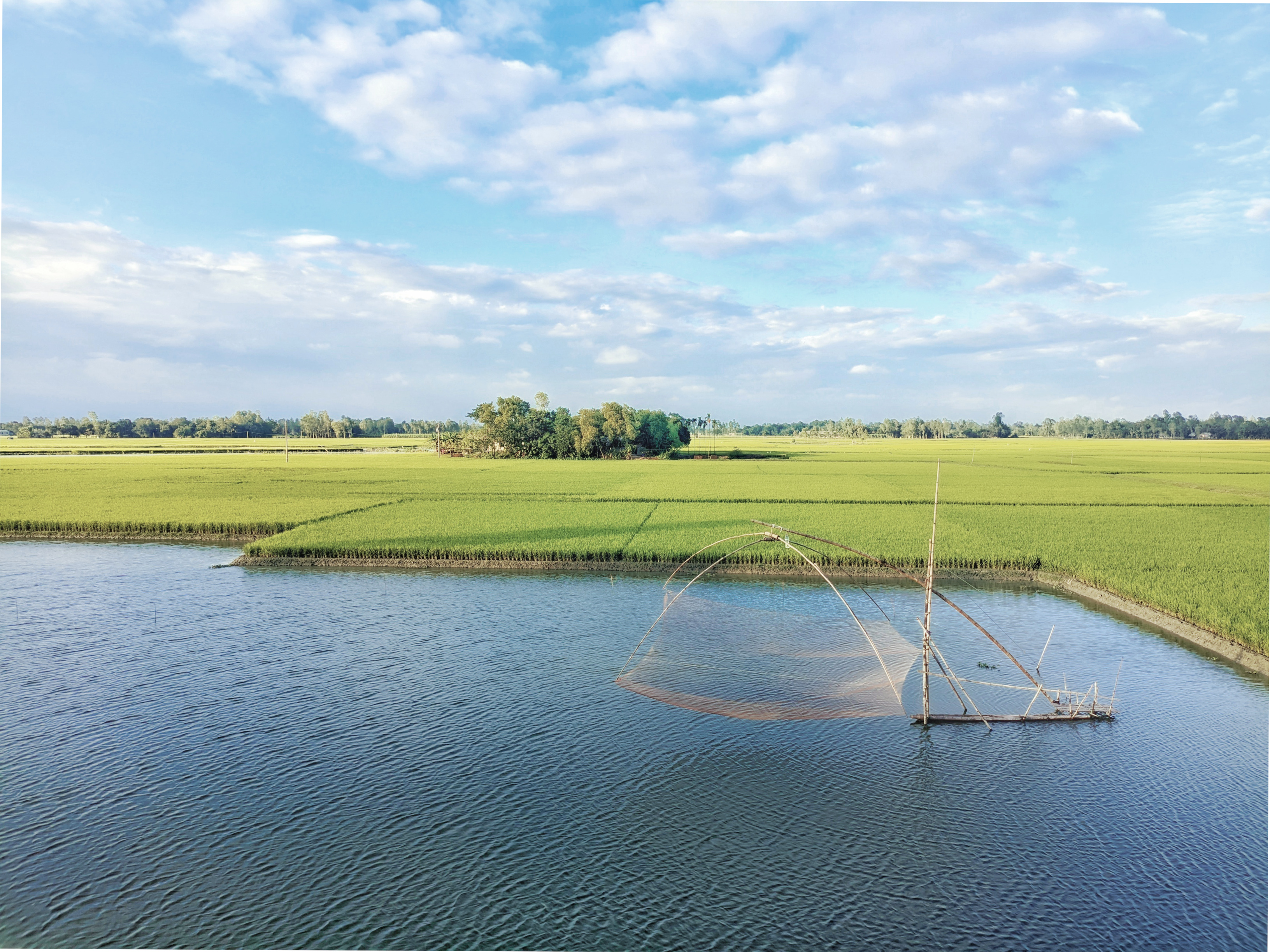
Ruhul Amin came from Char Rajibpur upazila in Kurigram district, which lies directly north of Dewanganj. Banglapedia gives its area as 111.03 square kilometres and its population at the 2011 census as 73,373. The Indian state of Assam lies to its east, and the Brahmaputra runs along its northern, southern and western sides. Its main rivers are the Brahmaputra, the Halhali and the Jinjiram. Char Rajibpur thana was formed in 1977 and became an upazila on 1 August 1983. It has three unions: Kodailkati, Char Rajibpur and Mohanganj.
Agriculture is the main source of income for 77.76 percent of Rajibpur's people. The main crops are paddy, jute, mustard, black gram, groundnut, china millet and kaun (foxtail millet). Banglapedia's list of the upazila's extinct or nearly extinct traditional transport includes, besides the palanquin, bullock, buffalo and horse carriages, a sign that buffalo carts once ran on these chars.
Kurigram is a district of Rangpur division. On 7 May 2026 the state news agency BSS, citing the divisional livestock office, reported that the demand for sacrificial animals in Rangpur division that year was 1,406,657, against 2,023,067 animals prepared, leaving a surplus of 556,410. Kurigram alone had 336,919 animals ready against a demand of 261,246. The report said the division's eight districts had about 21,000 farms, large and small, and that about 250,000 farmers had prepared around 850,000 cattle for commercial sale. Farmers said the surplus would be sent to other parts of the country after local demand was met.
Jamalpur district and its sacrificial animals this year
According to Banglapedia, Jamalpur district covers 2,115.16 square kilometres and had a population of 2,292,674 at the 2011 census. The district was set up in 1978. Its seven upazilas are Jamalpur Sadar, Islampur, Dewanganj, Bakshiganj, Madarganj, Melandaha and Sarishabari. The main rivers are the Jamuna, the Old Brahmaputra, the Banar and the Jhinai. Agriculture is the main source of income for 65.50 percent of the people. In describing the district's folk culture, Banglapedia mentions bull fights, horse races, lathi khela (stick fighting) and boat races on the Jamuna in the rainy season.
About two weeks before Eid, on 16 May, the Daily Ittefaq reported, citing the district livestock office, that about 12,000 farmers in Jamalpur had 107,065 animals ready for sacrifice, against a district demand of about 82,000. Some 25,000 surplus animals were expected to be sold in Dhaka and other parts of the country.
The report said farmers had spent months fattening their animals on local feed such as straw, grass, bran and maize. A surplus of animals reassured them, but the higher price of cattle feed had them worried about profits. Online sales were growing alongside the markets: one farmer told Ittefaq that cattle were being sold by weight, at Tk 500 to Tk 550 a kilogram, with photographs, videos and the animal's weight posted online.
Dr ATM Habibur Rahman, Jamalpur's additional district livestock officer, told Ittefaq at the time that small farmers were also now profiting from rearing large cattle, that the livestock department was keeping in regular touch with farmers and advising them, and that various cattle markets in the district had been made ready.
Nationwide preparations and the date of Eid
At a press conference at the Secretariat on 3 May 2026, Amin Ur Rashid Yasin, minister for agriculture, fisheries and livestock and food, citing Department of Livestock Services figures, said 12,333,840 animals were ready for sacrifice across the country against an estimated demand of 10,106,334, leaving a likely surplus of about 2,227,506. Of the animals ready, about 5,695,878 were cattle and buffalo, 6,632,307 goats and sheep, and 5,655 camels, dumbas and other animals (Bangla Tribune).
The minister also said that at the previous year's Eid al-Adha about 9,136,734 animals had been sacrificed and more than 3.3 million had gone unsold. The government said domestic production could meet the full demand, so no animals would need to be imported, and that the administration had been told to make sure there were no obstacles to moving animals around the country.
On the evening of 18 May, after meeting at the Islamic Foundation's conference room at Baitul Mukarram, the National Moon Sighting Committee announced that the crescent of Dhul Hijjah had been sighted, so Eid al-Adha would be celebrated across the country on Thursday, 28 May. Eid al-Adha commemorates the sacrifice of the Prophet Ibrahim (peace be upon him), his wife Hajera and their son Ismail; Muslims sacrifice animals at this time seeking closeness to Allah. The Sanandabari incident happened at the last Sunday market before Eid.
Buffaloes in Bangladesh: numbers and uses
Buffaloes are far fewer than other livestock in Bangladesh. Answering a question in parliament on 1 February 2023, the then fisheries and livestock minister, SM Rezaul Karim, citing the Bangladesh Economic Review and Department of Livestock Services data, said the country had 24.7 million cattle, 26.774 million goats and 1.508 million buffaloes (Prothom Alo).
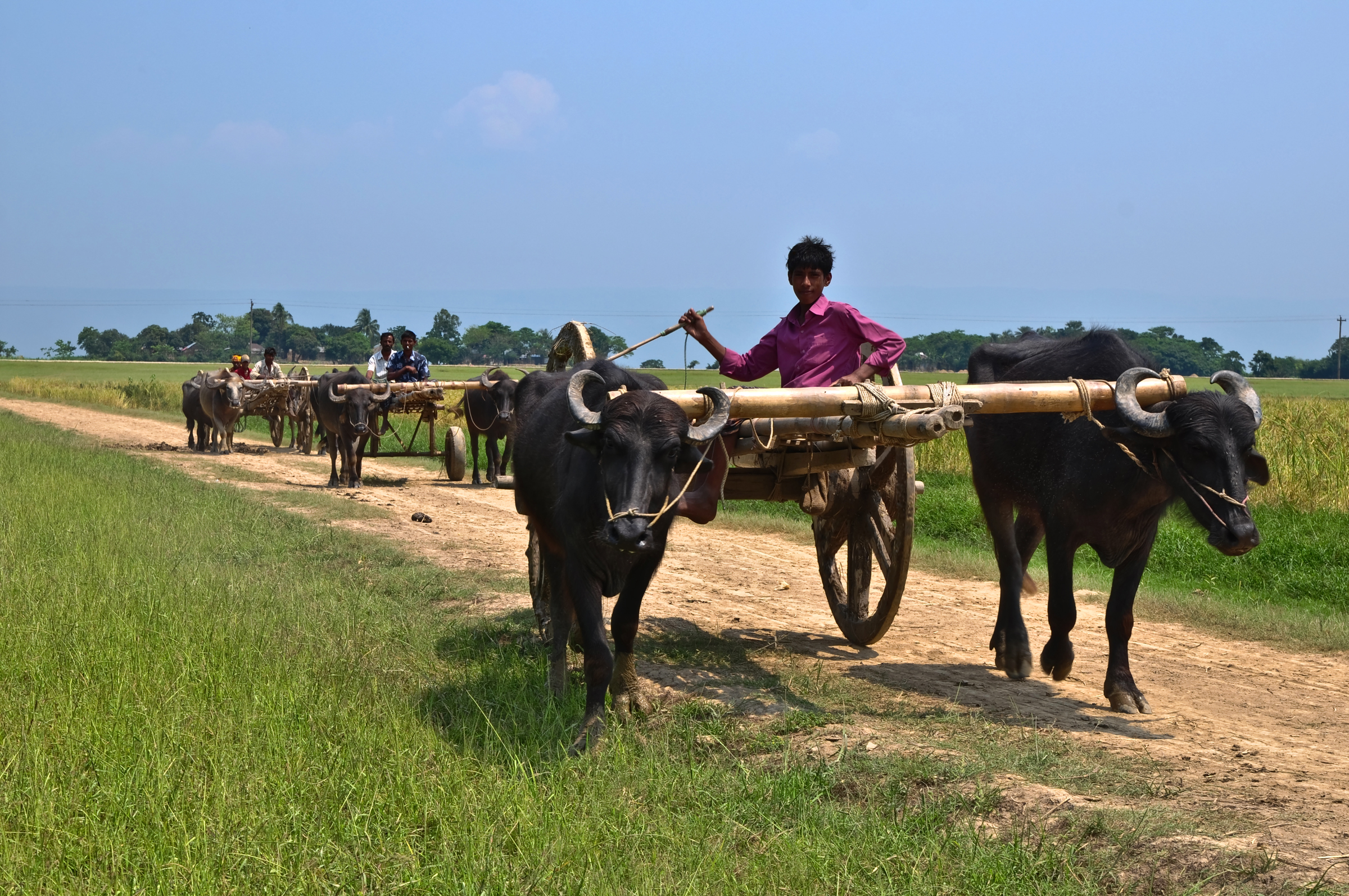
Banglapedia describes buffaloes mainly as draught animals used for ploughing and pulling carts. It says Bangladesh, unlike India and Pakistan, has no important breed of buffalo, and that the shortage of green grass is the main limit on rearing them, since each animal needs a large amount of fodder every day.
At a scientific conference of the Bangladesh Buffalo Association at the buffalo breeding and development farm in Savar on 8 October 2025, the then fisheries and livestock adviser, Farida Akhtar, said that buffaloes were an important national resource that had long been neglected. In her view the importance of buffaloes in the livestock sector had not been properly recognised, and the shortage of grazing land and neglect were causing their numbers to fall. She said buffalo curd had already been recognised as one of Bangladesh's geographical indication (GI) products, and that cheese and other products could also be made from buffalo milk (Khobor Sangjog).
Buffaloes for sacrifice are reared mostly in char and coastal areas. For example, figures from the Patuakhali district livestock office published by BSS on 5 May 2026 listed, among the animals ready for sacrifice, 559 buffaloes in Galachipa upazila, 556 in Dashmina, 355 in Sadar upazila and 322 in Bauphal. A buffalo farmer from Char Kalaiya village there told BSS that demand for buffaloes rises at the time of Qurbani.
What kind of animal the buffalo is
The domestic buffalo is known in English as the water buffalo. Wikipedia describes two types: the river buffalo, found from the Indian subcontinent west to the Balkans, Egypt and Italy, and the swamp buffalo, found from Assam through Southeast Asia to China's Yangtze valley. The river buffalo has 50 chromosomes and the swamp buffalo 48.
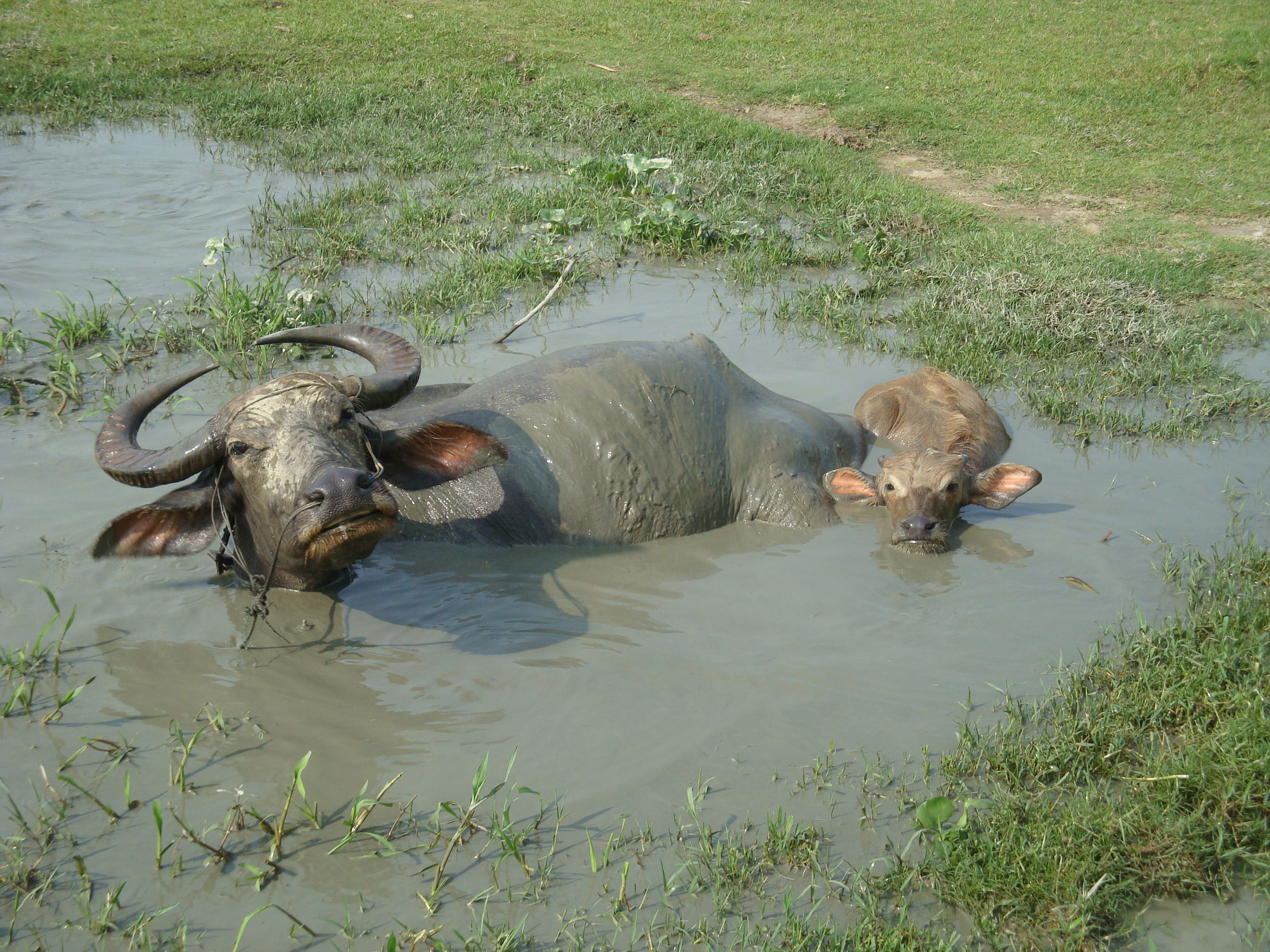
Adult buffaloes usually weigh 300 to 550 kilograms, though animals of more than 1,000 kilograms have been recorded. The river buffalo's horns grow downward and backward and then curve upward in a spiral; the swamp buffalo's horns grow outward and curve in a semicircle. Buffaloes need wallows, rivers or splashing water to regulate their body temperature, and swamp buffaloes like to wallow in mudholes.
The river buffalo is thought to have been domesticated in western India about 6,300 years ago, and the swamp buffalo between 3,000 and 7,000 years ago. Wikipedia cites an estimated world population of 208 million domestic buffaloes in 77 countries on five continents. The same article lists Bangladesh's buffalo milk production in 2020 as 35,790 tonnes.
What official guidance says about the risks of handling large livestock
In 2012 the UK's workplace safety regulator, the Health and Safety Executive (HSE), published an information sheet for farmers on handling cattle. It says that handling cattle always involves a risk of injury from crushing, kicking, butting or goring. Every year there are deaths and injuries to farmers and other workers while handling cattle, it says, often caused by poor equipment, ineffective methods of moving cattle and an underestimation of the strength, speed or behaviour of the animals.
The risk increases with animals that have not been handled frequently, according to the HSE. Its guidance asks handlers to work calmly with cattle, with a minimum of shouting, impatience or unnecessary force. It says makeshift gates and hurdles are not sufficient, and that the risk from cattle should never be underestimated, even with good precautions in place. The HSE also notes that many incidents involving cattle happen to people beyond normal retirement age, when they are less agile.
The guidance was written for farms in the United Kingdom, not for open livestock markets in Bangladesh. The published reports on the Sanandabari incident give no information on how animals were tied or kept apart at the market.
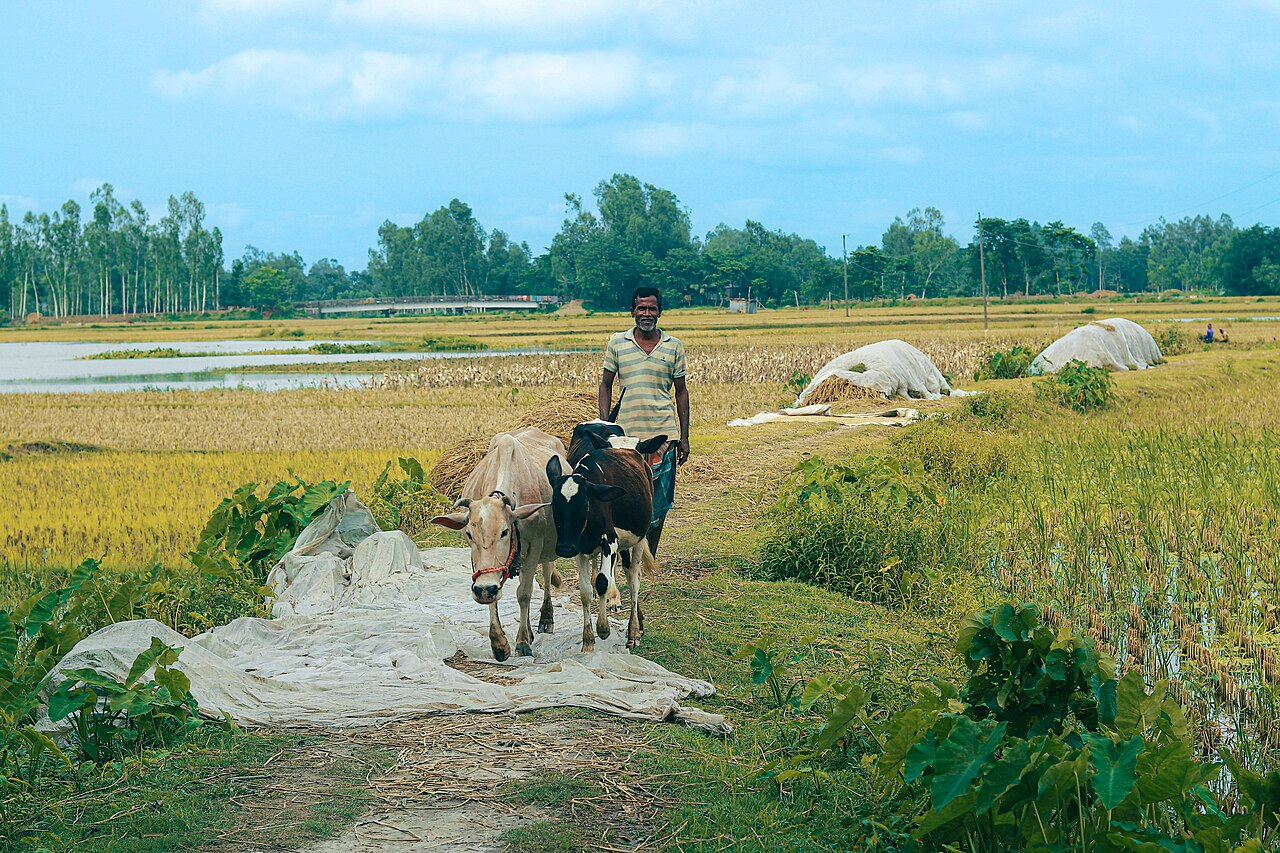
Photo: Wasiul Bahar / Wikimedia Commons (CC BY-SA 4.0)
Sources: Jagonews24, The Daily Ittefaq, Jamalpur News, Bangla Tribune, BSS, Prothom Alo, Khobor Sangjog, Banglapedia, Wikipedia, UK Health and Safety Executive (HSE)
Comments
(0)