
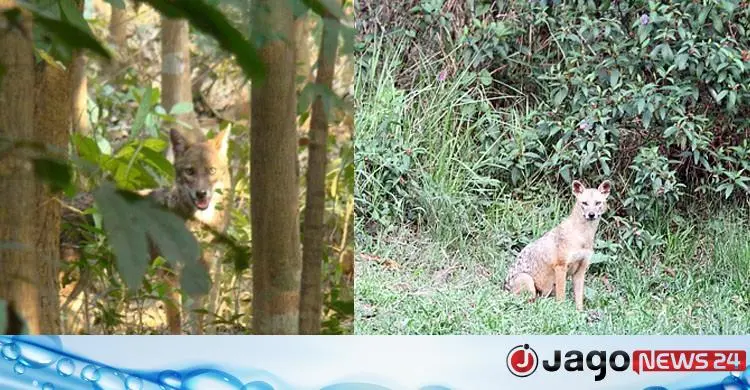
The familiar call that once broke the silence of the night across rural Bangladesh is on the verge of disappearing, writes Sabbir Hossain. Not so long ago, as soon as evening fell in the villages, jackals would call out in packs from behind the bushes and bamboo clumps: "hukkahua, keke hua". When one jackal called, the jackals of the whole area joined in and the surroundings rang with the sound. Even at dawn, children walking through the fog to the maktab would see them darting about.
Habitat lost
Under the grip of modernity, that familiar scene now seems like a fairy tale. This very important animal of the ecosystem is heading towards extinction in Bangladesh day by day. According to environmentalists, the main cause of the jackal's crisis is the unchecked clearing of forest and scrub. Trees are being cut and village thickets cleared all the time for housing, urbanisation and factories. The jackal's ancient and safe homes, the bushes, grass jungle and earth burrows, have been taken over by people. With the balance of nature destroyed, their normal breeding and life cycle are being badly disrupted.
Besides losing their homes, these voiceless animals face severe food shortages. With prey scarce in the wild, hungry jackals are forced into human settlements in search of food, and that is when trouble starts. People readily beat jackals to death, mistaking them for fishing cats or thinking them harmful. Many die in electric traps set in crop fields or from poisoned bait, and many are killed under speeding vehicles on the roads.
A friend of the farmer
Yet the jackal is a friend of nature. Its main food is rats, crabs and harmful insects. By eating field rats and insects it protects farmers' crops, and by eating carrion, rubbish and animal remains it keeps the environment free of germs. If the jackal disappears, rat infestations in crop fields will rise alarmingly, threatening the country's food security. If the environment and ecosystem cannot be protected, the earth will one day become unfit for human life.
To save the jackal and other endangered wildlife around us, effective steps must be taken now:
- The Wildlife (Conservation and Security) Act must be properly enforced, and killing jackals or any wildlife must be firmly dealt with as a punishable offence.
- Rural social forestry must keep safe refuges or corridors for wildlife instead of clearing scrub completely.
- People must be encouraged to inform the Forest Department or simply drive a jackal away when it enters a settlement, rather than beating it to death.
The loss of the "hukkahua" call from the heart of the village is not only the loss of one animal but the death of our childhood, our heritage and a large part of nature. The jackal that was the "pundit" of childhood stories cannot be allowed to vanish from the real world for ever. Letting nature live in its own form is not a luxury for us; it is our fight for survival.
The writer is a student at Ta'mirul Millat Kamil Madrasa, Tongi.
Source: Jagonews24. First published in Bengali on The Agro News.



Comments
(0)