
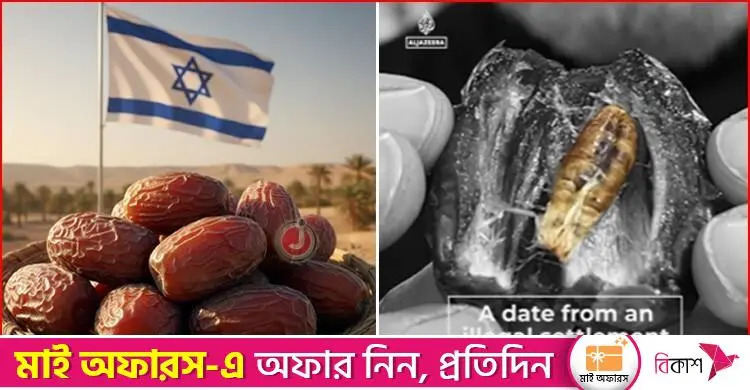
During Ramadan, dates on the iftar table are more than a fruit; they are part of a religious tradition. But a controversy has arisen over where some of the dates sold on world markets really come from. According to reports in several international media outlets, most of the popular Medjool dates sold around the world are Israeli produce, grown on occupied Palestinian land.
The reports say Israeli companies sometimes market dates grown in settlements in the occupied West Bank in packaging marked "Made in West Bank", suggesting a Palestinian product. The practice is alleged to have grown after boycott campaigns gained strength in Europe and the Arab world.
An investigative report by the Egypt-based Al-Ghad TV found that produce once sold in boxes labelled "Made in Israel" was later presented in new packaging as local produce.
Origin hidden on the label
Because they are grown on occupied land, these Israeli Medjool dates are in most cases sent to various countries with their origin concealed. The packaging sometimes says only "Israeli product" or "product of the Jordan Valley", although in reality they are a crop of illegally occupied land, and all the profit from the trade goes to Israel.
These Israeli Medjool dates are exported almost worldwide, including to the United States, Europe and Arab countries.
Because the climate of the Jordan Valley and the Dead Sea basin is much the same, the dates are similar in colour, size and texture. "These dates look almost the same," said Palestinian seller Mohammad Qaed Salim.
Check the barcode
Ibrahim Dayik, head of the Palestinian Palm and Dates Council, said exported Palestinian produce usually carries a barcode beginning with 625 and the words "Product of Palestine". Israeli produce usually shows a barcode beginning with 729, and sometimes 871.
He warned, however, that some companies can erase these marks by repacking the dates in new cartons or changing the distributor's name. Reliable documents and tracking systems are therefore the safest way to know.
According to Palestinian agricultural organisations, their production methods also differ from Israel's. Palestinian dates are irrigated with spring water and clean well water, while dates grown in Israeli settlements are irrigated with recycled waste water, which may affect their taste and nutritional value.
Often you can tell Israeli and Palestinian dates apart with the naked eye.
Appearance
Palestinian dates are usually light in colour, like natural honey, and medium in size. The skin is thin and the flesh soft and juicy.
Israeli dates are usually darker than Palestinian dates and are often larger.
The effect of the water source
Palestinian date palms are mainly irrigated with natural springs and clean well water, so the dates taste naturally sweet.
Dates grown in Israeli settlements, on the other hand, are often irrigated with recycled or treated waste water, which may affect their nutritional value and taste.
Black marks
According to Al Jazeera, because untreated water is used on land occupied by Israel, dates grown there may have black marks on the stone. Palestinian dates grown with clean water usually have no such marks.
The report drew on Al Jazeera and the Palestine Chronicle.
Source: Jagonews24. First published in Bengali on The Agro News.
Comments
(0)