
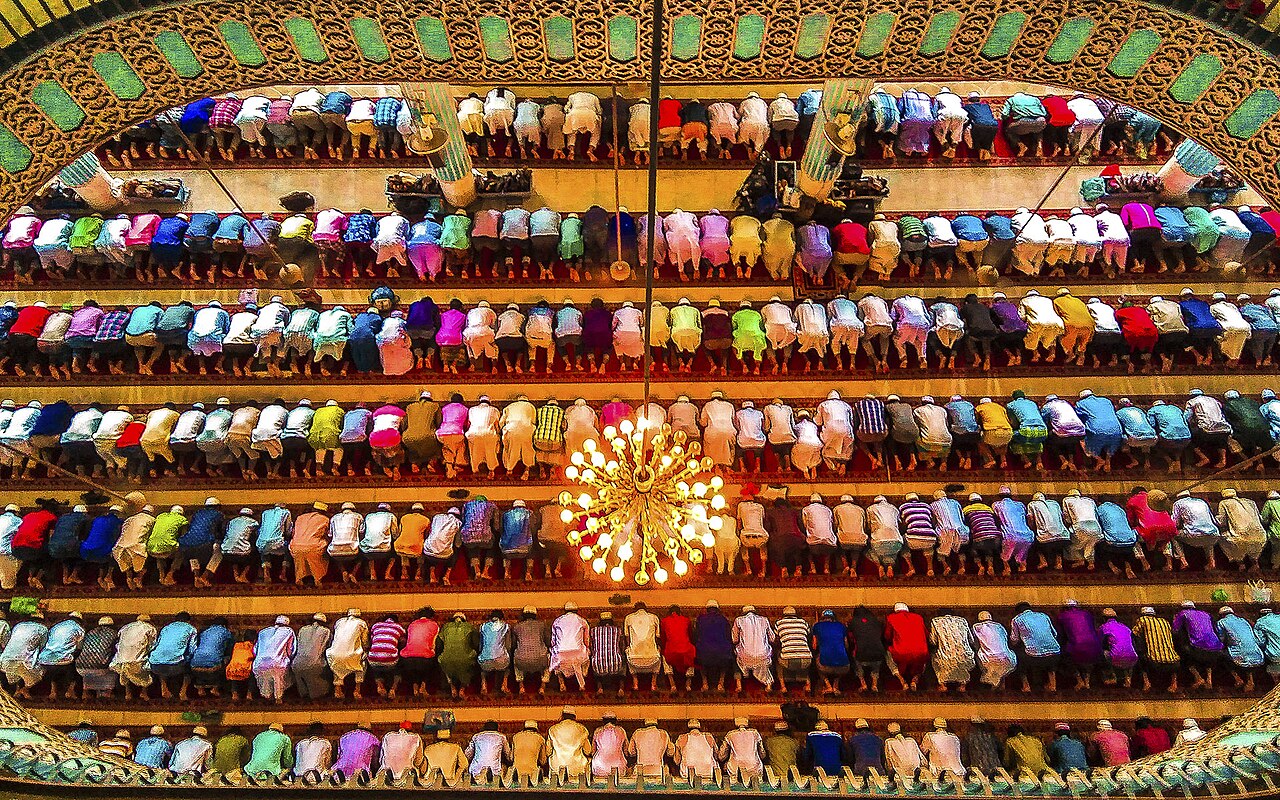
Work still unfinished at midnight, a child asleep unnoticed, barely two words with one's family all day. Writing on Prothom Alo's religion page, Muhammad Muhsin Mashkur, a part-time teacher at the Institute of Modern Languages, University of Dhaka, says the answer to this modern squeeze can be found in the life of the Prophet Muhammad (peace be upon him).
Citing research, the writer notes that people without a balance between work and personal life tire quickly, while those who keep work time and family time apart fare better in mental well-being. The real question, he says, is not how long you work but whether you work with your heart in it.
In Surah Al-Asr, God swears by time and says that man is in loss. The Prophet said most people are deceived about two blessings: health and free time (Sahih al-Bukhari, 6412). The companion Salman al-Farsi told Abu Darda: 'Your Lord has a right over you, your self has a right over you, and your family has a right over you, so give each its due.' The Prophet said Salman had spoken the truth (Sahih al-Bukhari, 1968).
The Prophet changed a whole people's thinking and state within 23 years, yet his day too had 24 hours. Aisha said he mended his own clothes, milked goats and repaired his own sandals (Musnad Ahmad). He prayed, 'O Allah, bless my community in its mornings' (Abu Dawud, 2606), and began important work at dawn.
The writer's advice: list the next day's tasks at night and start the morning with the most important one; keep office work out of the home; make the prayer times the day's natural breaks; learn to say no to what is not needed, as the Prophet shared out duties among his companions; and review the day before sleeping.
His conclusion is that the difference lies not in the amount of time but in how it is used: full attention at work, undivided time with family at home, and a prayer for blessing in one's time at the start of each day.
Photo: Ehsanul Siddiq Aranya / Wikimedia Commons (CC BY-SA 4.0)
Source: Prothom Alo
Comments
(0)