
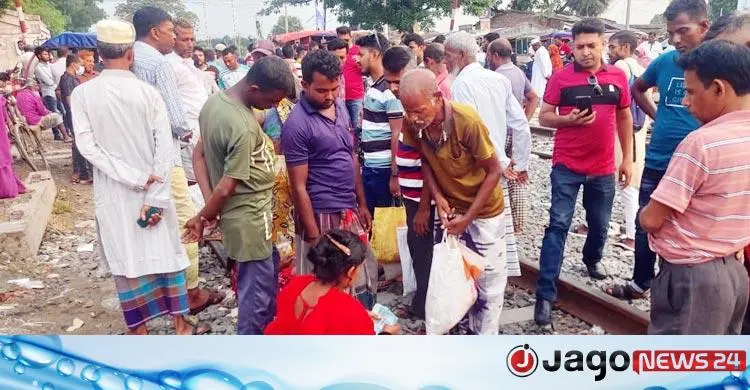
As in every year, a short-lived market for donated meat from Qurbani animals sprang up in Ishwardi, Pabna, at Eid-ul-Azha. The market got going from the afternoon of Thursday, 28 May, at various spots around the town's Rail Gate, Fakirer Bottola and the station area. The meat sold at Tk 500 to Tk 550 a kg.
A visit to the temporary market found meat collected from Qurbani being sold. Some people who had worked as butchers for a day had brought the meat they received to sell. Those buying it were people who cannot afford to make a sacrifice or cannot buy meat at high prices at the market.
Sellers
Anisur Rahman had come to the town's Rail Gate to sell meat. He said he had received three kilograms of meat after working as a butcher all day. He would sell two kilograms and take one home, and hoped to get Tk 1,200 for the two kilograms.
Another butcher, Atiar Rahman, said: "I brought three kilograms of meat and sold it at Tk 550. If I had bargained I might have got Tk 50 more a kilo."
A woman named Asiya Begum had come to sell donated meat at Fakirer Bottola on Station Road. "I collected about 5kg of meat during the day. Where would I keep so much? I've kept two kilograms to eat and come to sell the other three. Prices are being bargained between Tk 450 and Tk 550," she said.
Buyers and residents
Auto-rickshaw driver Anisur Rahman had come to buy meat. He told Jagonews24 that meat costs Tk 750 a kg at the shops, while here it could be bought for Tk 450 to Tk 550 a kg, so he had come to buy two kilograms.
Local resident Alamgir Hossain said Qurbani donated meat had been bought and sold on the afternoon of Eid day around the town's Rail Gate, Fakirer Bottola and the railway station for several years. Both buyers and sellers are poor people, and both sides benefit from the trade.
Station Road resident Altab Hossain said that on the day of the Qurbani Eid, donated meat is traded for two to three hours at several places in the town. A number of seasonal butchers sell meat there. Beggars also sell their donated meat because they have no fridge or other way to store it, while low-income people benefit from buying the meat somewhat more cheaply.
Source: Jagonews24. First published in Bengali on The Agro News.

Comments
(0)