
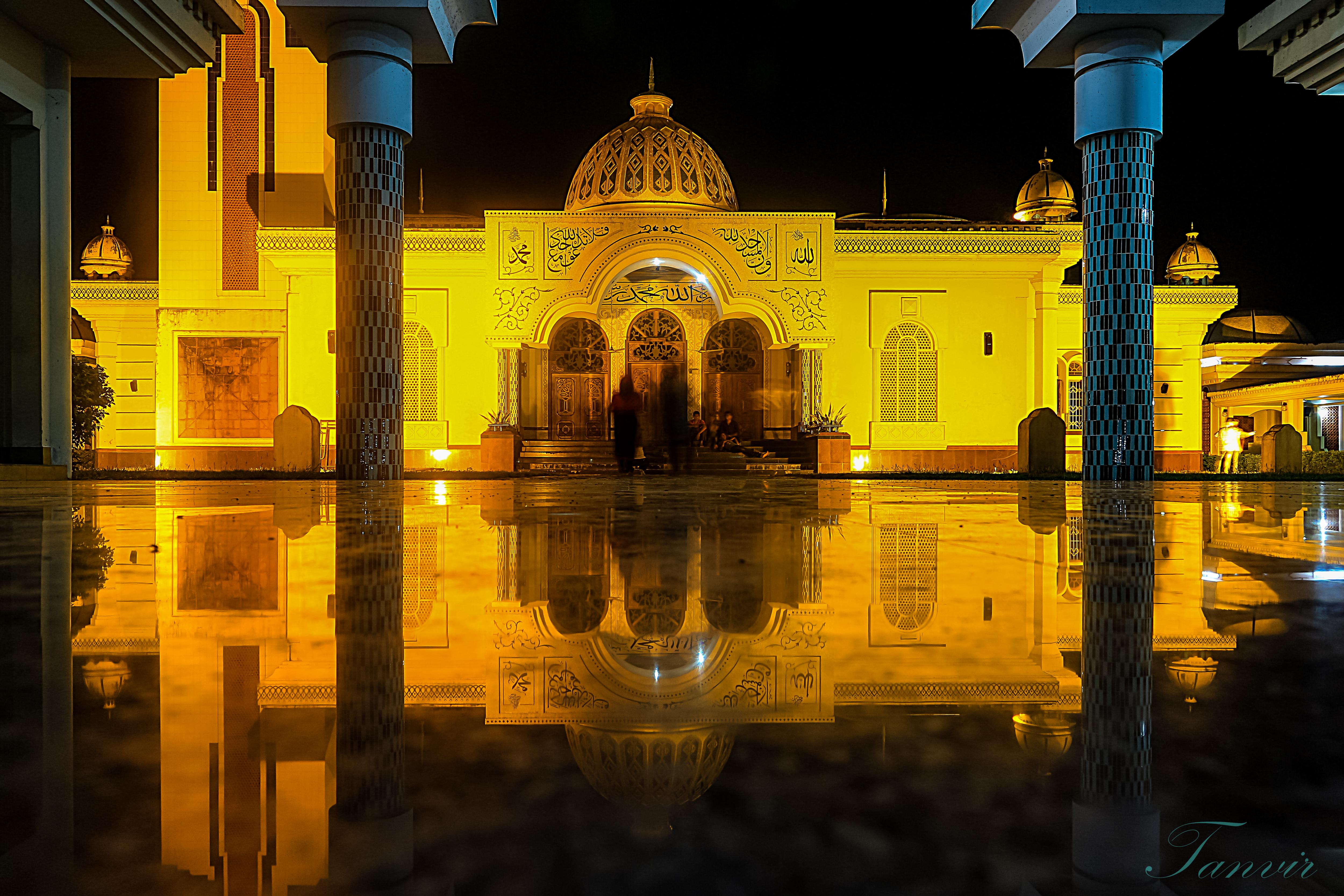
Answering whether the Isha prayer counts if it is offered after 12 at night, the Islam page of Banglanews24 explains that the time for Isha lasts until true dawn (subh sadiq). Anyone who prays Isha after midnight for a genuine reason has prayed it on time; it is not counted as a make-up (qaza) prayer.
Praying at the set times is obligatory. The Quran says prayer has been prescribed for the believers at fixed times (Surah An-Nisa, verse 103). When Abdullah ibn Masud asked the Prophet (peace be upon him) which deed Allah loves most, he answered: prayer at its proper time (Sahih Bukhari, hadith 502).
Hanafi scholars divide the time of Isha into three parts: preferred, permissible and disliked (makruh). If the night from sunset to dawn is split into thirds, Isha is best prayed towards the end of the first third, though a congregation at that time should be joined rather than praying alone. From then until midnight it is permissible, and from midnight to dawn it is disliked.
Many people assume the disliked time begins at 12 on the clock. The report says that is wrong: in Islamic law midnight is the halfway point between sunset and true dawn, which does not always match 12 o'clock. In Bangladesh, depending on the season, it can fall around 11 pm or closer to 11.30 pm.
Delaying Isha past midnight or into the last third of the night out of laziness, without a reason, is still discouraged. Citing Shaykh Ahmadullah, the report says Isha can be prayed from the end of Maghrib until the start of Fajr, but praying on time is best for a Muslim.
Photo: Tanvirislam6350 / Wikimedia Commons (CC BY-SA 4.0)
Source: Banglanews24

Comments
(0)