
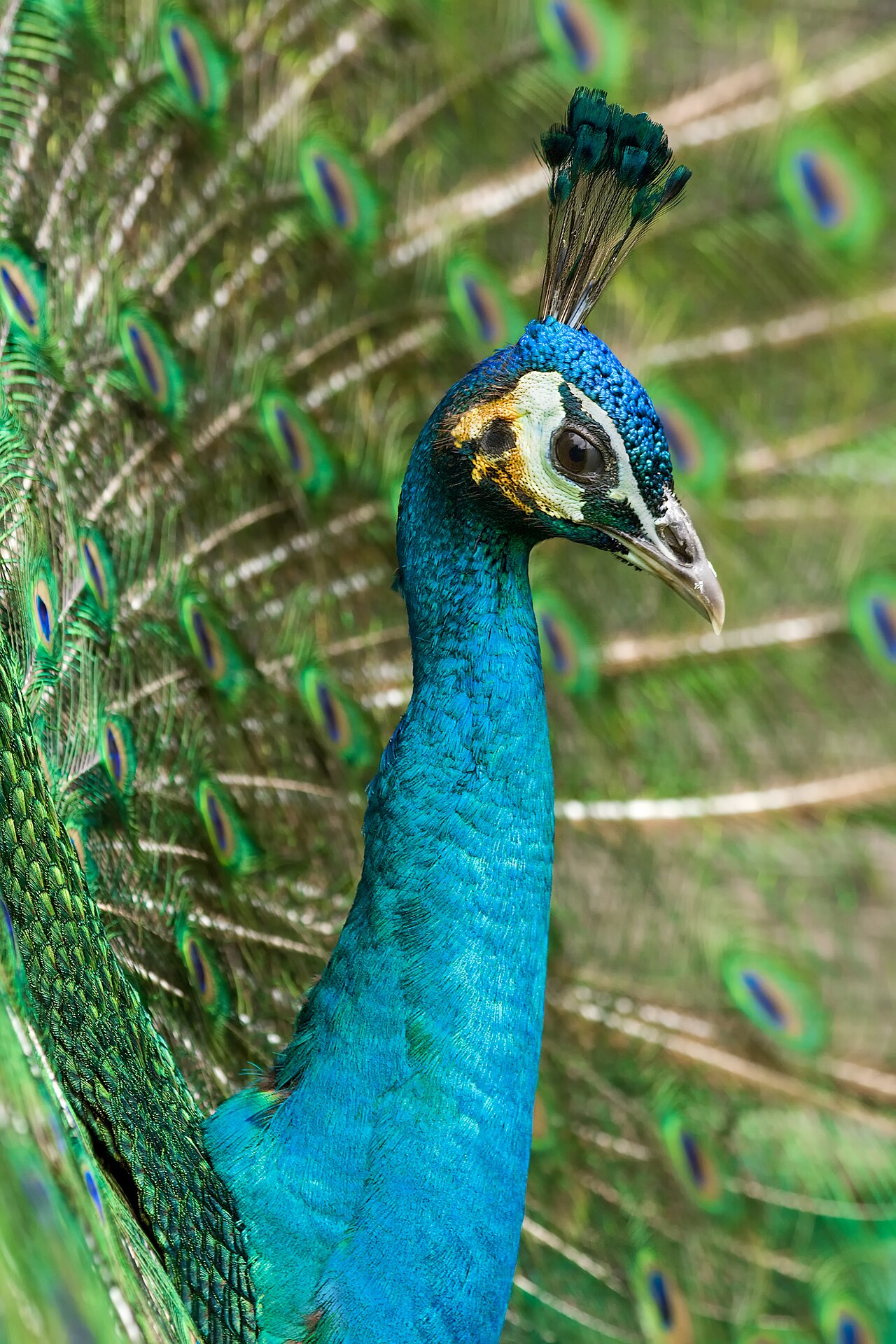
The Indian peafowl (Pavo cristatus), assessed as extinct in Bangladesh, is regularly crossing into the country along the Panchagarh border. Over three days of fieldwork from 6 November, an IUCN Bangladesh team found the night roost of seven wild peafowl in shade trees in a tea garden, and on the last morning all seven came down on the Bangladesh side.
The team was led by Reza Khan, a specialist in wildlife, zoos and safari parks, with the project's co-team leader Professor Mohammad Mostafa Feeroz and project coordinator Jennifer Azmiri. IUCN Bangladesh is carrying out the government project to update the country's fauna records. Writing in Prothom Alo, Reza Khan said he had waited 52 years to see a free-living peafowl in Bangladesh; he saw his first wild one in 1974 in Borivali National Park, Mumbai.
The Bangladesh Red Lists of 2000 and 2015 both assessed the peafowl as extinct. It is thought to have lived in the sal forest of Madhupur, perhaps into the 1940s, but there is no reliable record of its last appearance. In recent months birdwatchers photographed a few birds, including a hen with chicks, at three or four places in and around Tetulia, all close to India's border fence and the no man's land.
On the first afternoon the team saw one peafowl in the failing light, then four gathering by the roost. The next morning five flew down and fed in open ground across the border, returning to the same trees in the afternoon. On the third morning the birds landed on the Bangladesh side. When an alarm call sent them flapping into two trees, the team counted seven, not five. Reza Khan believes a predator, perhaps a fox, a jungle cat or a python, was hidden under the tea bushes.
He wrote that the observation gives the current Red List update a scientific basis, because the birds are not lost visitors but use land on this side of the border as a regular range. The question now is whether the peafowl stays listed as extinct or is moved to extinct in the wild, or even critically endangered.
One flock is not a permanent return, he cautioned. He called for protecting the roost trees and grazing ground, involving local farmers and tea workers to stop hunting and pesticide harm, controlling crowds of visitors, and joint conservation with India. How pesticides are used in the tea gardens and nearby fields is now tied to the bird's future as well.
Photo: Richard Bartz / Wikimedia Commons (CC BY-SA 2.5)
Source: Prothom Alo


Comments
(0)