
The Indian government may extend the window for duty-free cotton imports to the end of December 2026, beyond the current deadline of 31 October, Rural Voice reports. Inter-ministerial talks are said to be under way and an order could come soon. The Centre had waived the usual 11% customs duty from 1 June to 31 October, citing the textile industry's needs.
Mills argue that duty-free imports keep raw material available and production costs down. Growers fear the opposite effect on their side of the market: more imported cotton arriving just as the new crop reaches the mandis between October and December.
Cotton currently sells at around Rs 9,000 a quintal in major markets, above this season's minimum support price of Rs 8,267 for medium-staple and Rs 8,667 for long-staple cotton. Ranjeet Singh Raju, a farmer from Sri Ganganagar in Rajasthan and president of the Gramin Kisan Mazdoor Samiti, told Rural Voice that weather and fertiliser shortages had hurt this year's crop. Prices are better than last year, he said, but were as high as Rs 12,000 three years ago, and the government tends to ease imports whenever farmers begin to earn more.
India's output peaked at 398 lakh bales of 170 kg in 2013-14, fell to 297 lakh bales in 2024-25 and to about 290 lakh bales in 2025-26. The area under cotton is estimated at about 111 lakh hectares this season, against around 115 lakh hectares in the previous two years, with drought in Maharashtra, Rajasthan and Gujarat and unseasonal rain elsewhere. The textile industry puts domestic demand at about 350 lakh bales.
Imports have grown with the gap: from about US$579.2 million in 2023-24 to US$1.2 billion in 2024-25 and US$1.86 billion in 2025-26. In April to September 2026 they rose 63% year on year to about US$1.1 billion.
Anil Ghanwat, a former president of the Shetkari Sanghatana, said El Niño and drought had hurt production and that the industry's need for fibre might persuade the government to keep the waiver for another year, even though it could hurt farmers. Lower prices now, the report notes, could also discourage planting next season and deepen the dependence on imports.
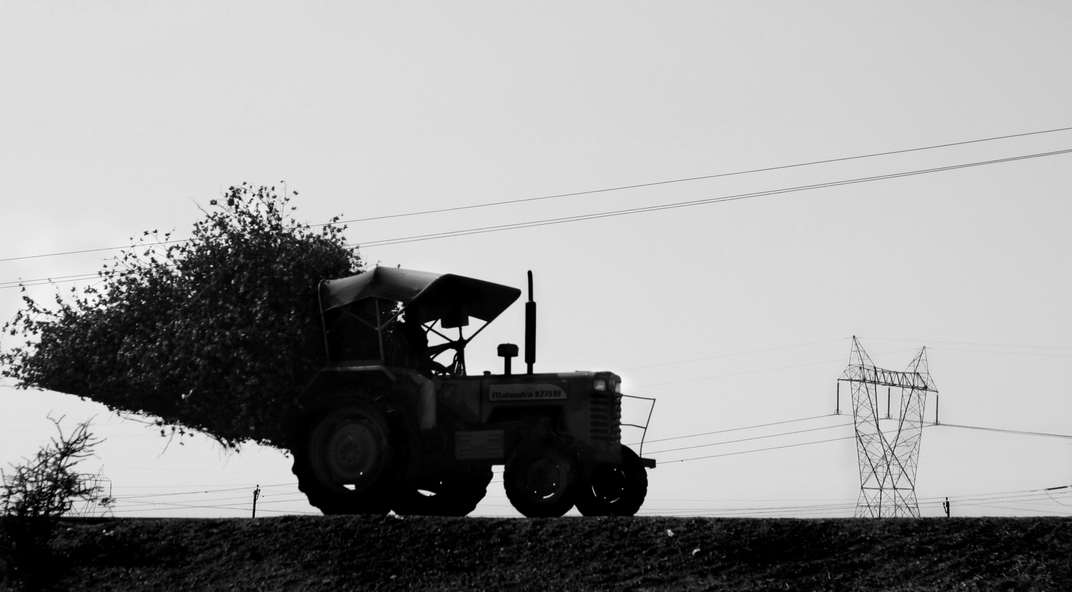
Photo: Abhisek Sarda (a tractor at the cotton harvest, Gujarat) / Wikimedia Commons (CC BY 2.0)
Source: Rural Voice

Comments
(0)