
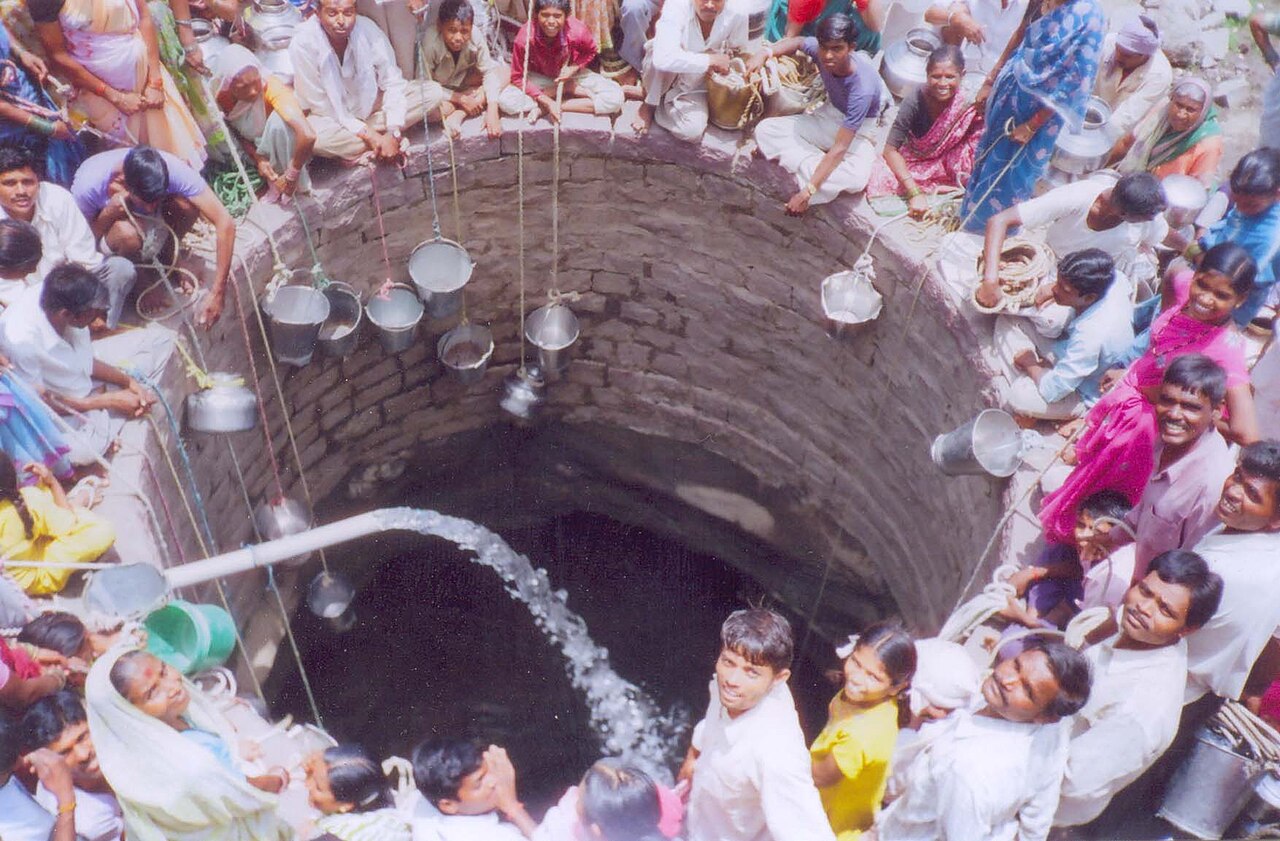
As the southwest monsoon begins to withdraw, more than half of India is under dry or drought conditions, and scientists say this year's drought appears worse than that of 2015-16 in its spread and persistence, Down To Earth reports.
About 52% of the country was dry or in drought on 16 September, up from 38.9% a month earlier, according to IIT Gandhinagar's India Drought Monitor; some areas have reached 'extreme' and 'exceptional' drought. "This drought looks worse than the 2015-16 drought," said Karthikeyan Lanka, associate professor at IIT Bombay's Centre for Climate Studies, pointing to repeated wet and dry spells that let dryness return even after rain. The World Meteorological Organization says El Niño is firmly established and likely to last until February 2027.
India received 706.9 mm of rain between 1 June and 22 September against a normal 832.4 mm, a 15% deficit that is still within the India Meteorological Department's normal range, but 41% of the country had deficient rainfall. About 79% of western India and 67% of southern India are dry or in drought, and deficits reach 37% in coastal Andhra Pradesh, 43% in Rayalaseema, 32% in interior Karnataka, 28% in Kerala and 36% in Marathwada. IIT Bombay forecasts persistent agricultural drought until early October in parts of Andhra Pradesh, Tamil Nadu, Karnataka, Maharashtra and western Madhya Pradesh.
The stress shows in planting. By 11 September the kharif area stood at 1,096.49 lakh hectares against 1,112.54 lakh hectares a year earlier. Paddy accounted for most of the fall, at 426.81 lakh hectares, nearly 17 lakh hectares less, with Karnataka, Telangana, Andhra Pradesh, Madhya Pradesh, Tamil Nadu and Maharashtra the largest losers.
Crops are at critical stages and late rain may not make up for accumulated moisture stress, so yields could suffer as well as area. The risk extends into the rabi season, which relies on residual soil moisture and reservoirs; about 55-60% of India's net sown area is rainfed. In June the agriculture ministry and ICAR identified 315 districts as vulnerable to El Niño-related farm distress, 111 of them high priority because less than 25% of their land is irrigated. The report was written by Shagun.
Photo: Suhasajgaonkar / Wikimedia Commons (CC BY-SA 4.0)
Source: Down To Earth

Comments
(0)