
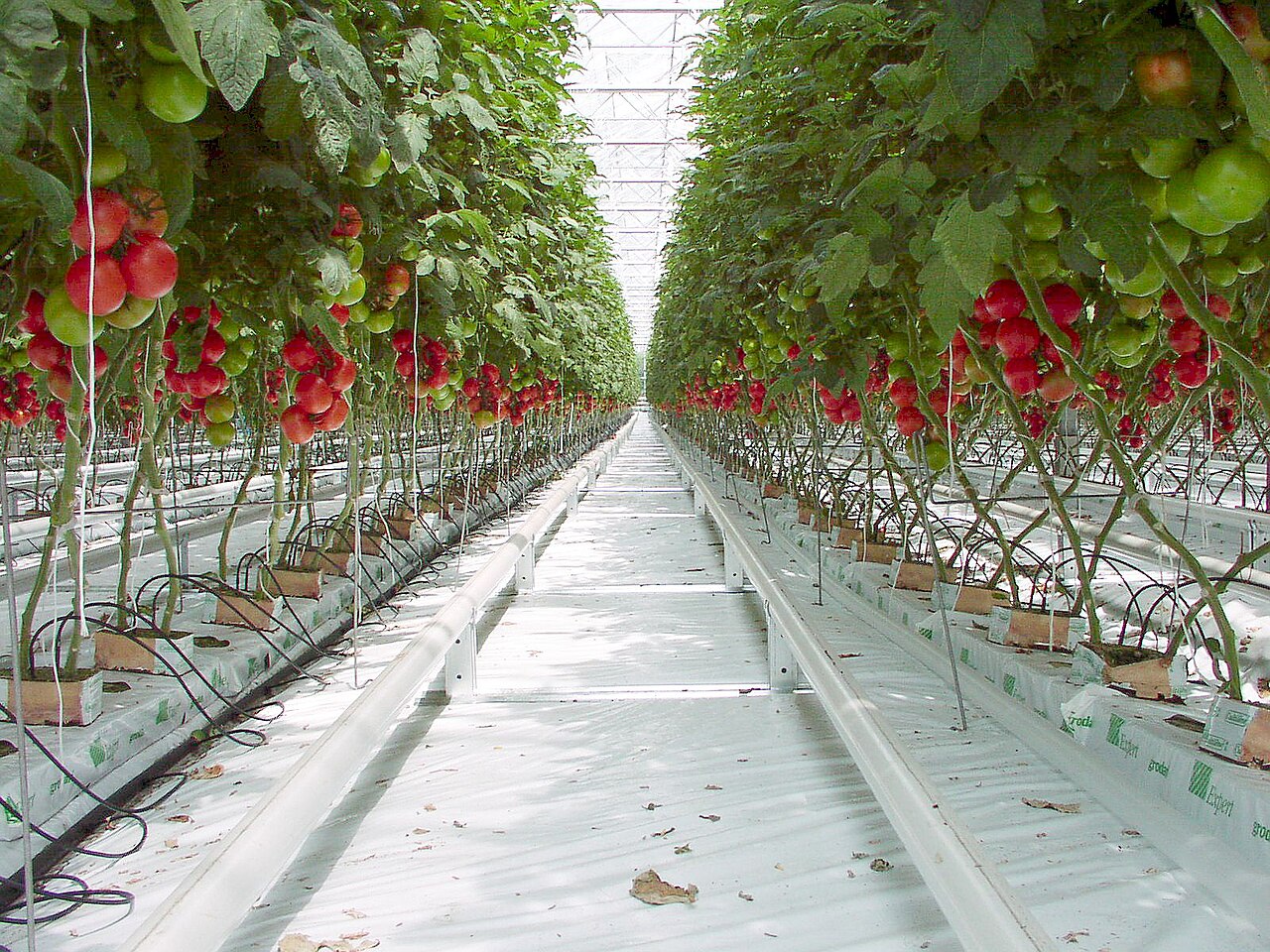
Inaho Europe B.V., a Netherlands-based robotics company with Japanese origins, has finished a summer-long pilot of its autonomous tomato-harvesting robot at two commercial greenhouse growers, one in the Netherlands and one in Belgium. The robot picked fruit beside human workers every working day from June to August.
The robot runs on the greenhouse's existing overhead rail system, so no new infrastructure is needed. It is battery-powered and light enough that any member of a grower's team can operate it without special training, said Yu Mizuki, director of inaho Europe. The two sites grew different snack tomato varieties and truss types, and each used two to three robots per hectare.
An AI vision system identifies ripe fruit and a robotic arm picks it, as the machine travels along the crop rows much like a picker's cart. The company tracked hours worked per lane (a row of crop) and kilograms harvested per hour, but has not published the pilot's figures.
Mizuki said the robot can take on part of the picking work in a commercial setting, and that the results were good enough for one of the two growers to commit to using it through the 2027 season. Neither grower has been named.
For 2027 the company will charge growers per kilogram of tomatoes harvested instead of selling the machine, a model it says is meant to be comparable to paying a human picker by output. Supply of the 2027 model will be limited, and it is being built with better picking precision, a higher rate of correctly identifying ripe fruit, a longer reach and a redesigned gripper.
Inaho has run trials with Dutch tomato growers since at least 2023, moving from fixed-cost test phases to the current pay-per-kilogram service. Labour for greenhouse harvests in Northern Europe is seasonal, hard work and increasingly difficult to find, which is pushing growers toward automation. Other firms are working on tomato-picking robots too, among them Germany's Eternal.ag, which has been expanding its fleet with Dutch growers.
Greenhouse tomatoes suit rail-based robots because the crop grows on a fixed structure: trusses hang at a fairly constant height along wires above each row, so a robot on a rail does not need the navigation and obstacle avoidance a field robot requires. Pricing by the kilogram also removes much of the upfront risk that has slowed robot adoption in horticulture, where growers were often asked to buy expensive equipment before knowing how it would perform on their own variety and layout.
Photo: Goldlocki / Wikimedia Commons (CC BY-SA 3.0)
Source: Global Agriculture

Comments
(0)