
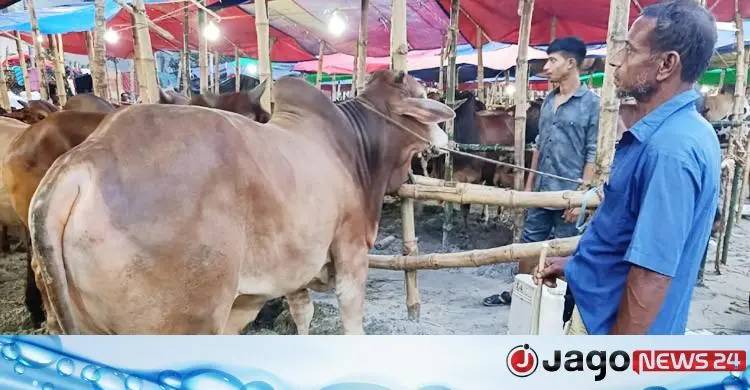
Eid-ul-Azha, one of the biggest religious festivals for Muslims, falls on 28 May. Around the festival, known as the Eid of sacrifice, cattle markets in Dhaka and across the country are busy with trade in local and foreign breeds. Cattle are the most popular animal for sacrifice in Bangladesh, and demand is highest for local breeds, which has grown in the domestic market over the past few years.
Local cattle are usually somewhat smaller than foreign or crossbred cattle. But because of their less fatty, tasty meat and affordable prices, local cattle are now at the top of buyers' lists, and demand is growing. Some dishonest traders are exploiting this extra demand, and ordinary buyers are sometimes cheated into buying foreign cattle thinking they are local.
So if you want local cattle for the sacrifice, it is important to know about them before buying, or you could be cheated. Here is how to identify local cattle at the market.
The common local type
This type is found in every region of the country. They are usually small. Their coat is short, smooth and shiny, and the skin quite tough. The hump is well formed and distinct. The skin under the neck is developed and extended, and in adult bulls in particular it hangs down. The ears are long and leaf-like with folds, and the horns are usually curved.
The colour can be red, white, black, grey or ash, and sometimes a mix of two or more colours. Height to the hump is usually three to three and a half feet, and body length, from the base of the front leg to the base of the tail, is close to three and a half feet. An adult male usually weighs 200 to 250 kg and a female 150 to 220 kg.
The red cattle of the Chattogram region
This type is found mainly in Chattogram and the Chattogram Hill Tracts. They are usually reddish, with a reddish tinge also visible on the face, eyelids, hooves and tail tip. The body is relatively small. Height to the hump is usually about three and a half feet, and body length three and a half to four feet. An adult male usually weighs 250 to 400 kg and a female 150 to 230 kg.
The Pabna and Sirajganj type
This breed is seen mostly in Pabna and Sirajganj districts. The colour is usually red, grey (ash) or a mix of the two. In males it can range from fairly dark grey to whitish grey. The face, eyelids, horns and tail tip are usually black. The body is quite long: about five and a half feet in length and four feet in height to the hump. An adult male usually weighs 350 to 400 kg and a female 250 to 280 kg.
North Bengal Grey
North Bengal Grey cattle are found in various districts of the northern region. They are usually white or various shades between dark grey and white. Adult males have ash-coloured patches on the neck. The face, eyelids and hooves are usually black, but the tail tip is white. The horns are small to medium and curve inwards. An adult usually stands a little over three feet tall, with a body length close to three and a half feet. An adult male usually weighs 300 to 350 kg and a female 200 to 250 kg.
Munshiganj cattle
Munshiganj cattle are found mainly in Mirkadim upazila of Munshiganj district and are commonly known as 'Mirkadim cattle'. They are also seen in neighbouring districts. They are mainly white, with a light pink tinge in places. The horns, eyelids, hooves and tail tip are pink or a mix of pink and black. An adult usually stands 3 to 5 feet tall. An adult male weighs 250 to 350 kg and a female 200 to 280 kg.
Knowing these features, any buyer can easily identify local cattle at the market. If possible, take a veterinarian or an experienced cattle keeper with you when you go.
Source: Jagonews24. First published in Bengali on The Agro News.

Comments
(0)