
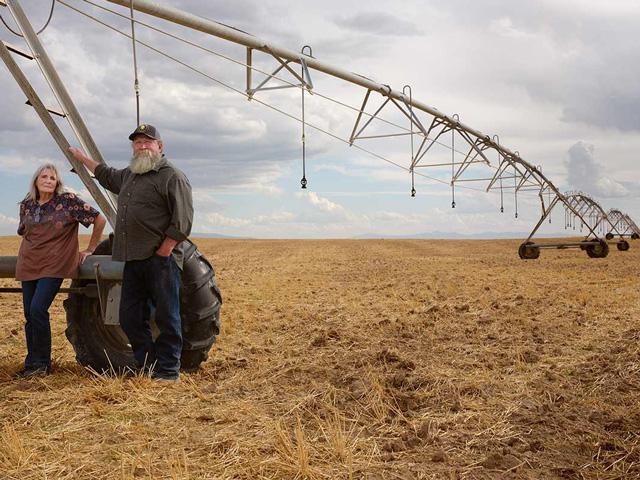
Idaho farmers Jerry and Valerie Bingham have sued the state, arguing that groundwater curtailment orders violated their senior water rights and amount to an unconstitutional taking of their property, DTN reports.
The Binghams have been allowed to pump groundwater for irrigation on their 1,000-acre farm near Blackfoot in southeast Idaho only once since 2025, in April 2026. Their complaint, filed in the District Court for the Seventh Judicial District in Bingham County, seeks compensation for about $300,000 in lost potato revenue from land they could not plant and about $388,000 in lost wheat revenue from inadequate irrigation, and says the family faces possible loan defaults and bankruptcy. "Without water, our soil has dried out, crops have failed and we've had to leave land unplanted," the family said.
Idaho's prior-appropriation law — "first in time is first in right" — gives senior users priority. On 25 July 2025 the state ordered all groundwater users with priority after 11 October 1900 to stop pumping unless they operated under an approved mitigation plan; six further orders followed through 21 July 2026. The Binghams' six rights date from 1950 to 1952 and 1987, among the more senior in the basin, yet junior users who joined state-approved mitigation plans have kept pumping. The family says the state rejected all five mitigation proposals it filed.
The orders stem from a delivery call by the Surface Water Coalition, whose members hold some of the oldest surface rights on the Eastern Snake River Plain; in 2025 the state predicted an in-season shortfall of about 75,300 acre-feet for the Twin Falls Canal Company. Under Idaho's conjunctive management, groundwater and surface water are treated as connected. The Snake River basin has more than 30,000 farms, according to the US Bureau of Reclamation.
"The government must either respect the Binghams' senior water rights or pay them for its refusal to do so," said Damien Schiff of the Pacific Legal Foundation, which represents the family. The family has also asked the court to stay enforcement, noting that federal crop insurance is generally unavailable for crops planted under curtailment and that without assured water it is unlikely to get a potato contract. The Idaho Attorney General's Office did not respond to DTN's request for comment.
The report was written by Todd Neeley, DTN environmental editor.
Source: DTN / Progressive Farmer

Comments
(0)