
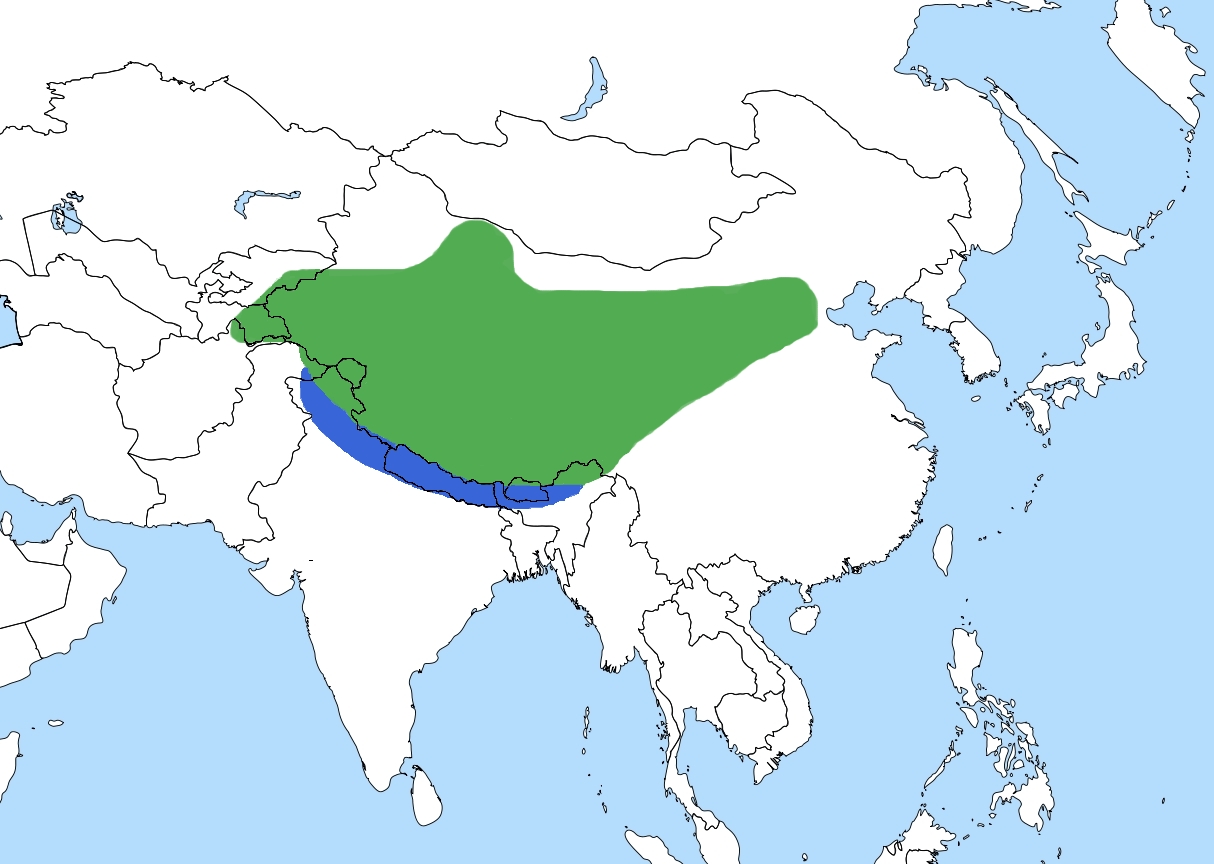
The ibisbill (Ibidorhyncha struthersii), an elusive bird of the boulder-strewn mountain rivers of the Himalayas, may find more climatically suitable habitat as the region warms, according to the first detailed climate-based assessment of the species in the north-western Himalayas. Scientists warn, however, that climate is only part of the picture, as mining and pollution are degrading the rivers it depends on.
Researchers at Sher-e-Kashmir University of Agricultural Sciences and Technology, supported by India's Science and Engineering Research Board, matched recorded ibisbill locations against climate data using an ensemble of species distribution models fed with six bioclimatic variables. The study, published in the Journal for Nature Conservation, found that mean annual temperature accounted for about 60 percent of relative importance in explaining where the bird lives in Kashmir and Ladakh. Future projections show a net expansion of suitable climate, particularly along mid-elevation river corridors.
The ibisbill feeds between stones and under gravel on aquatic insects and larvae, and nests on gravel bars in fast, often braided rivers. It is listed as least concern by the IUCN, but there is no conclusive population estimate for India. It is the only member of its family, Ibidorhynchidae.
"Suitable climate alone is not enough," said Khursheed Ahmad, a co-author and senior scientist in the division of wildlife sciences at SKUAST-Kashmir. His team's satellite tracking has shown that ibisbills return to the same nesting sites year after year, and has documented severe damage to breeding habitat along the Sindh river in Ganderbal district from extensive sand and boulder mining. Rohan Menzies of the Nature Conservation Foundation, who was not involved in the study, said climatic suitability does not guarantee habitat suitability.
Asad Rahmani, former director of the Bombay Natural History Society, said boulders taken for houses and roads, rising garbage and plastic, and more crows, kites and dogs near settlements all threaten the bird's eggs and chicks. Without change, he said, the ibisbill could disappear from the Kangan area and much of the Sindh river.
The researchers say conservation must protect breeding sites, keep rivers healthy and maintain connections between river systems. Climate change is also speeding glacier melt and making Himalayan rivers shift course faster, while dams, water diversion, farming and urban growth reshape their banks, changes that affect river-dependent wildlife and the communities living along these valleys.
Photo: Tupaia / Wikimedia Commons (CC BY 3.0)
Source: Mongabay India


Comments
(0)