
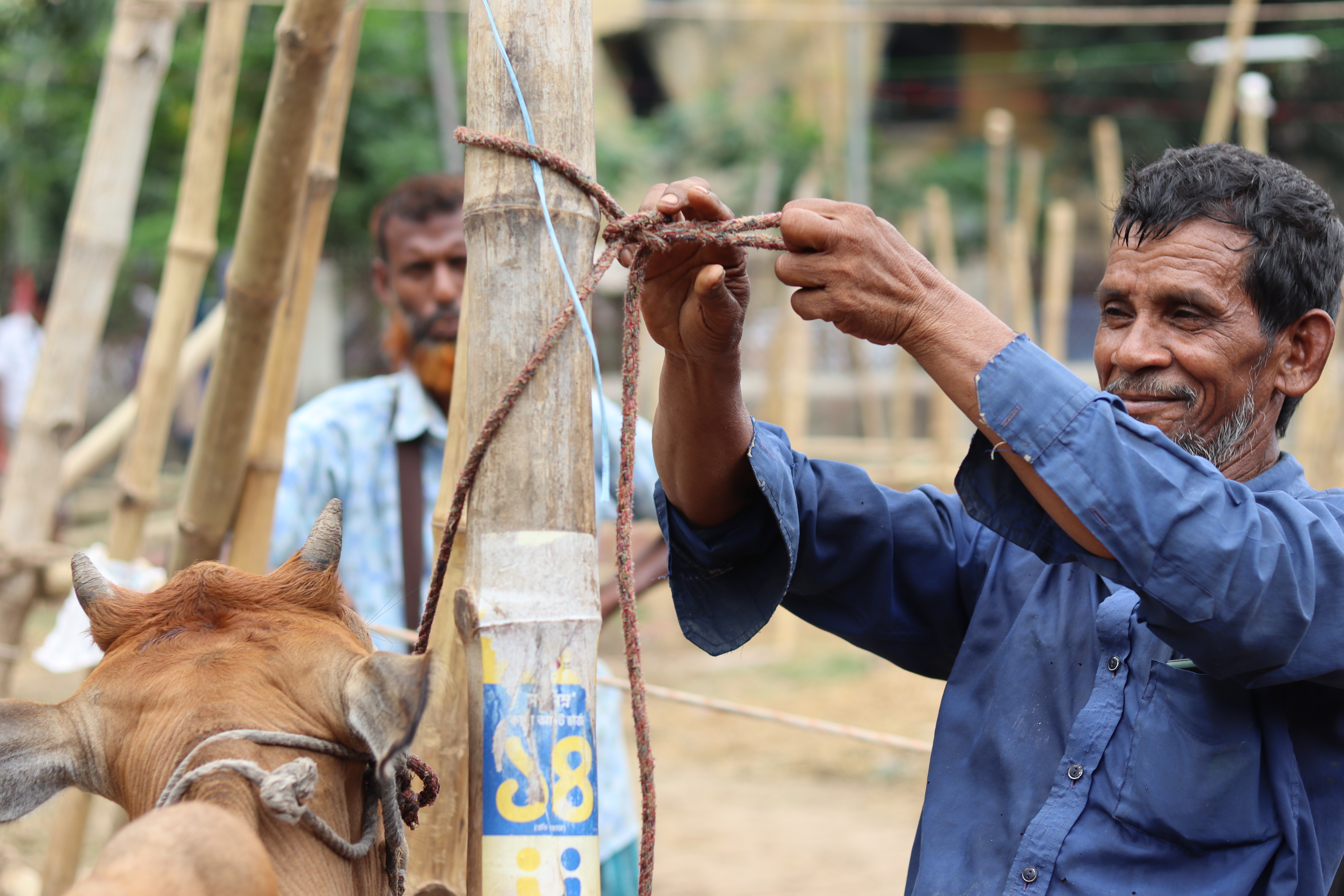
A woman died after being gored by a cow at a cattle market in Homna upazila of Cumilla on Monday, 25 May 2026, in the days before Eid-ul-Azha. The incident took place at noon in the Gharmora Bazar area of the upazila, Jagonews24 reported that night, citing the officer-in-charge (OC) of Homna police station.
What the police and local reports said
Thomas Barua, OC of Homna police station, confirmed the death to Jagonews24 at 8:30pm. The woman was Amena Begum, 55, the wife of Abul Hashem of Omrabad village in Bhasania union of the upazila.
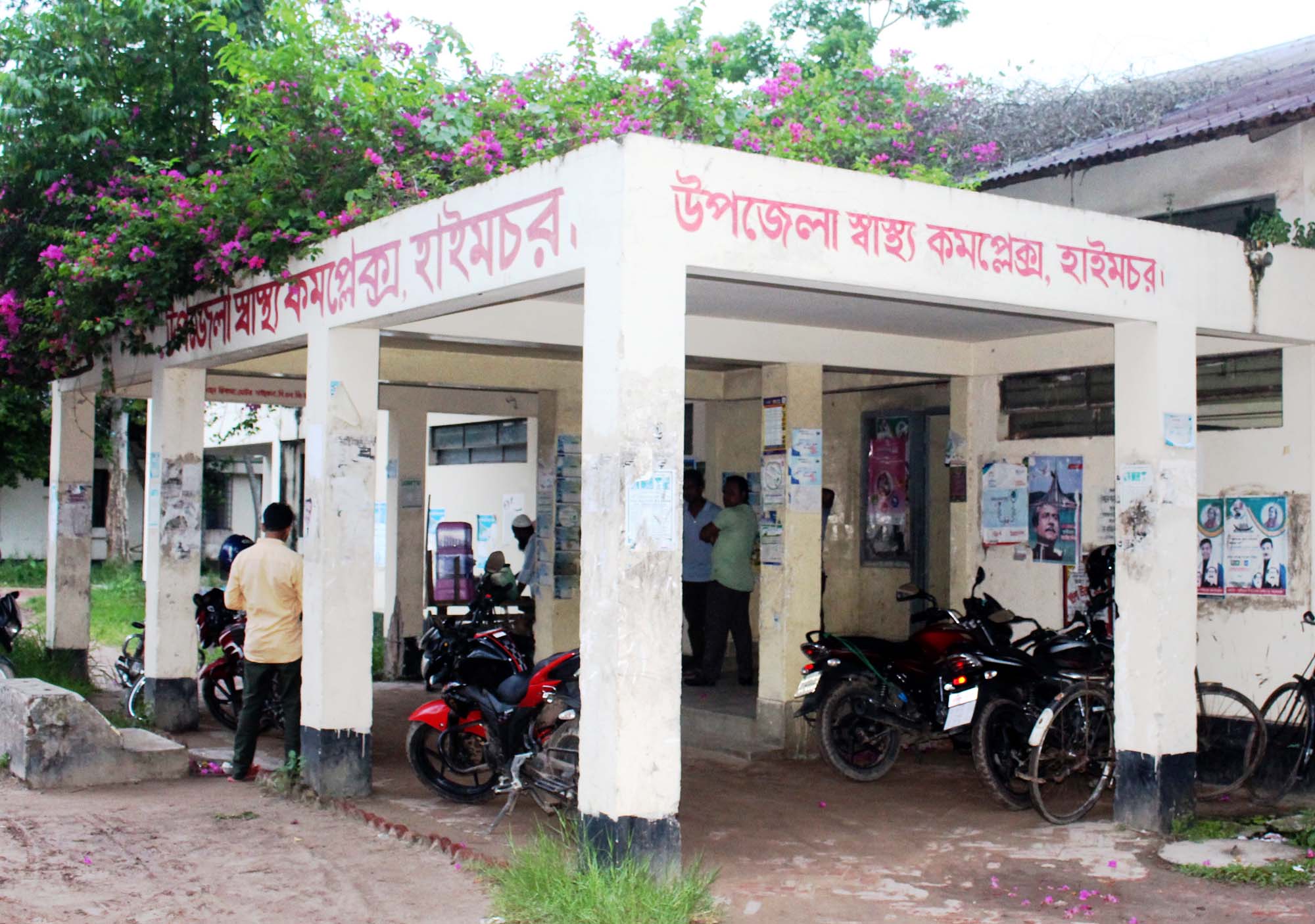
Citing local people, the OC told Jagonews24 that Amena Begum had brought a cow she had raised herself to Gharmora Bazar to sell. After the animal was brought into the market, it became agitated and struck her with its horns, seriously injuring her. Local people rescued her and took her to the Homna Upazila Health Complex, where a doctor declared her dead.
The Daily Ittefaq's Homna correspondent, in a report published at 3:58pm the same day, gave a somewhat different account. Ittefaq described the place as the traditional Gharmora cattle market, gave the woman's age as 75 and her husband as the late Abul Hashem, and said, citing local sources, that she was walking past the market at around midday when a bull brought there for sale butted her. The two reports agree that she was seriously injured, that local people took her to the upazila health complex and that the doctor on duty declared her dead.
According to Ittefaq, OC Thomas Barua said that as the family had made no complaint about the incident, the body was handed over to her relatives for burial.
Homna upazila and its hats and bazars
According to Banglapedia, the national encyclopedia of Bangladesh, the upazila covers 142.78 square kilometres between 23°37' and 23°45' north latitude and 90°38' and 90°53' east longitude. It is bounded by Bancharampur upazila on the north, Daudkandi and Gazaria upazilas on the south, Muradnagar upazila on the east and Araihazar upazila on the west. Its main rivers are the Meghna, the Titas and the Kathalia, and Luitar Beel, Darirchar Beel, Kasimpur Beel, Kalidhoar Beel and Khodadawdpur Beel are notable wetlands.
Homna Thana was formed in 1918 and is now an upazila with one municipality, nine unions, 73 mouzas and 154 villages. The nine unions are Asadpur, Garmora, Ghagutia, Chander Char, Joypur, Dulalpur, Nilakhi, Bhasania and Mathabhanga. The 2011 population census of the Bangladesh Bureau of Statistics counted 206,386 people in the upazila, 100,245 men and 106,141 women; Bhasania union, where Amena Begum lived, had 10,935 men and 10,901 women.
Farming is the largest source of income. Banglapedia gives agriculture as the main source of income for 46.91 per cent of households, followed by commerce at 17.16 per cent. Paddy, wheat, maize, potato, sesame, mustard, lentil and vegetables are the main crops, and wheat, potato, sesame, mustard, lentil and vegetables are sent out of the upazila. Mango, watermelon, futi (a local melon) and papaya are the main fruits.
Banglapedia counts 27 hats and bazars and two fairs in Homna, naming Homna Hat, Ramkrishnapur Hat, Dulalpur Hat, Mirash Hat, Kashipur Hat, Shreepur Hat, Joypur Hat and Asadpur Hat among them. Its health facilities include one upazila health centre, seven union health and family planning centres, seven rural health centres and one veterinary hospital.
Ittefaq's Homna correspondent described the upazila's cattle markets on 3 June 2025, two days before the previous Eid-ul-Azha. Buyers had crowded in during the last days, local (deshi) cattle dominated every market, and the Munshir Hat cattle market was so packed that there was hardly room to stand. The upazila nirbahi officer told the paper that mobile teams of the administration were working for the markets' security, that police were watching for counterfeit notes and that there was extra police watch over traders moving animals to and from the markets.
Cumilla's sacrificial animals for Eid in 2026
Cumilla district, in Chattogram division, covers 3,034.74 square kilometres, Banglapedia says. It is bounded by Brahmanbaria and Narayanganj districts on the north, Noakhali and Feni districts on the south, the Indian state of Tripura on the east and Munshiganj and Chandpur districts on the west. Its main rivers are the Meghna, the Gumti, the Dakatia, the Little Feni and the Buri. The district was established as Tippera district in 1790 and renamed Comilla in 1960. The 2011 census counted 5,177,106 people, and agriculture was the main source of income for 47.31 per cent of households.
On 12 May 2026 the state news agency BSS reported, citing the district livestock department, that about 259,000 animals had been raised on farms and in households across the district's 17 upazilas for the coming Eid-ul-Azha, against an estimated local demand of about 247,000, leaving a surplus of about 12,000. Of the animals ready for sale, 200,717 were cattle and buffalo and 58,283 were goats, sheep and other animals. Officials said most farms had fattened their animals by traditional methods using natural feed.
Adarsha Sadar upazila had prepared the most animals, 20,923, followed by Burichang with 18,794, Barura with 17,647, Chauddagram with 16,908 and Sadar Dakshin with 14,517, BSS reported; Meghna upazila had the fewest, 8,732, which officials said was still enough for local demand. Homna's own figure was not given in the report.
The district livestock officer told BSS there would be no shortage of sacrificial animals in Cumilla that year. Veterinary medical teams would work at the cattle markets, he said, and there would be strict watch to keep sick animals, and animals fattened by harmful methods, out of them. The commanding officer of the Border Guard Bangladesh battalion in Cumilla (10 BGB) said patrols had been stepped up along the district's 96 kilometres of border so that foreign animals could not be brought in illegally.
A year earlier, on 31 May 2025, Desh Rupantor's Cumilla correspondent reported 401 cattle markets across the district's 17 upazilas, eight of them large markets beside the Cumilla stretch of the Dhaka-Chattogram highway. The district livestock officer at the time said 36,000 farmers had prepared animals and that a medical team was working at every market, and the district administration had arranged health checks, counterfeit-note detection, bank booths and CCTV cameras at the markets, the paper said.
The national picture before Eid-ul-Azha
The National Moon Sighting Committee announced on the evening of 18 May 2026 that the moon of Zilhaj had been sighted in the country's sky, so Eid-ul-Azha would be celebrated across Bangladesh on Thursday, 28 May.
At a press conference at the Ministry of Fisheries and Livestock on 3 May 2026, the minister said the estimated demand for sacrificial animals that year was 10,106,334, against an availability of 12,333,840, leaving a surplus of about 2,227,506. The animals available included 5,695,878 cattle and buffalo, 6,632,307 goats and sheep and 5,655 camels, dumbas and similar animals. Twenty-six temporary cattle markets would be held in Dhaka, he said, and law enforcement agencies, including plain-clothes members, would work for the security of markets, buyers and sellers.
After a high-level meeting on Eid preparations on 4 May, the home minister said no cattle market would be allowed on roads, highways or railway lines. Trauma centres of the health ministry beside highways would be made functional, with doctors, nurses and equipment under the civil surgeons, and nearby upazila and district hospitals had been told to be ready from seven days before Eid, he said.
For comparison, the Department of Livestock Services (DLS) counted 9,136,734 animals sacrificed at Eid-ul-Azha in 2025, including 4,705,106 cattle and buffalo, 4,430,668 goats and sheep and 960 other animals such as camels and dumbas, Ittefaq reported on 11 June 2025. The figure for 2024 had been 10,408,918. The ministry said 3,310,603 sacrificial animals had gone unsold in 2025, and Chattogram division, which includes Cumilla, had accounted for 1,753,732 of the animals sacrificed.
From 23 to 26 May 2026, DLS ran free veterinary medical teams at 29 cattle markets in Dhaka, 11 under the Dhaka South City Corporation and 18 under Dhaka North, Ittefaq reported. Eighty-seven students of Bangladesh Agricultural University, Sher-e-Bangla Agricultural University and Gono Bishwabidyalay took part as intern veterinarians. An intern veterinarian at the Uttara Diabari market told the paper that most of the animals they saw were under stress: they had travelled long distances packed together in the heat without enough floor space or shade, and after arriving were kept crowded in hot sun or partly closed spaces, leaving many with heatstroke and severe dehydration.
On 24 May, Bangladesh Bank told banks to keep selected branches, sub-branches and temporary booths near the cattle markets of the Dhaka North, Dhaka South, Chattogram, Khulna, Rajshahi and Rangpur city corporations open from 10am to 10pm until the day before Eid, noting the large crowds of buyers and traders and the large cash transactions at the markets.
Why cattle can turn dangerous in a crowded market
The World Organisation for Animal Health (WOAH, formerly the OIE) sets out in its Terrestrial Animal Health Code the behaviour that people who handle cattle and other livestock must take into account. Domestic animals try to escape if a person approaches closer than a certain distance. This critical distance defines the animal's flight zone; it varies among species and among individuals of the same species and depends on the animal's previous contact with people. Tame animals reared close to humans have a smaller flight zone, while those kept in free-range or extensive systems may have flight zones of one metre to many metres. Handlers should avoid suddenly entering the flight zone, the Code says, because this may cause a panic reaction that could lead to aggression or an attempt to escape.
Domestic animals have wide-angle vision but only limited forward binocular vision and poor perception of depth, the Code explains, so they can detect objects and movements beside and behind them but can judge distances only directly ahead. They can hear a wider range of frequencies than humans, are more sensitive to higher frequencies and tend to be alarmed by constant loud noise and by sudden noises, which may cause them to panic. Their sense of smell is highly sensitive too. The behaviour of individual animals varies with breed, sex, temperament and age and with the way they have been reared and handled.
To move an animal, the Code says, handlers should use the point of balance at its shoulder, standing behind that point to move it forward and in front of it to move it back. Animals should not be forced to move faster than their normal walking pace, so that injuries from falling or slipping are kept down, and they should be handled in a way that avoids harm, distress or injury. Violent acts such as crushing or breaking tails, grasping the eyes or pulling the ears must never be used, and lifting or dragging animals by the tail, head, horns, ears or limbs should not be permitted. Excessive shouting and loud noises such as the cracking of whips should not be used to move animals, because they may make the animals agitated, leading to crowding or falling. Handlers should be experienced and competent and understand the behaviour patterns of the animals.
A systematic review published in the journal Animals in March 2022, which examined 17 studies on cattle handling, behaviour and safety, found that a review of media sources and published literature had reported more injuries from bulls than from cows, and that first-calving and freshly calved cows are also seen as very dangerous to work with. Stressed cows are potentially more dangerous, the authors noted, and farmers felt that horns make an animal more dangerous even when the individual animal is not aggressive. The review found cattle-related incidents to be under-reported, with contradictory advice on preventing injury, and concluded that recommendations should be regionally specific, easily accessible and practicable.
Similar deaths and what research in Bangladesh shows
The Homna death was not the only one at a cattle market that week. At 8:50pm on the same day, Ittefaq's Jamalpur correspondent reported that a buffalo brought for sale to the Sanandabari cattle market in Dewanganj upazila on Sunday, 24 May, had suddenly become agitated, run through the market and attacked people, injuring at least six. One of them died on the way to treatment that day, and an 80-year-old man died of his injuries at Jamalpur General Hospital on the afternoon of 25 May, the paper said, citing local people and the OC of Dewanganj Model police station.
Accidents also happen during the sacrifice itself. In June 2024, Ittefaq reported that a 55-year-old man died in Ramu upazila of Cox's Bazar on the morning of 17 June after a cow being slaughtered for the sacrifice moved its legs and kicked him hard in the chest; local people took him to a medical centre at Eidgar, where he was declared dead.
A population-based survey published in BMJ Open in November 2019 by researchers of the Centre for Injury Prevention and Research, Bangladesh (CIPRB) and the Johns Hopkins Bloomberg School of Public Health covered about 1.17 million people in 51 unions of seven rural subdistricts, among them Daudkandi, Homna's southern neighbour in Cumilla, between June and September 2013. It found a non-fatal animal-related injury rate of 1,635.3 per 100,000 people and a fatal rate of 0.7 per 100,000; eight deaths were recorded. Cows and buffaloes caused 25 per cent of animal-related injuries, second only to wasp, hornet and bee stings.
Most of the non-fatal injuries in that survey were of low severity (81.6 per cent), while 6.1 per cent were severe. People working in agriculture had the highest odds of injury, females had 30 per cent lower odds than males, and most non-fatal injuries occurred in the monsoon, peaking between June and August. The authors described animal-related injury linked to agriculture as a major occupational hazard in rural Bangladesh and suggested education programmes to train farmers in first aid.
Hospital data from neighbouring India show how serious such injuries can be. A study of 42 patients with bull-related injuries who came to an emergency department in Madurai, India, between June 2017 and March 2019, published in the Western Journal of Emergency Medicine in 2020, found that 86 per cent were male, that injuries to the trunk were the most common (55 per cent) and that most injuries were penetrating (59.5 per cent). Five patients (12 per cent) developed complications including intra-abdominal abscess, peritonitis and sepsis, and two died of septicaemia from peritonitis. The authors said educating people about the dangers and getting patients to the emergency department early could significantly reduce illness and death.
First aid after a horn or kick injury
The US National Library of Medicine's MedlinePlus encyclopedia advises getting emergency medical help for severe bleeding, and especially if internal bleeding is suspected, because internal bleeding can very quickly become life-threatening. Wounds to the abdomen, pelvis, groin, neck and chest can be very serious because of the possibility of severe internal bleeding: they may not look serious, but can result in shock and death, so medical care should be sought right away. Its first-aid steps for bleeding include the following:
- Calm and reassure the injured person, and lay them down to reduce the chance of fainting.
- Put pressure directly on an external wound with a sterile bandage, a clean cloth or even a piece of clothing, and keep it there until the bleeding stops; if blood seeps through, place another cloth on top rather than removing the first.
- Do not remove an object stuck in the body, and do not probe the wound.
- If organs are showing through a wound, do not try to push them back; cover the injury with a moist cloth or bandage and apply gentle pressure.
- If possible, do not move a person who may have a head, neck, back or leg injury.
- If bleeding is severe, get medical help right away and take steps to prevent shock: keep the injured part still, lay the person flat with the feet raised about 30 centimetres and cover them with a coat or blanket.
MedlinePlus lists the signs of shock that can follow blood loss: confusion or decreasing alertness, clammy skin, dizziness or light-headedness after an injury, low blood pressure, paleness, a rapid pulse, shortness of breath and weakness. Puncture wounds usually do not bleed very much, it adds, but carry a higher risk of infection, and medical care should be sought to prevent tetanus or other infection.
In rural Bangladesh most first aid after an injury comes from people without medical training. A study published in the International Journal of Environmental Research and Public Health in July 2017, based on a census of about 1.2 million people in seven subdistricts, found that 81.7 per cent of people with non-fatal injuries received first aid, 79.9 per cent of them from providers who were not medically trained, and that those treated by a medically trained provider were 1.28 times more likely to improve or recover. Anyone hurt by a cow or buffalo should be taken to the nearest upazila health complex or hospital without delay, and treatment should be left to a doctor.
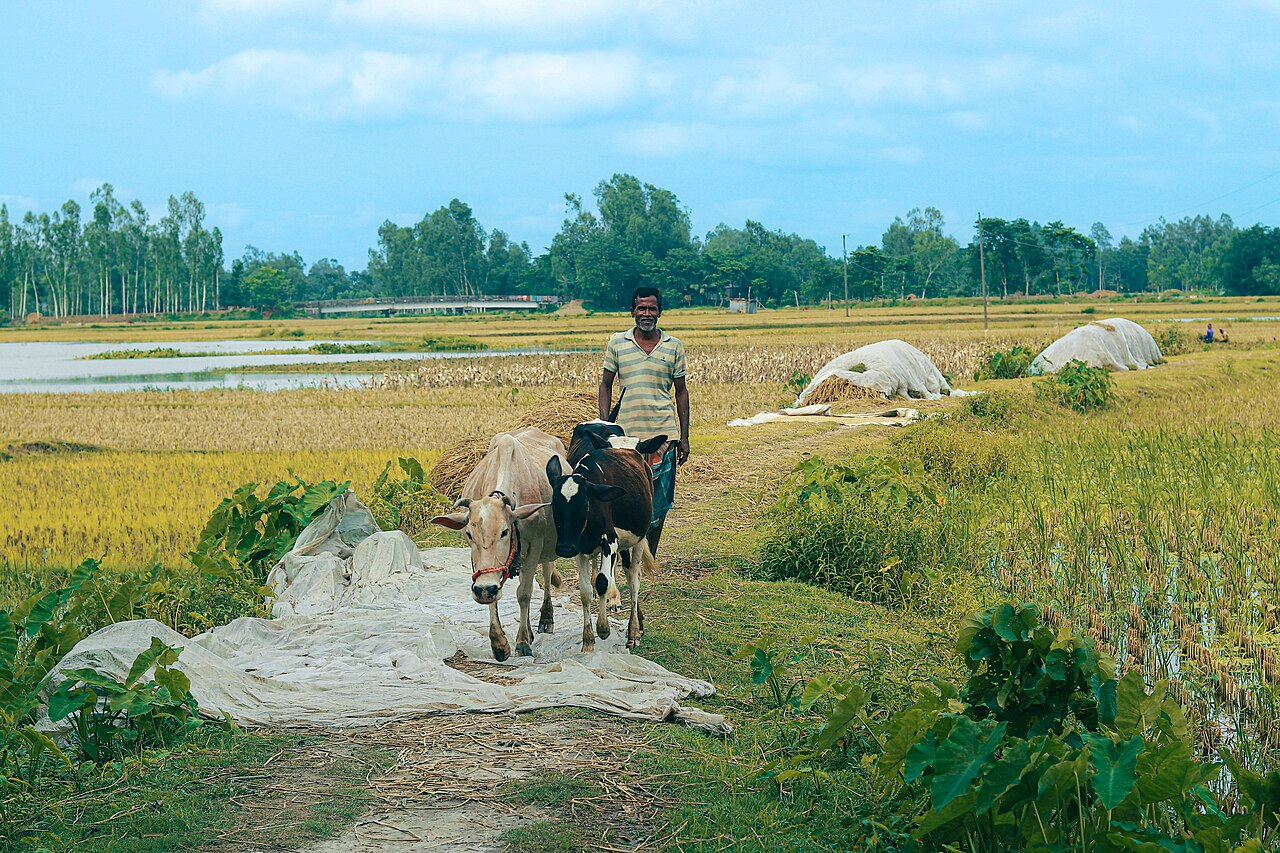
Photo: Wasiul Bahar / Wikimedia Commons (CC BY-SA 4.0)
Sources: Jagonews24, The Daily Ittefaq, Bangladesh Sangbad Sangstha (BSS), Desh Rupantor, Banglapedia, World Organisation for Animal Health (Terrestrial Animal Health Code), Animals (MDPI), BMJ Open, Western Journal of Emergency Medicine, International Journal of Environmental Research and Public Health, MedlinePlus (US National Library of Medicine)
Comments
(0)