

Hilsa prices have been high all year. The season has begun, but prices have not fallen; they are rising day by day. Why is this happening, and will prices come down at all this year?
A BBC Bangla report said a one-kg hilsa now costs around Tk 2,500-2,600 at the capital's Karwan Bazar. Fish heavier than a kilogram are selling for Tk 3,000-3,500 a kg depending on weight, and even fish under a kilogram cost around Tk 2,000 a kg.
Pradip Rajbongshi, a seller at Palashi Bazar, said they were buying one-kg hilsa for Tk 2,000 last week and are paying Tk 2,250 to 2,300 this week. The price rises further by the time it reaches consumers, and sales are down because of the high price, he said.
Even in Chandpur, a stronghold of hilsa, a one-kg fish costs around Tk 2,500 and fish of one and a half kilograms more than Tk 3,000 a kg, said Abdul Bari Jamadar, president of the Chandpur Banik Samity.
Lower supply at the heart of it
The main reason for the high price this year is low supply: fewer fish than expected are being caught at the height of the season. Hilsa are not being exported to neighbouring India at present, and the local hilsa available there are cheaper than in Bangladesh.
Because the weather has been unfavourable most of this year, "fishermen are being hindered even when they go out to catch hilsa", said Md Anisur Rahman, a hilsa researcher and former chief scientific officer at the Fisheries Research Institute's riverine centre in Chandpur.
One warning signal after another has been in force. That makes going out to fish risky, and even those who go cannot catch fish easily. "That does not mean there is no hilsa, but fishermen are being hindered in catching it," Anisur Rahman said.
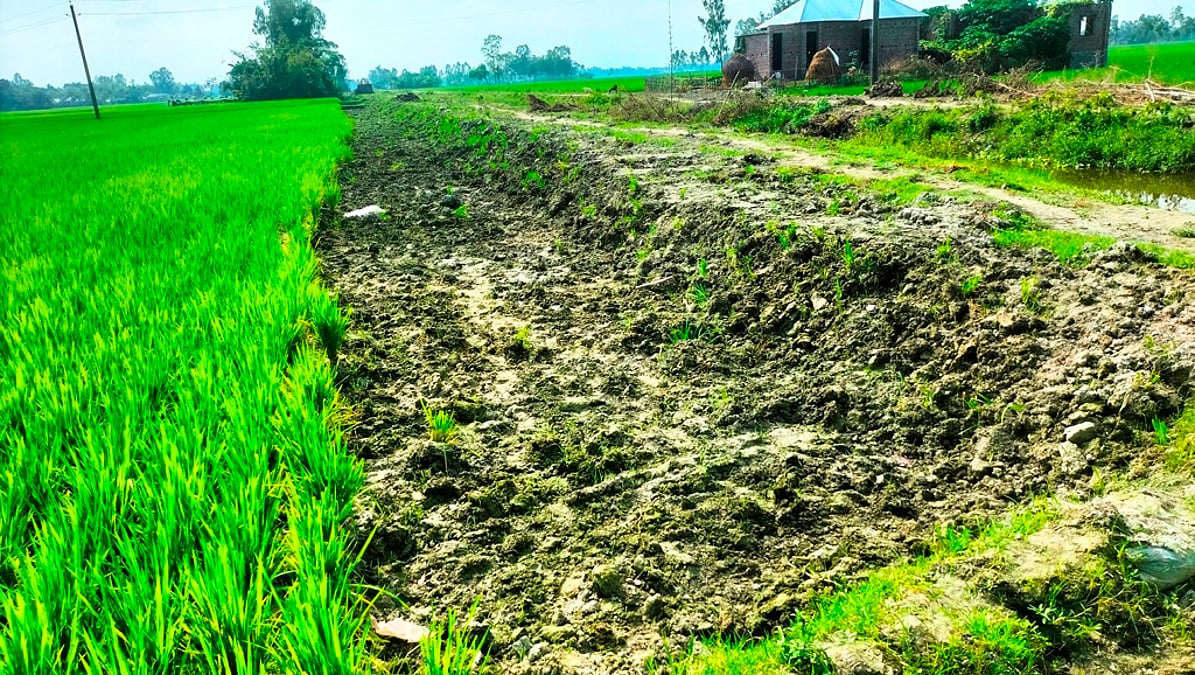
There are also broader reasons why the hilsa's normal spread is being disrupted. One is the loss of navigability in many parts of rivers. Especially in the south, silt has built up submerged chars in many places along the routes hilsa take from the sea into rivers to spawn. Hilsa largely move in deep water, so shallowing blocks their normal paths.
The navigability problem affects rivers across the country, not only in the south, disrupting both hilsa movement and shipping. There is also pollution, which damages the fish's food and the environment they need to spread in many ways.
These problems are not new. Abdul Bari Jamadar, who entered the hilsa trade in 2005, says he has heard since then about the need to dredge rivers to restore hilsa breeding grounds.
Fish are also caught in many ways during fishing bans in rivers and the sea. Along with the killing of jatka (young hilsa) and brood fish, there is the problem of current nets. Some also allege a syndicate behind high fish prices, which fish traders deny.
Catches falling since 2022-23
Abdul Bari Jamadar said he has noticed a trend of fewer hilsa in both rivers and the sea since around 2022 to 2023.
According to the latest Department of Fisheries figures, 571,000 tonnes of hilsa were caught in the 2022-23 fiscal year, falling to 529,000 tonnes in 2023-24.
Demand has not fallen; hilsa are now sold online as well as in markets, so supply falling short of demand is one reason for the rise in price.
Alongside these problems, higher fuel and commodity prices have made fishing trips more expensive. For the big trawlers, "when I came into the business (around 2005) it took Tk 50,000 to at most Tk 1 lakh. Now it takes Tk 4 lakh to Tk 5 lakh," said Abdul Bari Jamadar, adding that this too affects the price of hilsa.
Still room for prices to fall
Despite the problems, there is still a chance that hilsa prices will fall.
Although the season has begun, researcher Md Anisur Rahman said September and October are the main season. There is an opportunity around the full moon in early September, when more fish may be caught if the weather is favourable. "Once conditions allow fishing, you will see each net bringing in two or three times as much fish as before," he said.
"If supply rises, it takes two to at most three days for prices to fall, and they can be seen to drop by up to Tk 400-500 a kg," said Abdul Bari Jamadar.
Mohammad Faruk Moyeduzzaman, assistant director of the hilsa unit at the Department of Fisheries, also expects more hilsa in September.
"In that case, if there is a good catch, we hope we may get prices down to Tk 1,800 (for a one-kg fish) at the landing ghats. So far the lowest we have seen is Tk 2,100 (for a one-kg fish at ghats in Barishal, Chattogram and Khulna). If the catch is a little better, the price may come down a little more," Moyeduzzaman said.
Harder problems to fix
The problems harming the spread of the fish overall are not easy to solve. Tackling rising sea temperatures from the climate crisis, or pollution, needs coordinated action, and that is lacking.
Moyeduzzaman acknowledged that although regular drives are run during the fishing ban, full surveillance is often not possible in remote areas.
On navigability, he said detailed information has been collected on places with shallowing problems and these have been mapped. An inter-ministerial meeting of the Ministry of Fisheries and Livestock, the Ministry of Shipping and those involved in dredging will then decide the next steps, the assistant director said.
If the work can go ahead according to the plans they are making, he hopes "the hilsa's habitat could return within three to five years".
The reality, however, is that in Bangladesh there are often questions over whether plans are successfully carried out. If the problems facing the national fish, now recognised as a GI product, keep growing, its price will keep moving out of reach.
The report cites BBC Bangla as its source.
Source: Jagonews24. First published in Bengali on The Agro News.

Comments
(0)