
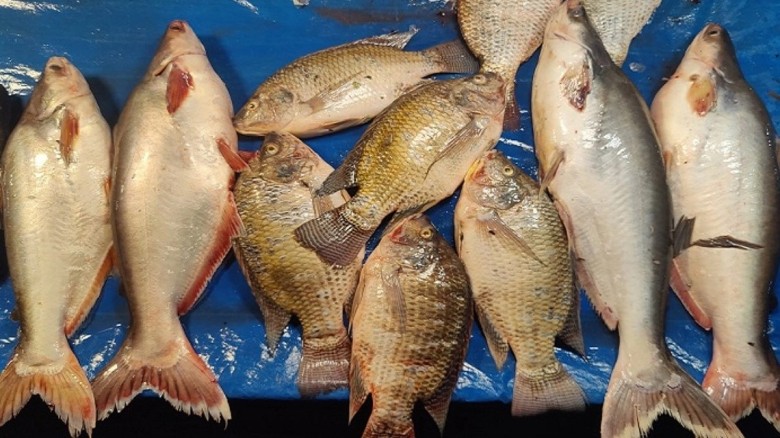
Last year the international intellectual property authority recognised the hilsa as a geographical indication product of Bangladesh. Now Bangladeshi scientists have achieved another milestone: decoding the fish's complete genome.
Four researchers at Bangladesh Agricultural University (BAU) in Mymensingh unravelled the full genome of the hilsa. They began the genome research in 2015.
The success is expected to play an important role in conserving the hilsa and in increasing its production and improving its quality. The researchers believe the results could bring economic gains for Bangladesh and make hilsa more readily available to consumers.
What the genome will reveal
The team, working under the name Ilish Genome Sequencing and Assembly, is coordinated by Professor Dr Md Samsul Alam of the Department of Fisheries Biology at BAU.
Asked what a genome is and how the information can be used, he said: "The genome is the complete code of life of an organism. An organism's birth, growth, reproduction and adaptation to the environment, along with its other biological activities, are run through the genome."
"The hilsa lives in the sea all year round and comes into the rivers only to spawn. From this complete genome sequence we will be able to learn when and where they lay their eggs."
Dr Md Samsul Alam said the work would also show how large the hilsa stock is within Bangladesh's waters and how widely it is spread across different geographical areas.
Source: BBC Bangla. First published in Bengali on The Agro News.
Comments
(0)