
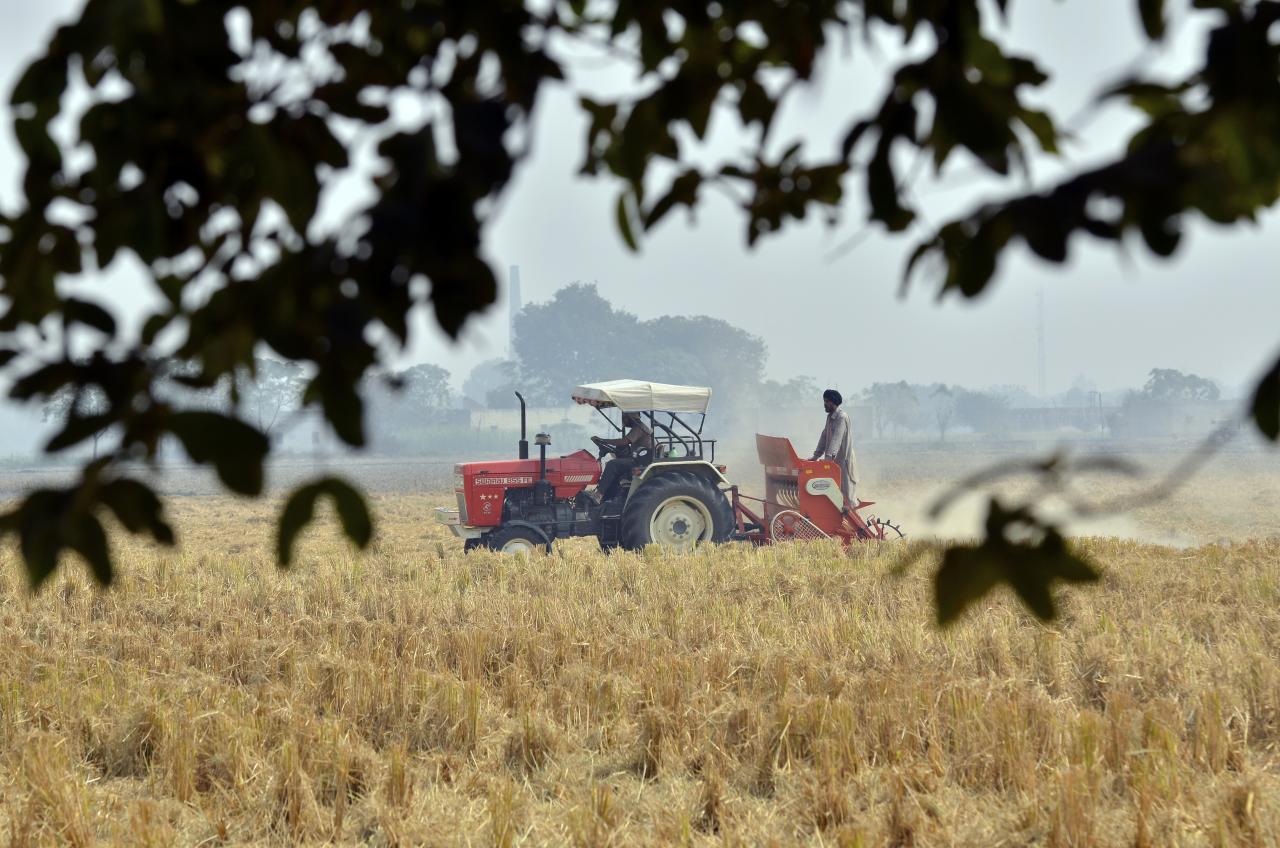
Four in five farmers in the Indian state of Haryana who take paddy straw off their fields, by baling it or using it as fodder, plan to keep doing so this year rather than burning it, according to a survey of 1,588 farmers by the Council on Energy, Environment and Water (CEEW). But the market behind the practice is thin: only 7 percent of farmers who bale say a buyer pays them.
Of the farmers who bale, 87 percent use aggregators. About 62 percent give their straw away, and 31 percent pay roughly INR 1,000 an acre to have their fields cleared. Most Super Seeder users run the machine two or more times to get a clean field, which takes the cost to INR 4,000 to 4,500 an acre. CEEW suggests combine harvesters fitted with Super Straw Management Systems followed by a single Super Seeder pass.
"An intention is not yet a practice, and what turns one into the other is income," said Kurinji Kemanth, programme lead at CEEW. Haryana has raised its target for industrial straw use from 1.1 to 2.3 million tonnes, yet only three of seven proposed compressed biogas plants are running. CEEW recommends fast-tracking approved plants and building bale storage near aggregation points.
Timing matters too. Of the Haryana farmers who reported burning in their village, 77 percent said it happens between 4 pm and 10 pm. In Punjab, satellite studies show peak burning moved from about 1.30 pm in 2020 to about 5 pm in 2024, after the satellites pass. A second CEEW study combined daily PlanetScope commercial imagery with free Sentinel-2 images over 1,600 sq km of Sangrur and Patiala in late 2024 and found two to five times more burnt fields in five villages than Sentinel-2 alone, with about 75 percent overall accuracy.
CEEW wants the Commission for Air Quality Management to add burnt-area estimates to fire counts and to track compliance through a portal. Stubble burning can contribute up to 40 percent of Delhi's daily PM2.5 on peak days. Punjab recorded 717 satellite-detected fires between 15 September and 27 October, down from 890 a year earlier.
Photo: CIAT / Wikimedia Commons (CC BY-SA 2.0)
Source: Global Agriculture

Comments
(0)