
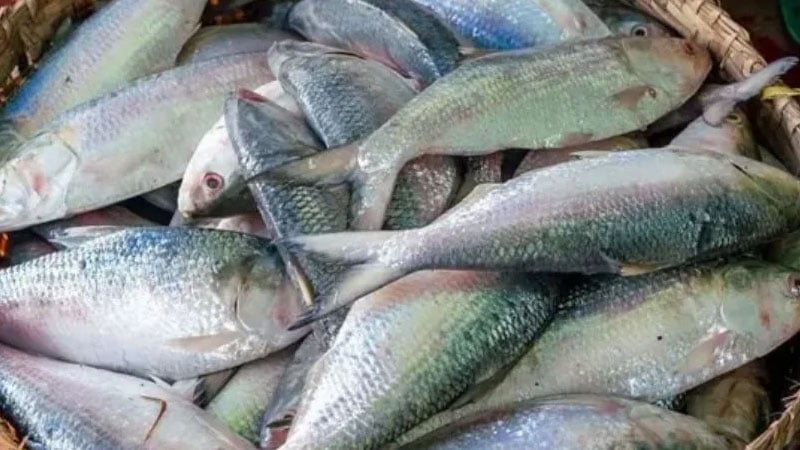
With hilsa production down and supply short in the domestic market, the Department of Fisheries allowed traders to import the fish from India. More than 3.5 lakh kilograms have come in through the Benapole land port in two months. In one of the world's leading hilsa-producing countries, the imports are now being questioned inside the Ministry of Fisheries and Livestock itself.
National Board of Revenue figures show that in July and August of the current financial year, 22 firms imported 3,52,786 kilograms of hilsa through Benapole, with an import value of about Tk 6 crore 92 lakh 95 thousand. All of it came from the Bharuch area of Gujarat, India.
Ministry sources say that when the minister for agriculture, fisheries and livestock, Mohammad Amin Ur Rashid, learned of the imports he expressed displeasure and asked the director general of the Department of Fisheries to explain. Steps to stop the imports followed. The director general, Dr. Md. Khaled Konok, has written to the ministry's secretary, and on the basis of that letter the ministry is preparing to recommend to the Ministry of Commerce that the imports be stopped.
The director general's explanation is that hilsa is a sea fish that enters the rivers to breed, and that Indian fishermen catching more of it at sea has contributed to the fall in Bangladesh's stock. With little hilsa in the market this year, limited imports were permitted under pressure from traders. Hilsa imports are not prohibited, he says, but no new permission will be given.
At a recent meeting of the national task force on hilsa resource development, state minister Sultan Salauddin Tuku said it was worrying that production had fallen to the point of importing fish, and called for identifying the causes and working on them in a coordinated way. Agricultural economist Dr. Jahangir Alam said this is the first time Bangladesh has imported hilsa and called it shameful; traders on both sides, he said, are looking to their own profit rather than to people's access to the fish, and national policy must govern both import and export of a fish of such national importance.
Speaking to Samakal on Thursday night, minister Mohammad Amin Ur Rashid said: "I did not know either that permission had been given to import hilsa. After learning of it I asked the Department of Fisheries how this import was permitted." The director general told him a small quantity had been allowed under pressure from traders, after which he ordered that no further imports be permitted; the necessary steps have been taken, he said.
With concern growing over the decline in the country's hilsa catch, the decision to import and its reversal change the market signals for fishermen, wholesalers and exporters alike.
Based on a report by Jahidur Rahman in Samakal.
Source: Samakal

Comments
(0)