
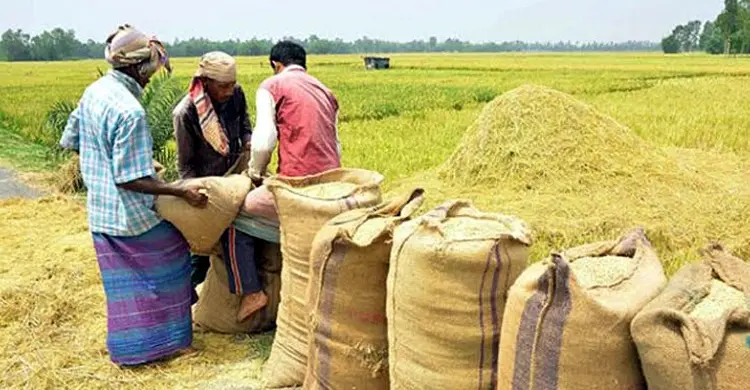
The government will buy eight lakh tonnes of paddy and rice from the domestic market this aman season, paying Tk 42 a kg for rice and Tk 28 a kg for paddy.
Food Minister Sadhan Chandra Majumder told journalists this after a meeting of the Food Planning and Monitoring Committee in the Cabinet Division conference room at the Secretariat on Tuesday (1 November).
He said government procurement of paddy and rice would start on 10 November.
Targets and prices
The minister said the target this year was to procure five lakh tonnes of rice and three lakh tonnes of paddy, at Tk 42 a kg for rice and Tk 28 a kg for paddy, with buying to start on 10 November.
In last year's aman season the government bought paddy at Tk 27 a kg and rice at Tk 40 a kg.
Asked whether farmers' interests had been considered in setting the prices, the food minister said no paddy had been bought through middlemen for three or four years. "For example, we buy paddy from farmers through an app, and we also procure by lottery from farmers' lists. The money goes directly into their bank accounts. There is no room for middlemen here," he said.
Asked about the global food crisis, he said: "Everything is on our minds. Prime Minister Sheikh Hasina is tackling the situation firmly. We are prepared. I do not think there will be a food crisis in Bangladesh."
On whether an increase of Tk 8 in the price of OMS flour had been proposed, Sadhan Chandra said there had been no such proposal and no increase. The price of flour remains Tk 18 a kg. The reason for not raising the price of government flour is that it will help at least those on low incomes, he said.
Aman outlook
On aman targets and production, Agriculture Minister Abdur Razzaque said: "Aman is a big crop for us, though boro is now much larger. Boro comes to two crore tonnes or more; aman is about one crore 50 tonnes. This year it rained only one day in the month of Shraban. We were very anxious about this. Everyone, from the Prime Minister down, was worried that paddy could not be transplanted."
He explained that aman flowers as the days get shorter, and once it flowers, production falls because the plants cannot grow tall. But right at the end, farmers managed to cultivate it more or less by irrigating in various ways, he said.
The agriculture minister said that if nature is favourable, there will be no risk to boro either.
Source: Jagonews24. First published in Bengali on The Agro News.
Comments
(0)