
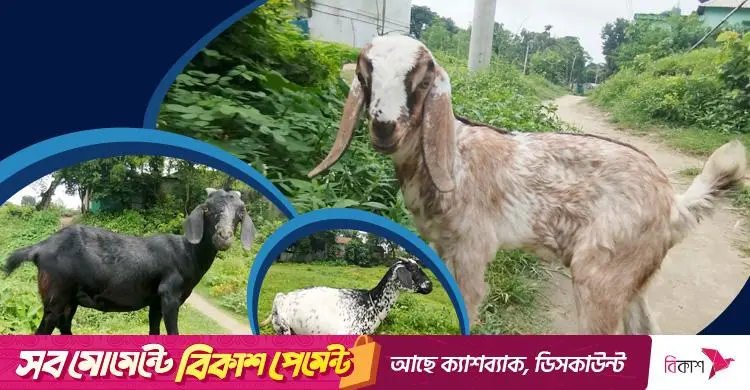
Goat rearing has long been a tradition in rural Bangladesh. It is seen as one of the easiest ways to earn with little land, small capital and modest effort. Almost every rural household in the country keeps some goats, and it is gaining importance as a source of income, especially for women and the elderly. Goat rearing contributes not just to a family's finances but to the rural economy as a whole.
Low cost, many uses
First, goats need no large space or special infrastructure. Many village families keep goats in their homestead yards, earning without using farmland. Feeding is relatively simple: rice bran, grass, leaves and various crop residues are enough, so keeping one or two goats costs next to nothing. Goats are also relatively hardy against disease, so treatment costs are low.
Second, the goat is a versatile animal. Its milk, meat and skin are economically valuable. Goat milk is nutritious and easy to digest, making it suitable for children and patients, and in various areas initiatives are now making ghee, chhana, yoghurt and cheese from it. Demand for goat meat is also growing, especially for Qurbani, weddings and social occasions.
Women and jobs
Third, goat rearing plays a role in women's economic empowerment. A research report by the Bangladesh Livestock Research Institute (BLRI) found that the livestock sector now creates 20 per cent direct and 50 per cent indirect employment, most of it for women. Many NGOs and government bodies support self-reliant women with free or low-interest loans for goat rearing. This lets women contribute directly to part of the family income and gain confidence and social standing.
Fourth, with money from selling goats, many families can pay for their children's education, medical care or house repairs. Starting with one or two goats, many have now built farms of 20 to 30 goats, which also create jobs for local unemployed young people.
Fifth, jobs are being created in related sectors such as feed supply, veterinary care, building pens and sheds, and meat processing and marketing, so even a small goat farm can build a whole small economic cycle.
Challenges
There are challenges too. If disease spreads, many goats can die at once, causing heavy financial losses, and without proper management and knowledge at breeding time kid mortality rises. Solving these problems needs training, vaccination programmes and wider government and private support.
In short, goat rearing is not just an age-old custom of an agricultural country but an effective tool for the socio-economic development of rural communities. With proper planning and incentives it can put the rural economy on a firmer footing, and it is an affordable and sustainable way to improve livelihoods, reduce poverty and empower women.
Source: Jagonews24. First published in Bengali on The Agro News.
Comments
(0)