
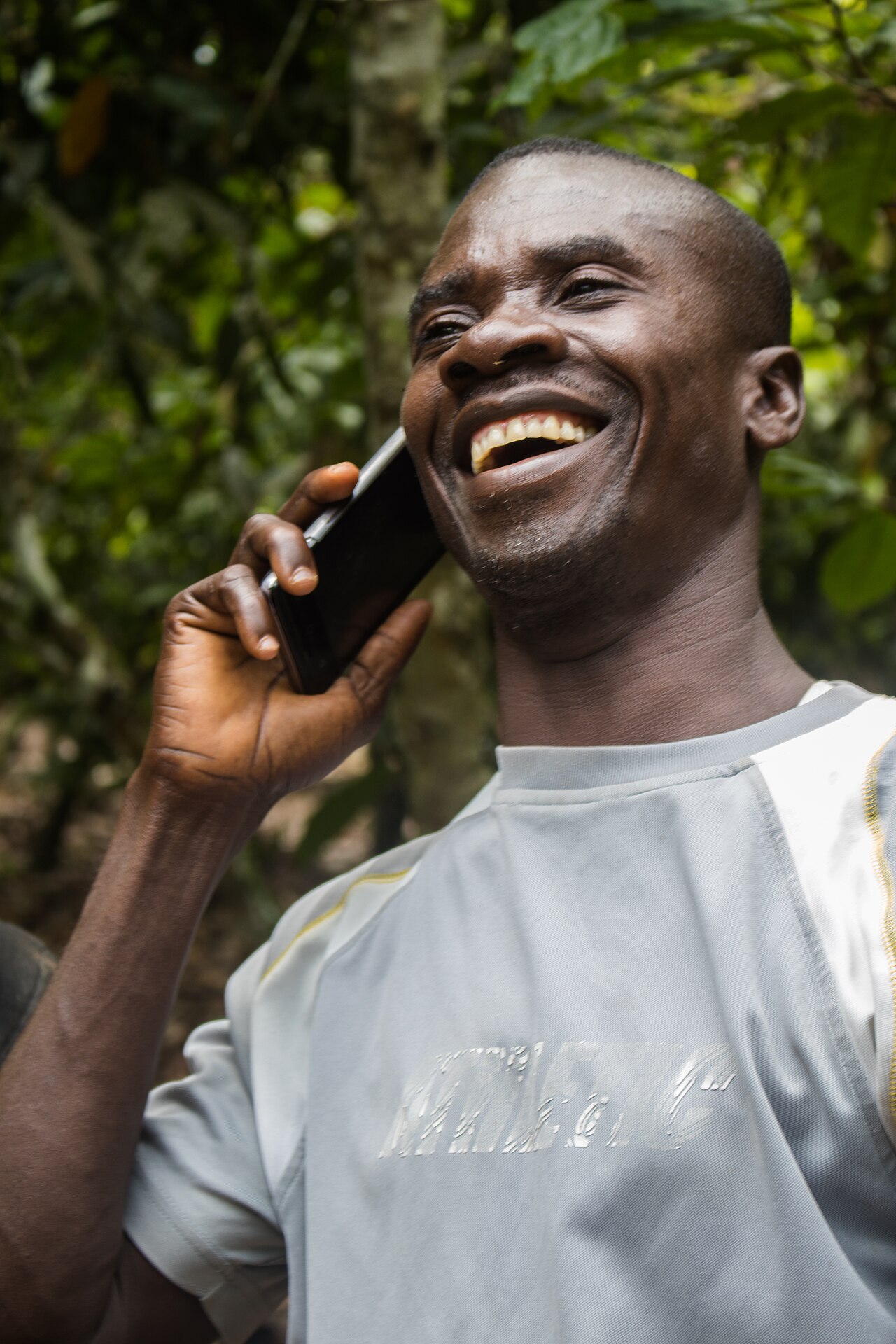
A new study published in Frontiers in Sustainable Food Systems has looked at how gender, age, literacy, money, infrastructure and social norms shape farmers' access to digital advisory services in Ghana. The research, highlighted by CABI ahead of Rural Women's Day on 15 October and World Food Day on 16 October, was carried out in the Ashanti and Bono regions, where CABI and other organisations promote digital tools for farmers.
It found that all farmers use a mix of traditional and digital channels, including interactive voice response services such as Farmerline 399, basic and smart mobile phones, and occasionally social media. Mobile phones are the main route to farm information for men and women alike, and also carry calls to extension officers, customers and peers, and mobile money payments.
Access differed sharply by gender and age. Younger men made more use of smartphones and online platforms, while adult women more often relied on basic phones, radio and voice-based services. Many women could not read or write and did not understand English, the language most farm apps use, so they depended on others to make calls or read messages. "I find it hard to read or even write. That is why I avoid using a smartphone," one woman farmer told the researchers.
Social norms added to the gap: women said it was seen as inappropriate for them to go to another household or public place to listen to the radio or watch television, so their access depended on having the devices at home. Poor network coverage and unreliable electricity limited everyone, but the cost of smartphones and data weighed more heavily on women. The study included both subsistence and commercial farmers, since women are often wrongly assumed to farm only for subsistence.
CABI cites FAO's estimate that if women had the same access to resources as men, they could grow enough food to lift an additional 100 to 150 million people out of hunger. It argues that digital inclusion means making sure every farmer can access, understand and use information, not just putting it online.
Photo: IanCamp / Wikimedia Commons (CC BY-SA 4.0)
Source: Global Agriculture

Comments
(0)