
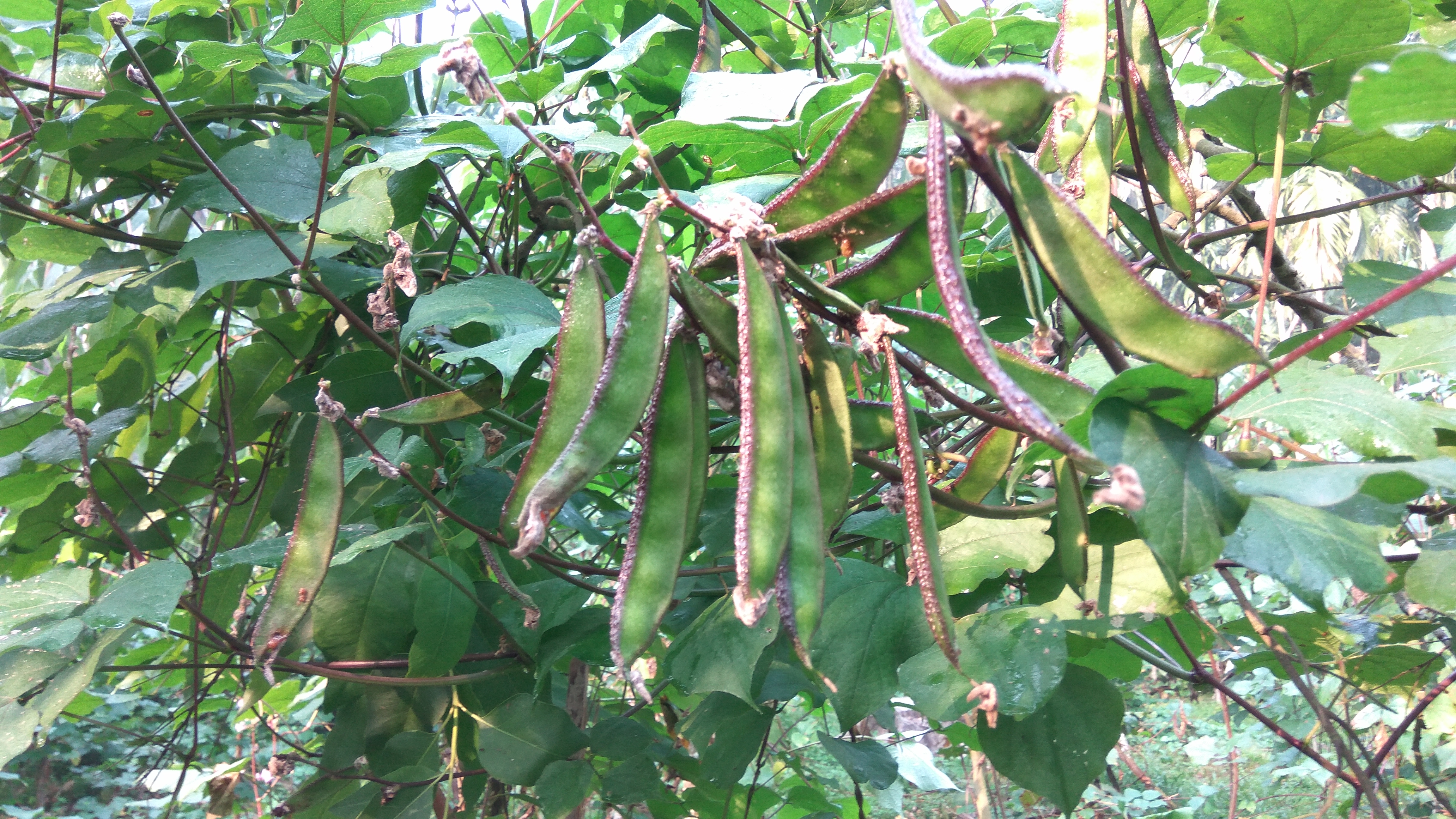
Residents of Gobindaganj upazila in Gaibandha district grew winter vegetables on the central divider of the Dhaka-Rangpur highway in the 2025-26 winter, turning the road island along about four kilometres of the upazila into a vegetable garden, the Bangladeshi news site Jagonews24 reported on 29 January 2026. The crops on the divider included country beans, bottle gourd, bitter gourd, brinjal, onion, papaya, radish, spinach, red amaranth, coriander leaves and chillies.
According to the report, local people began this unusual cultivation with help from the agriculture department and with seed they received free of charge. The paper said the soil was fertile and the yields good, and that the harvest had raised the growers' income: the families were eating the vegetables, sharing them with neighbours and selling some at market, and the work had created extra employment for local people. A sub-assistant agriculture officer of the Gobindaganj Upazila Agriculture Extension Office told the paper that the office was giving the growers advice and technical support.
A road island turned into a vegetable garden
Jagonews24's Gaibandha correspondent described the scene on the spot: along about four kilometres of the highway inside the upazila, the middle of the road was lined with many kinds of vegetables, all grown by people living in the area. The report said the colourful greens and vegetables had added to the look of the highway, and that ordinary people were getting fresh vegetables from it.
Residents and passers-by told the paper that the top of the divider had been lying empty, and that some enthusiastic people had therefore started growing different kinds of greens and vegetables on it. The produce met their families' food needs and some of it was being marketed. They said the road island used to be full of rubbish and was now full of colourful vegetables, which they found pleasant to look at.
The report did not give the number of people growing vegetables on the divider, the area under the crops, the quantity harvested or the money earned, and it did not say exactly when the planting had begun. It carried no comment from the Roads and Highways Department (RHD), which builds and maintains the country's highways, or from the highway police, and it did not say whether the growers had asked the RHD for permission.
What the growers and a truck driver said
Amirul Islam, a farmer from Chandipur village in Talukkanupur union, one of the 17 unions of Gobindaganj upazila, was among those who had planted the divider. "Quite a few stretches of the road divider of the Dhaka-Rangpur highway were lying abandoned. I have grown bottle gourd leaves, spinach, red amaranth and other vegetables on them. With help from the agriculture department the vegetables have also yielded well. After meeting our own needs we are giving some to our neighbours and selling some too," he told Jagonews24.
Another farmer, Shamim Mia, said the spaces in the middle of the road had been lying idle for a long time. "Nothing had been planted there and it had become dirty. We cleaned these spaces, and this year we grew beans, bottle gourd, bitter gourd, brinjal, chillies and many other vegetables and met our families' needs. We have sold at the market too, and the neighbours are eating them," he said.
Md Raju Ahmed, a truck driver who uses the highway, also spoke to the paper. "I drive a truck on this road. When I reach this part of Gobindaganj, my mood lifts. It is nice to see the greenery in the middle of the road," he said.
Advice from the upazila agriculture office
Bilas Kumar Bhattacharya, a sub-assistant agriculture officer at the Gobindaganj Upazila Agriculture Extension Office, was the only official quoted in the report. "Seeing the farmers' interest in growing vegetables on the abandoned space of the highway divider, the upazila agriculture extension office is giving them advice and technical support. An initiative like this is undoubtedly praiseworthy," he said.
The upazila office belongs to the Department of Agricultural Extension (DAE), the government department responsible for agricultural extension in Bangladesh. The DAE works under the Ministry of Agriculture and has its headquarters in Dhaka. It was formed in 1982 by merging six bodies: the Agriculture Directorate (Extension and Management), the Jute Directorate, the Plant Protection Directorate, the Horticulture Board, the Tobacco Development Board and the Central Extension Resource and Development Institute. A New Agricultural Extension Policy, adopted in 1996, guides the planning of its work.
The report did not name the programme under which the growers received free seed. The DAE runs several schemes that hand out seed and other inputs to small growers. One of them, the Establishment of Family Nutrition Gardens on Fallow Land and Homestead Courtyards Project (1st Revised), was the subject of a report from Birampur upazila in Dinajpur, a district on Gaibandha's western border, in April 2025. On 21 April 2025, according to the newspaper Desh Rupantor, the Birampur agriculture office gave 36 farmers organic fertiliser, fruit saplings and seed of 22 kinds of vegetables for three seasons, with netting, free of charge, and 100 farmers in that upazila had received inputs and technical support under the project in the 2024-25 fiscal year. The Birampur upazila agriculture officer, Kamal Krishna Roy, told the paper that family nutrition gardens were making an important contribution to the production of safe vegetables.
Gobindaganj, the largest upazila of Gaibandha
Gaibandha district, in Rangpur division, covers 2,114.77 square kilometres and has seven upazilas, according to Banglapedia, the national encyclopedia of Bangladesh. Banglapedia describes Gobindaganj as the largest of them and Palashbari as the smallest. Its article on the upazila puts Gobindaganj's area at 460.42 square kilometres and its population at the 2011 census at 514,696. The upazila borders Ghoraghat and Palashbari upazilas to the north, Sonatala and Shibganj to the south, Saghatta and Palashbari to the east, and Panchbibi to the west, among others. Gobindaganj thana was formed in 1912 and became an upazila in 1984.
About a quarter of the upazila lies in the Barind Tract, and the rest is river country: its main rivers are the Karatoya, the Bangali and the Nalua, and Saat Beel is its best-known wetland. Banglapedia's article on the Karatoya says that the Jamuneshwari-Karatoya flows south-southeast to Gobindaganj upazila, where its main stream turns east through the Katakhali and falls into the Bangali.
The Barind Tract, which Banglapedia calls the largest Pleistocene physiographic unit of the Bengal Basin, covers about 7,770 square kilometres of old alluvium, bounded by the Karatoya to the east. The encyclopedia describes its climate as one of extremes: average rainfall is about 1,971 millimetres, falling mainly in the monsoon, the region is classed as drought-prone, and in winter the temperature falls to about 5 degrees Celsius in some places of Dinajpur and Rangpur districts.
Farming dominates the upazila's economy. Banglapedia gives agriculture's share among its main sources of income as 66.92 per cent, and names paddy, jute, maize, sugarcane, wheat, potato, mustard and vegetables as its main crops, and mango, jackfruit, litchi, banana, coconut, papaya, melon and watermelon as its main fruits. On the ownership of agricultural land, the same article gives 59.43 per cent as landowners and 40.57 per cent as landless.
A highway being widened to four lanes
The stretch of the Dhaka-Rangpur highway that runs through Gobindaganj is part of the Elenga-Rangpur road, which the RHD has been upgrading to four lanes under the second South Asia Subregional Economic Cooperation (SASEC) road connectivity project. The Financial Express reported on 26 March 2024 that the project covered 190.2 kilometres between Elenga and Rangpur and was the second phase of the first SASEC project, which had widened the Tangail-Elenga stretch.
According to that report, the development project proposal was first approved in September 2016 at Tk 118.99 billion, revised in 2020 and 2021 to Tk 166.62 billion, and revised again in November 2022 to Tk 190.16 billion. The project needed 326 hectares of land across Sirajganj, Bogura, Gaibandha and Rangpur districts. Toll plazas at three points and axle-load control stations were added later, which the paper said would make the corridor nearly access-controlled and toll-operated.
The four-lane widening and a two-lane service road were expected to be finished by December 2024, the paper said, but the project's term was expected to be extended to 2026 because two flyovers, at Elenga and at Gobindaganj, and the Hatikumrul interchange would not be ready by then. Construction of the Gobindaganj flyover had not started because the land it needed had not yet been handed over by the office of the Gaibandha deputy commissioner. Overall progress stood at 73 per cent at the time, and the project director, Dr Waliur Rahman, said travel from Dhaka to Rangpur would take about four hours once the road opened. The Jagonews24 report of January 2026 did not say which part of the road the vegetable-covered divider belonged to.
The RHD, which runs the project, was established in 1962. It works under the Road Transport and Highways Division of the Ministry of Road Transport and Bridges, has its headquarters at Tejgaon in Dhaka and is responsible for building and maintaining the highways and bridges of Bangladesh.

The winter vegetables on the divider
Nearly 100 different local and exotic vegetables are grown in Bangladesh, Banglapedia says, and vegetables matter for the country's nutrition, income and food security; the recommended requirement it gives is 200 grams a person a day. The encyclopedia names cabbage, cauliflower, tomato, brinjal, radish, hyacinth bean and bottle gourd as the major winter vegetables, and notes that brinjal, pumpkin, okra and red amaranth can be grown in both seasons, while summer vegetable cultivation is held back by adverse weather and pest attacks. Most of the crops on the Gobindaganj divider belong to this winter group.
The country bean, known locally as shim (Lablab niger, also called hyacinth bean), is described by Banglapedia as a winter vegetable grown throughout the country and rich in calcium, phosphorus, protein and vitamin C. Seedlings are transplanted into the field from June to August, the crop is ready for harvest 80 to 90 days later, and the average pod yield is 10 to 12 tonnes a hectare. The pods are cooked as a vegetable and the dry seeds are used in various dishes.
Red amaranth, lalshak, is one of the leafy types of amaranth, herbaceous plants of the genus Amaranthus native to the Indian or Indo-Chinese region. Banglapedia says the tender leaves and stems are rich in vitamins A and C, calcium and iron. The leafy type can be grown all year but yields most in the winter months; two important varieties are Altapeti and BARI Lalshak-1, from the Bangladesh Agricultural Research Institute, and depending on the variety the yield can reach about 15 tonnes a hectare.
Radish, mula (Raphanus sativus), is mainly a winter crop, though it can be grown to some extent in summer. Its leaves are rich in vitamins A, B and C and its root contains a moderate amount of vitamin C, calcium and phosphorus. Banglapedia names Red Bombay, Mino Early and Mino Saki as important varieties and three varieties released by the Bangladesh Agricultural Research Institute, Tasakisan, Pinky and Druti, with yields of 30 to 35 tonnes a hectare. Brinjal (Solanum melongena) is planted in October and November and is ready for harvest in 90 to 100 days, with yields of 40 to 45 tonnes a hectare depending on the variety.
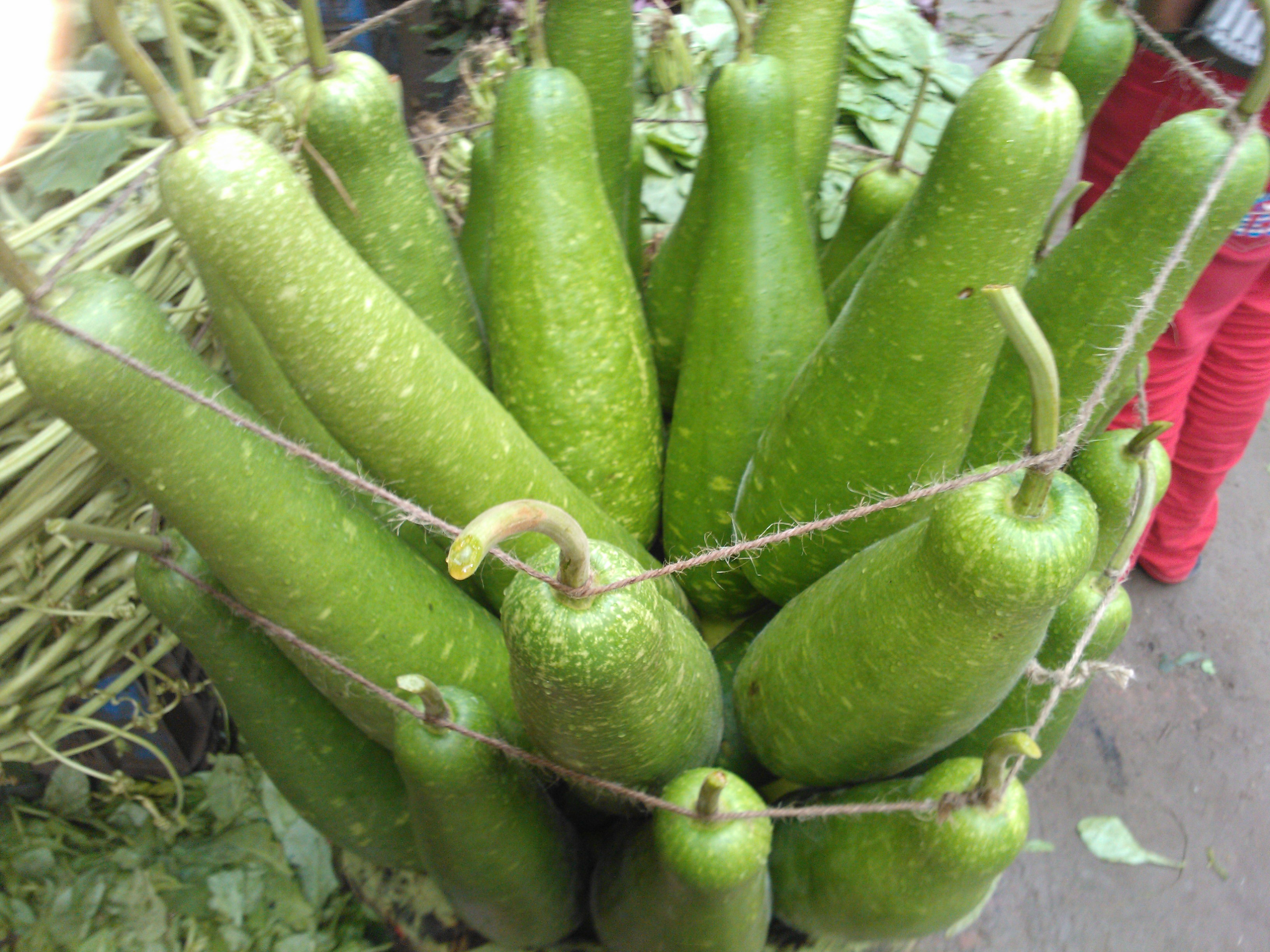
Bottle gourd, lau (Lagenaria siceraria), and bitter gourd, karala or ucche (Momordica charantia), belong to the gourd family, Cucurbitaceae, and chilli belongs to the genus Capsicum in the nightshade family, Solanaceae, the same family as brinjal. Amirul Islam's list of crops began with laushak, the young leaves and shoots of the bottle gourd plant, which are eaten as greens.
Vegetable output in Bangladesh and the north
Bangladesh grows vegetables on nearly one million hectares and produces about 17 million tonnes a year, the Financial Express reported on 14 September 2025, citing the Bangladesh Bureau of Statistics (BBS). The same report put vegetable production in the 2020-21 fiscal year at 14.82 million tonnes and noted that rice and other cereals occupy more than 75 per cent of the country's 8.5 million hectares of arable land. Citing the Food and Agriculture Organization of the United Nations (FAO), it said Bangladesh ranked third in the world in vegetable production, after China and India.
In April 2023 the Financial Express reported that the DAE's Rangpur region, which includes Gaibandha, had set a record target of 961,170 tonnes of winter vegetables from 40,470 hectares for the 2022-23 Rabi season, and that farmers had planted 40,558 hectares, 198 hectares more than the target. By then vegetables had been harvested from 37,485 hectares, producing 943,137 tonnes at an average of 25.16 tonnes a hectare, and the DAE expected the total to exceed 10.23 lakh tonnes when the harvest ended. The DAE's deputy director in Rangpur, Md Obaidur Rahman Mandal, told the paper that farmers had brought more land under vegetables that season, including mainland fields, riverine char areas and fallow homesteads, with the department's help.
For the 2025-26 winter, the season of the Gobindaganj divider garden, the DAE set a target of 19.75 lakh tonnes (1.975 million tonnes) of vegetables from 82,525 hectares in the eight districts of neighbouring Rajshahi division, the national news agency BSS reported in November 2025. Of this, the Bogura agricultural zone, whose district borders Gaibandha to the south, was to produce 10.13 lakh tonnes from 42,830 hectares, and the Rajshahi zone 9.62 lakh tonnes from 39,695 hectares.
What the Highways Act says about highway land
The law that governs the use of highways in Bangladesh is the Highways Act 2021 (Act No. 28 of 2021, dated 7 December 2021). Parliament passed it on 27 November 2021 in place of the Highways Act of 1925, Bangla Tribune reported at the time. In the Act, the word "department" means the Roads and Highways Department, and a "highway" includes not only the road itself but also the land within its right of way, its slopes, berms, roadside ditches and borrow pits, all land next to the highway under the department's control, and the trees standing on that land.
Among the department's duties listed in section 4 of the Act are aesthetic tree planting along highway corridors, giving priority to the engineering safety of traffic, future road development, the durability of the pavement and drainage, and taking the measures needed to beautify highways. Section 13 tells the department to keep highways and their movable and immovable property and structures free of illegal occupation and unauthorised entry.
Section 9 sets out restrictions on the use of a highway. Among them, no one may use a highway to dry crops, straw or other goods; no one may stay on any part of a highway except for purposes permitted under the Act; no one may damage a highway divider; no part of a highway within its control line may be used for structures, markets or commercial purposes without the government's prior approval; and no rubbish may be thrown or heaped on a highway or its right of way. Section 14 sets the penalties: a fine of 1,000 to 5,000 taka for drying crops on a highway or staying on it without a permitted purpose, and a fine of 10,000 to 50,000 taka for building an unauthorised U-turn or damaging a divider.
The Jagonews24 report did not discuss these provisions or say whether the cultivation had the department's approval. The only official it quoted, the agriculture extension officer, described the initiative as praiseworthy; no comment from the RHD, the highway police or the upazila administration appeared in the report.
Vegetables beside traffic: what research has found
Researchers in Bangladesh have studied whether traffic affects crops grown close to roads. A study published in the Bangladesh Journal of Agricultural Research in March 2012 by Habib Mohammad Naser, Sarmin Sultana, Rebeca Gomes and Shamsun Noor of the Soil Science Division of the Bangladesh Agricultural Research Institute measured lead, cadmium and nickel in roadside soils and vegetables along a major highway in Gazipur. Soil samples were taken at 0, 50, 100 and 1,000 metres from the road, and the vegetables tested were bottle gourd and pumpkin.
The scientists found that the concentrations of lead and nickel in both the soil and the vegetables fell with distance from the road, which they took to indicate a link with traffic and vehicle emissions, while the concentration of cadmium did not depend on distance. At every distance, the heavy metal content of soils and vegetables followed the order nickel, then lead, then cadmium. The study concerned a highway in Gazipur, not the Dhaka-Rangpur highway, and the Jagonews24 report did not mention any testing of the vegetables grown on the Gobindaganj divider.
The World Health Organization (WHO), in its fact sheet on lead poisoning as it stood in December 2025, said that people are exposed to lead mainly by inhaling lead particles from burning lead-containing materials and by swallowing contaminated dust, soil, water or food. It said that there is no level of exposure to lead known to be without harmful effects, that young children are particularly vulnerable and may absorb four to five times as much lead as adults from an ingested dose, and that lead can permanently affect children's brain development. The WHO cited estimates from the Institute for Health Metrics and Evaluation that more than 1.5 million deaths worldwide in 2021 were attributable to lead exposure, mainly through its effects on the heart and blood vessels.
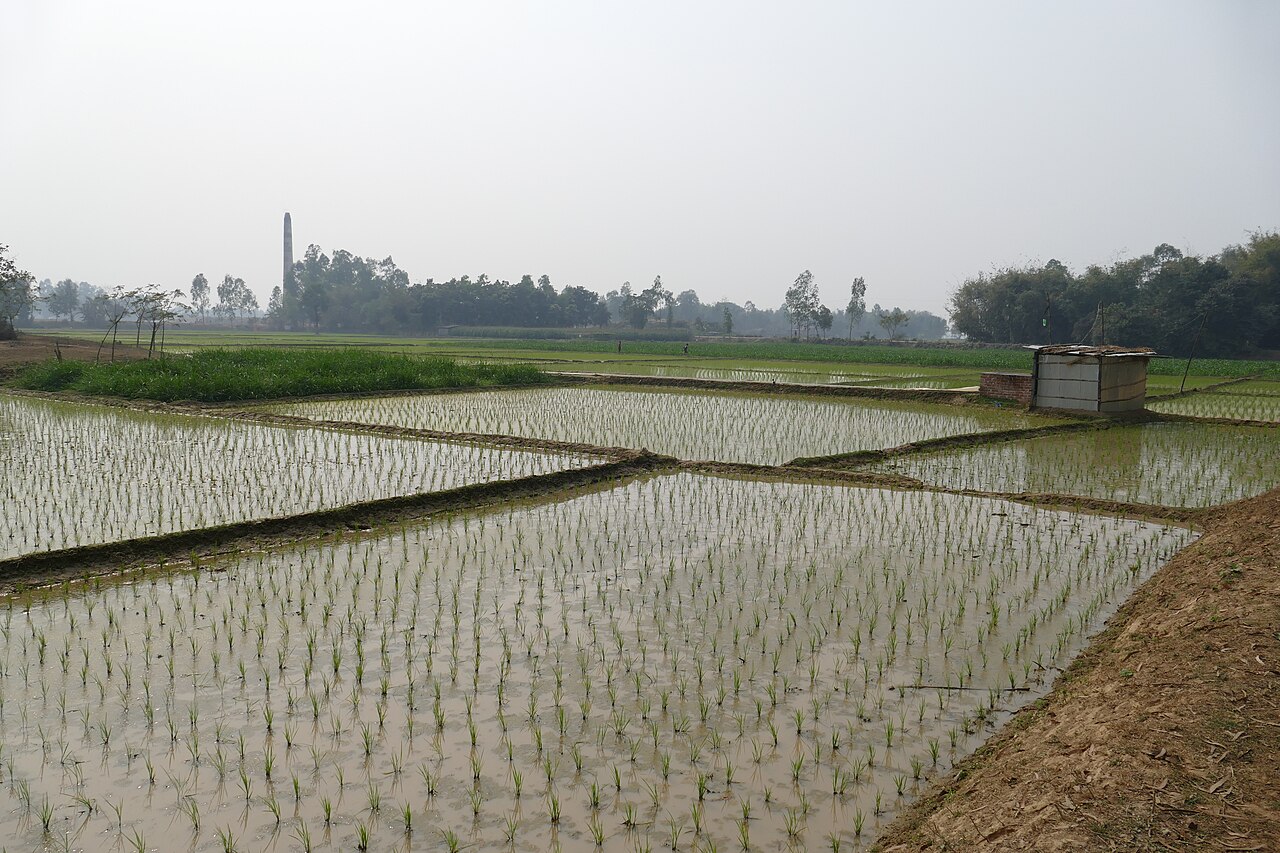
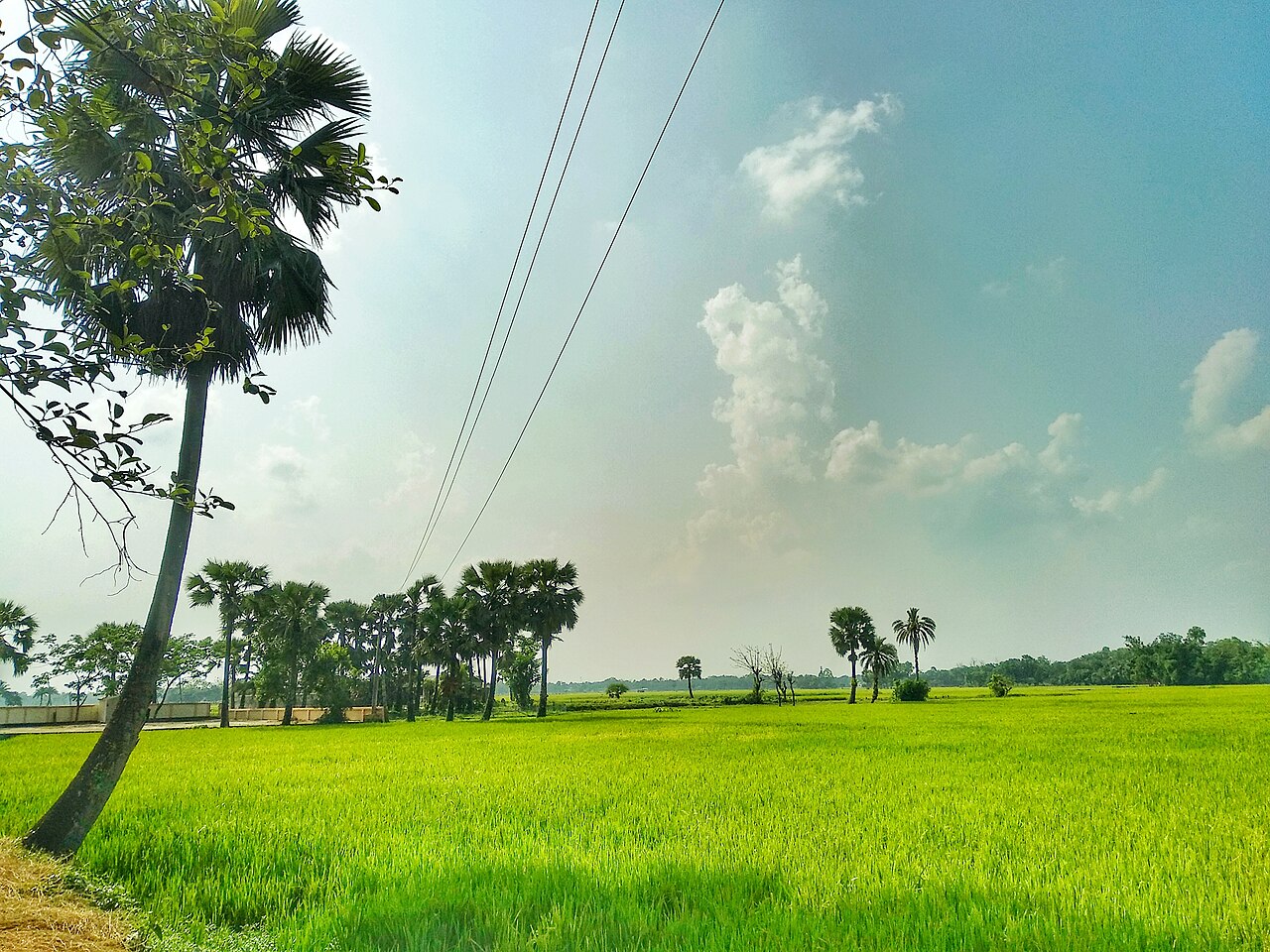
Photo: কামরুল ইসলাম শাহীন / Wikimedia Commons (CC BY-SA 4.0)
Sources: Jagonews24, Banglapedia (Gobindaganj Upazila; Gaibandha District; Barind Tract; Karatoya River; Vegetable; Bean; Amaranth; Radish; Brinjal), The Financial Express (26 March 2024; 2 April 2023; 14 September 2025), BSS via FreshPlaza (28 November 2025), Desh Rupantor (21 April 2025), Bangla Tribune (27 November 2021), Highways Act 2021 (Laws of Bangladesh, Legislative and Parliamentary Affairs Division), Bangladesh Journal of Agricultural Research (Naser and others, 2012), World Health Organization, Wikipedia (Department of Agricultural Extension; Roads and Highways Department)
Comments
(0)