
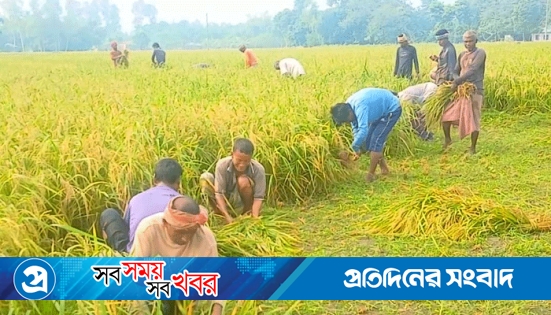
IRRI-Boro cultivation has begun in Gaibandha despite cold and dense fog. Although seedlings are being damaged by the cold, farmers are busy transplanting.
Farmers complain that labourers are demanding more money to work in the fields because of the cold, and that production costs have risen at the very start of the season. Yet paddy prices do not match costs; they say costs rise year after year while paddy prices do not, and even fall, leaving farmers frustrated.
The district agriculture department, however, says that although seedlings have been damaged by the cold, there will be no shortage, and IRRI-Boro cultivation will again exceed the target. It says paddy prices are rising along with labour and production costs.
In the fields
Farmers were seen busy with IRRI-Boro across Gaibandha's seven upazilas: some preparing land, some lifting seedlings, others transplanting.
Farmers said ploughing, fertiliser, pesticide, wages and irrigation water all cost more, while paddy prices are low against production costs. Last year they battled two floods and got a good harvest but not a fair price. They are growing IRRI-Boro despite the cold and the costs simply to survive.
Abdur Rashid, a farmer from Burungi village in Kachua union of Saghata upazila, said: "We are working hard, ignoring the cold and the costs, in the hope of a good harvest. Even so, we are denied a fair price when we sell paddy. Now growing rice does not even cover the cost of production."
Abu Taleb, a farmer from Mahimaganj union in Gobindaganj upazila, said it is now very hard to pay for his children's schooling and run the household from rice farming. "Even though the government buys paddy by lottery, we do not get a fair price. The lottery is held among all farmers together instead of drawing up a list of actual paddy growers, so most growers miss out on selling paddy."
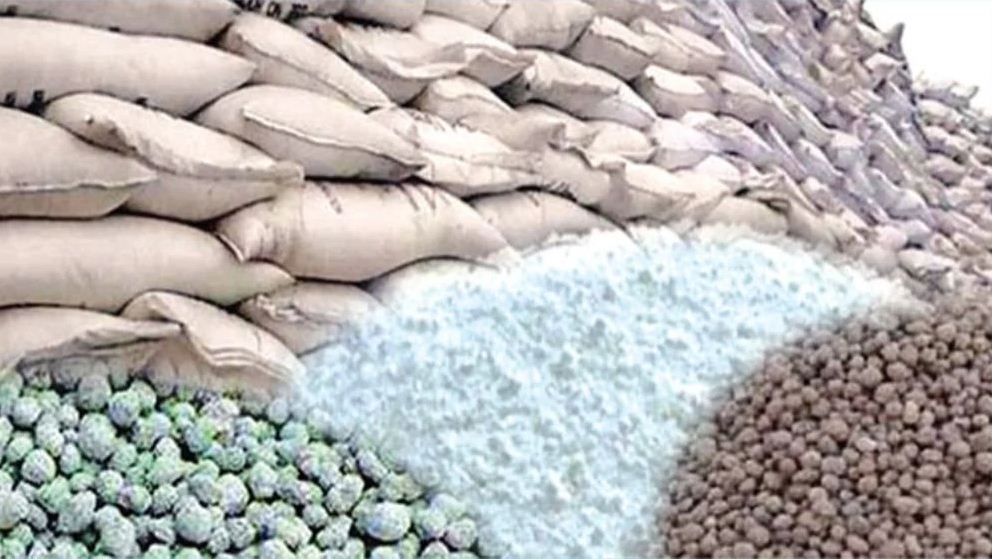
Abdul Momin, a farmer from Ramchandrapur village in Sadar upazila, said labourers are charging more to work in the bone-chilling cold and foggy fields. "A sack of urea costs Tk 800, irrigating the land costs Tk 1,500 to Tk 2,000, and extra is charged for sowing seed, transplanting and ploughing. Production costs have risen at the start of the Boro season. At harvest we will find there is no price in the market, and then all our toil goes to waste."
Mahabbat Ali, a farm labourer from Shahapara union in Sadar upazila, said working in the cold and fog is very hard, but he has to work to run his household. Labour is dearer, he said, and workers are not as easy to find as before.
Officials expect target to be exceeded
Masudur Rahman, deputy director of the Department of Agricultural Extension (DAE) in Gaibandha, said the Boro target this year is 130,500 hectares. Although seedlings have been damaged by the cold, there will be no shortage, and IRRI-Boro cultivation will again exceed the target.
He said paddy prices have risen along with labour and production costs, and advised farmers not to lose heart but to carry on with Boro cultivation.
Source: Jagonews24. First published in Bengali on The Agro News.
Comments
(0)