
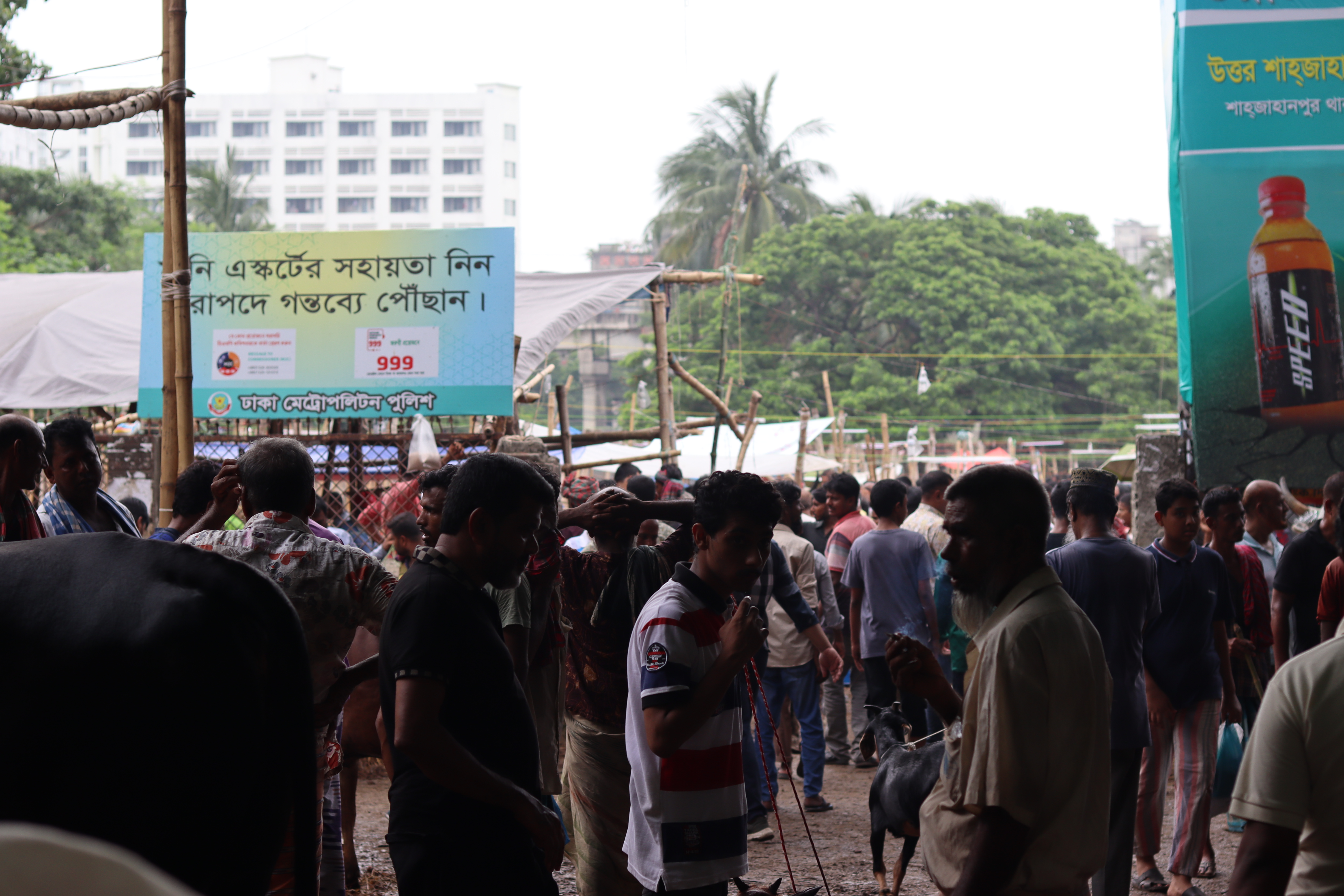
Small and medium-sized cows were selling fastest at the Gabtoli cattle market in Mirpur, Dhaka, on Thursday, 5 June 2025, two days before Eid-ul-Azha, Jagonews24 reported that afternoon. Trade at the market, one of the capital's oldest and best known, had picked up by midday: four or five cows were leaving through the main gate every minute, and many more stood waiting in front of the room where the hasil, the market toll, is paid.
Traders said the cows in greatest demand were those priced between Tk 1 lakh and Tk 2 lakh. Buyers and visitors told the reporter that people offering a sacrifice on their own preferred small and medium cows, while people who share a sacrifice with others looked for bigger animals. The Daily Star had reported on 28 May that Eid-ul-Azha would be celebrated in Bangladesh on 7 June, a Saturday, so the Thursday and Friday before it were expected to be the busiest days of the trade.
What buyers paid at Gabtoli on Thursday
Hanif Bepari, a trader who had brought cattle from Barishal, told Jagonews24 that the small and medium cows were going quickly and that demand was highest for animals in the Tk 1 lakh to Tk 2 lakh range.
The buyers the reporter met that day paid within that range. Billal Hossain, who came from Mirpur-13, bought a cow for his sacrifice for Tk 1 lakh. Abul Hossain, another Mirpur resident, bought a cow for Tk 1 lakh 67 thousand. Afnan, who came from Zoo Road with his father, paid Tk 1 lakh 70 thousand for a red cow.
Buyers and visitors at the market also said that the very smallest cows were selling at prices that looked a little high for their size, a sign of how many households were chasing the same kind of animal.
Sellers saw the market differently. Abdus Salam, a seller, said prices were comparatively much lower than he had hoped. "If buyers offer within our target, we let the cow go, because we have brought a lot of cows and more are coming. We have to sell them all. Often the target is not met for every cow," he told Jagonews24.
Why the size of the cow matters for Qurbani
The choice the buyers described follows from the rules of the sacrifice itself. Banglapedia, the national encyclopedia of Bangladesh, describes Eid-ul-Azha, popularly called Kurbanir Eid in the country, as one of the two main Muslim festivals, observed on the 10th of Dhul Hijjah. The sacrifice begins after the Eid prayer and may also be offered on the following day, and according to some on the third day as well.
According to Banglapedia, a camel, cow or buffalo can be sacrificed in the names of seven persons, while a goat or a lamb can be sacrificed in the name of one person only. That is why a single household with a modest budget often buys a small or medium cow or a goat, while several families who pool their money for shares in one animal can afford a larger bull. Banglapedia notes that cows, goats and buffaloes are the animals usually sacrificed in Bangladesh, and that some people also bring in camels.
The encyclopedia also records the conditions buyers check at the market: an animal offered for sacrifice must be of a specified age and free of certain defects. It should not be blind, and it should not have broken legs, broken horns or ears that are cut off in part or in full. After the sacrifice, one third of the meat is customarily kept by the owner, one third is given to relatives and the rest is distributed among the poor.
Gabtoli, Dhaka's permanent cattle market
The Gabtoli market is in the Mirpur area of Dhaka. According to the Bengali-language Wikipedia, it is the largest cattle market in the capital and lies in Ward 9 of Dhaka North City Corporation (DNCC). The same account traces the market to around 1918, when Haji Munshi Lal Mia, a zamindar of Mokimabad pargana who lived on Mazar Road in Mirpur, set up a livestock market beside Mirpur village. At first it sat on the bank of the Turag river, met once a week, and people from the surrounding area came on foot or by boat to buy and sell. The name is said to come from the many large gab trees that grew in and around the market. The government nationalised the market in 1973.
Reports in the days before this Eid described Gabtoli in similar terms. UNB, in a report published on 1 June 2025, called it the city's only permanent haat, and BSS, the state news agency, described it on 5 June as the capital's largest permanent cattle market. A BSS report of 3 June, carried by The Daily Ittefaq's English edition, said DNCC had set up nine temporary markets for the Eid alongside its permanent market at Gabtoli, while Dhaka South City Corporation (DSCC) had set up eight temporary markets alongside its own permanent market at Sarulia.
On 5 June, BSS also found the trend Jagonews24 reported. At Gabtoli, a buyer told the agency that small cows were in the highest demand. Goats were selling there for about Tk 10,000 to Tk 15,000 for small ones, Tk 20,000 to Tk 25,000 for medium ones and Tk 30,000 to Tk 50,000 for large ones, BSS reported. Camels brought from Rajasthan in India drew large crowds, including people making online videos.
How Dhaka's Eid markets were organised in 2025
Every year the two city corporations lease out temporary cattle markets on open grounds across Dhaka for the Eid trade, in addition to the permanent markets. The number given for 2025 differed from one report to another. At a press conference reported by The Daily Star on 4 May 2025, the fisheries and livestock adviser said Dhaka would have 19 cattle markets. UNB's report of 1 June put the number of official markets at 18 and named, besides Gabtoli, the sites at Sadeque Hossain Khoka Playground, Dholaikhal, Bosila, Kamrangirchar, Eastern Housing, Mirpur and Uttara Sector 15. According to the BSS report of 3 June, a director of the Department of Livestock Services (DLS) said 19 temporary markets had been set up under the two city corporations, and animals were also being traded at two permanent markets. BSS on 5 June referred to all 22 designated cattle markets in the capital.
UNB said the official markets are usually set up two to three weeks before Eid, that activity began in the final week of May, and that smaller unauthorised haats had started forming in some neighbourhoods. BSS reported on 5 June that the markets had officially opened on Tuesday, 3 June, that they usually run for five days including Eid day, and that city corporation officials said court orders had barred markets at Aftabnagar and Meradia that year. Security had been tightened at all the market sites.
Trading started slowly. The BSS report of 3 June said the makeshift markets had not yet drawn crowds a day after they were set up, though truckloads of animals kept arriving from across the country, and traders expected the peak on Thursday and Friday. By the afternoon of 5 June, BSS reported a surge of sellers and buyers at the city's markets despite intermittent rain and mud, with buyers and sellers saying that prices were generally within tolerable limits.
National supply and the decision on imports
The scene at Gabtoli unfolded against an official estimate that the country had more sacrificial animals than it needed. At the press conference reported by The Daily Star on 4 May 2025, the fisheries and livestock adviser said the government would not allow cattle imports before Eid-ul-Azha because domestic supply was higher than demand. "No cattle will be allowed entry," she said. According to a press statement quoted in the same report, Bangladesh had 1.24 crore animals ready for sacrifice, including 56 lakh fattened bulls and buffaloes, and the adviser said: "We expect there will be a surplus of 20.68 lakh cattle this year."
A BSS report published by Bonik Barta's English edition on 17 May 2025 gave the ministry's breakdown: more than 56.02 lakh cattle and buffaloes, more than 68.38 lakh goats and sheep, and more than 5,500 animals of other species. The report said the government was training farmers not to use steroids and hormones to fatten animals, and quoted a senior ministry official as saying that the price would depend on demand and supply and that he expected prices to remain stable.
The figures for previous years show the scale of the trade. The Daily Star report cited a DLS estimate that about 1.04 crore animals were sacrificed in 2024, up from 1.01 crore the year before. For 2024, the DLS count of animals available for sacrifice was 1 crore 29 lakh 80 thousand 367, Prothom Alo reported on 21 May 2024, including 76 lakh 17 thousand 801 goats and sheep.
The BSS report carried by Bonik Barta on 17 May also said the ministry had given more than one lakh heifer calves (bakna) free of charge to farmers and poor families in Lakshmipur, Faridpur, Noakhali, Sirajganj, Jhalokati, Narayanganj and Rajshahi, and that Department of Livestock Services officials were working with farmers in the field and monitoring their work.
Imported cattle played little part in the Dhaka trade in 2025. UNB reported that only a limited number of animals were coming from India and Nepal because of stricter cross-border rules, and traders at several markets told BSS on 5 June that Indian cattle were largely absent. Domestic cows, especially those raised on local farms, were the buyers' first choice, BSS said.
Prices and mood at other Dhaka markets that week
Reports from other markets in the same week showed buyers working to similar budgets. At the market on the Dhaka Polytechnic Institute ground in Tejgaon, BSS reported on 3 June, sellers and buyers said more than 10,000 animals had been sold there at the previous Eid-ul-Azha, and they expected about 20,000 this time. A trader from Islampur in Jamalpur who had brought 16 cows was asking Tk 1.30 lakh to Tk 1.40 lakh per cow, and other traders had brought 16 cows from Pabna and 22 from Chuadanga. A buyer from Nakhalpara said his budget was Tk 1.40 lakh: "The price does not seem high, but I will buy a cow within my budget." Most customers said they would compare prices across markets and buy over the next two days.
Animals were also moving through the country markets that feed Dhaka. The BSS report of 3 June described a farmer from Binnadari village in Shahzadpur upazila of Sirajganj who had taken two cows, each weighing more than 240 kg, to the Koromza haat in Bera upazila of Pabna on Tuesday. At the Polytechnic ground in Dhaka, a representative of the company that held the market lease told BSS that a lot of cows were coming to the market this time.
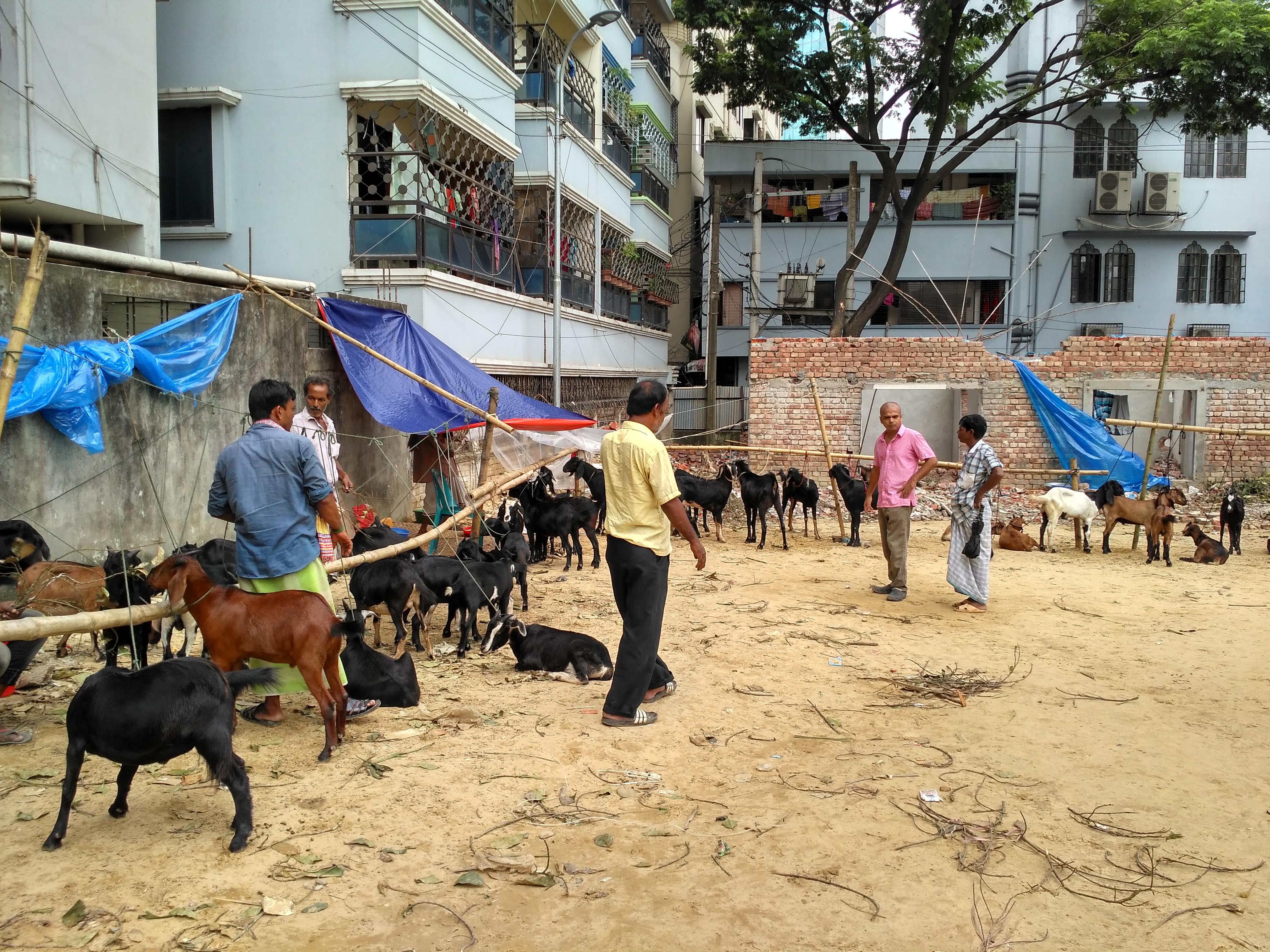
By 5 June, BSS reported, demand at the Polytechnic ground was high for small to medium domestic breeds; prices had been slightly lower earlier in the week but had risen a little in the previous 24 hours, though buyers and traders still considered them reasonable. At the North Shahjahanpur rail gate market, a university student told the agency that prices seemed a bit lower than in previous years, and at the Brothers Union Club market under DSCC a buyer said there was a good supply of all sizes at affordable prices. Goats were generally selling for Tk 10,000 to Tk 20,000 across the markets.
Not everyone saw prices the same way. In UNB's report of 1 June, published before the markets opened officially, a Mirpur resident said prices were very high and bargaining was tough, and a cattle trader from Pabna said transport costs had gone up because of fuel prices and road tolls, which made it hard to offer lower prices. A cattle transporter from Kushtia warned that heavy rain before Eid would turn the markets into mud.
Services at the markets: vets, banks and transport
The government and the city authorities set up several services around the markets. The fisheries and livestock adviser said at the 4 May press conference that 20 veterinary teams would work in the markets, according to The Daily Star, which also reported that a special train would run from northern Bangladesh to help carry animals to the cities.
UNB listed the arrangements reported for the official markets in Dhaka:
- supply of clean water and waste management at the market sites
- mobile veterinary clinics, CCTV cameras and security patrols
- promotion of digital payments to reduce fraud and theft
- temporary bank booths at market sites for cash deposits, withdrawals and opening accounts
- faster drainage work at haat sites ahead of forecast rain
Bangladesh Bank also asked bank branches near the cattle markets in Dhaka and Chattogram to stay open from 10am to 10pm from 3 June until the day before Eid, UNB reported, so that buyers and sellers did not have to carry large amounts of cash.
Where the cattle come from
The animals at Dhaka's markets come from farms and households across the country, and the traders the reporters met in 2025 had come from Barishal, Jamalpur, Pabna, Chuadanga, Faridpur and Kushtia. Banglapedia notes that most of Bangladesh's cattle are non-descript indigenous zebu (humped) animals kept for several purposes at once: milk, meat, draught power and dung for manure and fuel. Cattle are spread almost evenly across the country, with a slightly higher concentration in the north.
Some local types are better known than others. According to Banglapedia, the best local cattle are found in the Pabna, Sirajganj, Chittagong and Munshiganj areas: a medium-sized type in the Pabna and Sirajganj area known as Pabna cattle, the Red Chittagong cattle, and a type known as White Munshiganj cattle. The encyclopedia says local cattle are less prone to disease and tolerate heat better than pure and crossbred animals, which need more feed and care.
Efforts to raise the output of local cattle go back decades. Banglapedia records that exotic breeds such as Holstein-Friesian, Jersey, Sahiwal, Sindhi and Sahiwal-Friesian crosses have been introduced several times to crossbreed with local cows, and that pure exotic animals, their crosses and upgraded cattle are now kept on government dairy farms, commercial dairy farms, in milk-pocket areas and in urban and semi-urban areas. The encyclopedia adds that no specific cattle breed has yet been established in Bangladesh, though long natural selection has produced the improved indigenous varieties named above and the North Bengal Grey cattle.
The Eid sacrifice also feeds a major industry. Banglapedia's entry on the leather industry says about 40 percent of the country's supply of hides and skins comes from animals slaughtered during Eid-ul-Azha. The encyclopedia's entry on the festival adds that the hide of a sacrificial animal may be used by the owner or donated, and that the hide, or the money from its sale, should go to the poor or to poor students of madrasahs and orphanages.
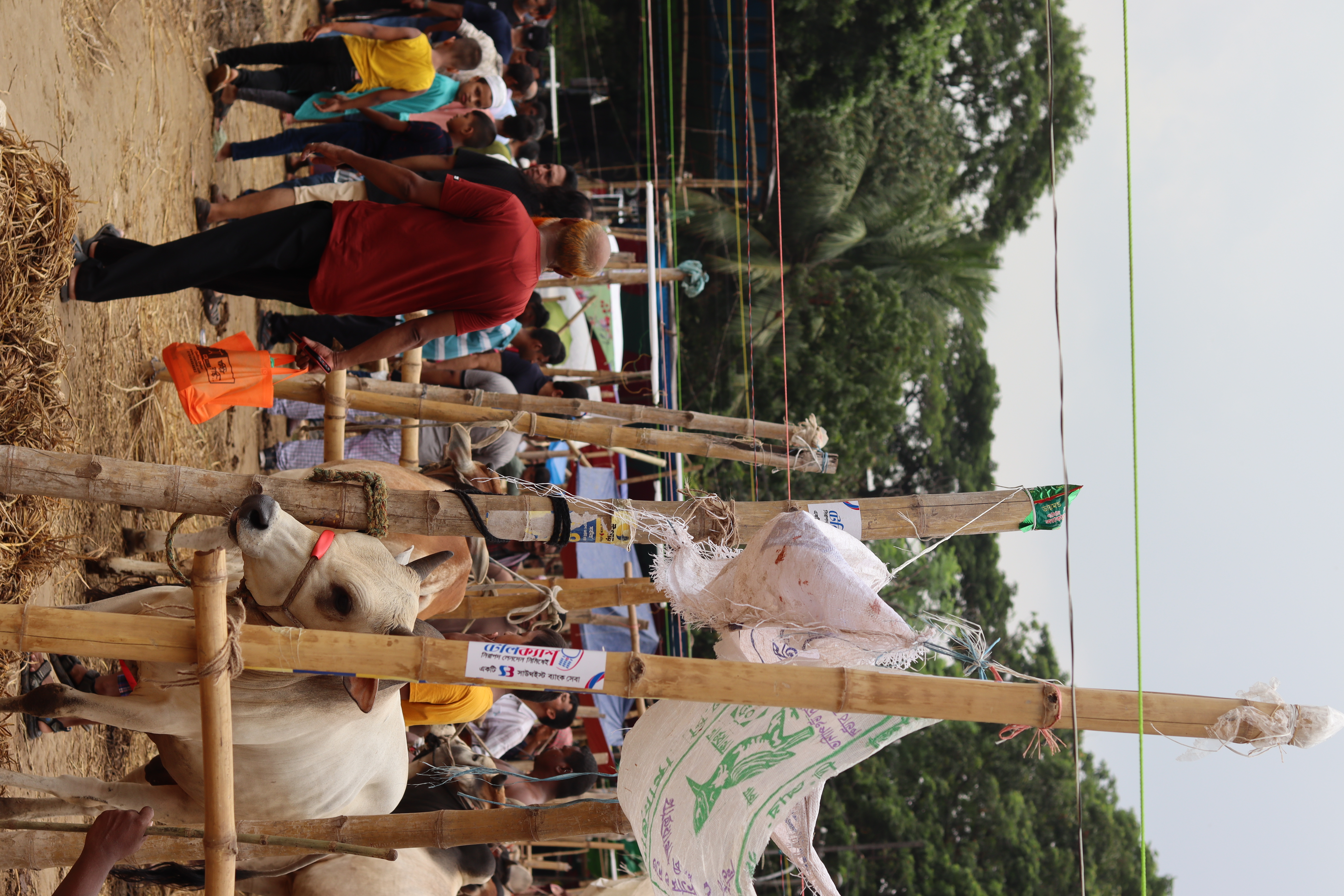
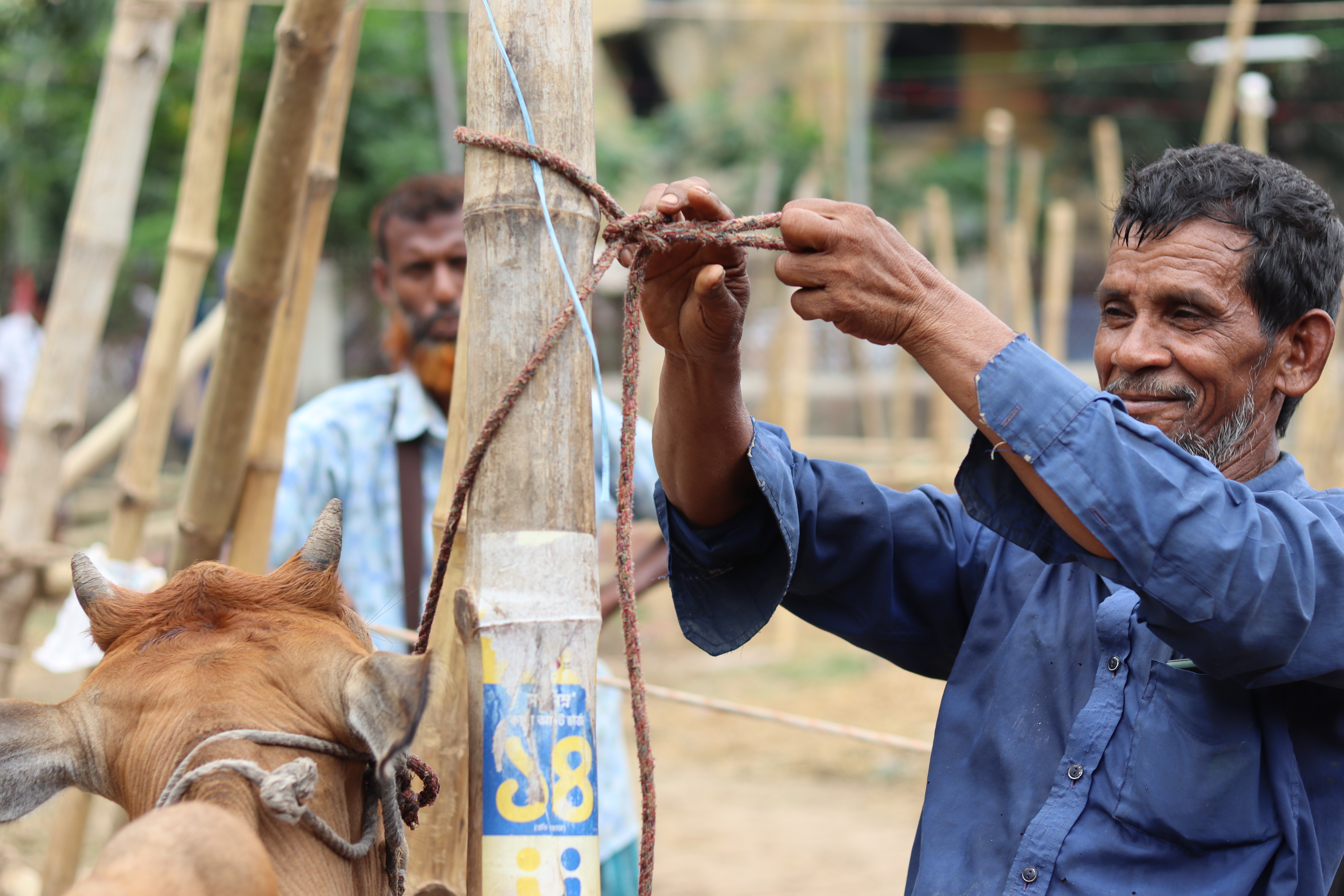
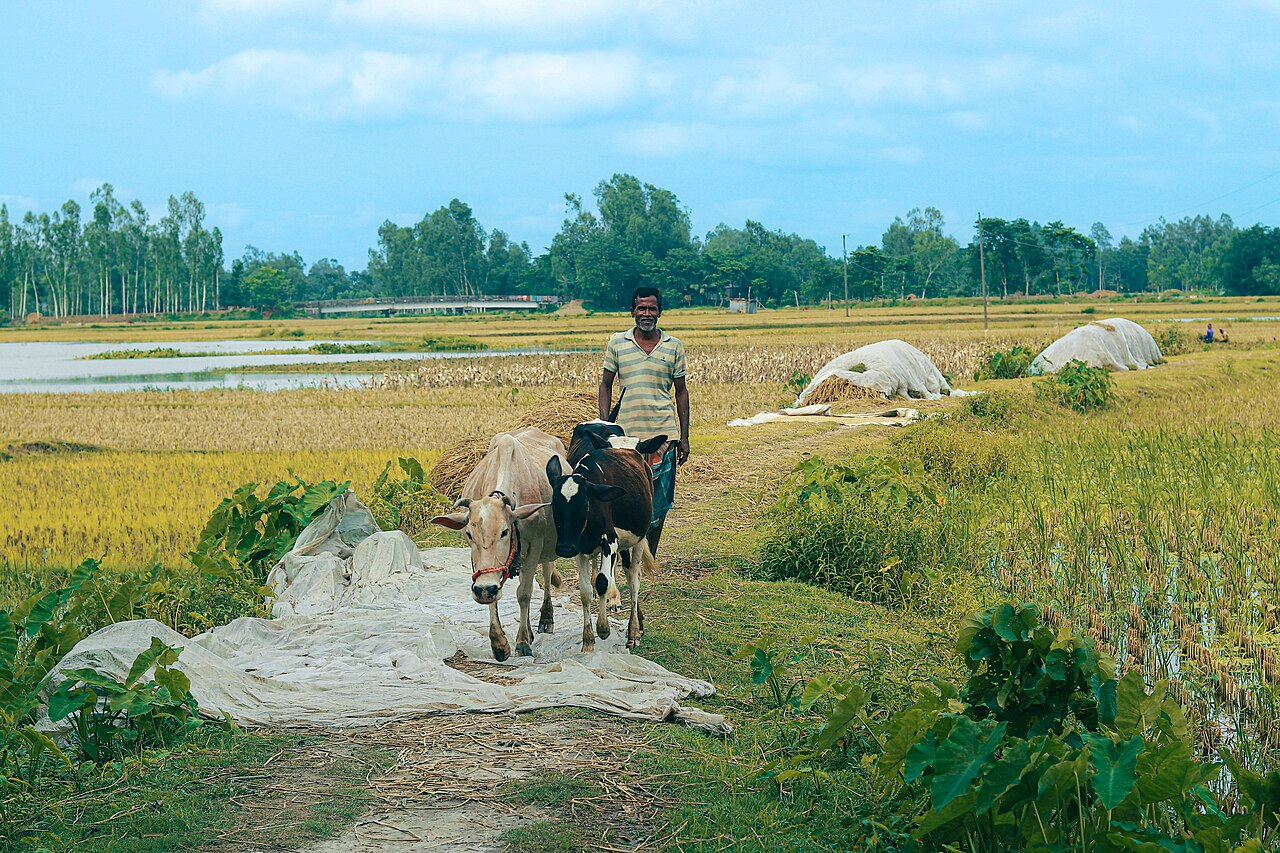
Photo: Wasiul Bahar / Wikimedia Commons (CC BY-SA 4.0). The top picture shows an Eid-ul-Azha cattle market in Bangladesh in June 2024, as background; it is not Gabtoli.
Sources: Jagonews24 (5 June 2025), BSS via Prothom Alo English (5 June 2025) and The Daily Ittefaq English (3 June 2025), UNB via Dhaka Tribune (1 June 2025), The Daily Star (4 May and 28 May 2025), BSS via Bonik Barta English (17 May 2025), Prothom Alo (21 May 2024), Banglapedia, Bengali Wikipedia
Comments
(0)