
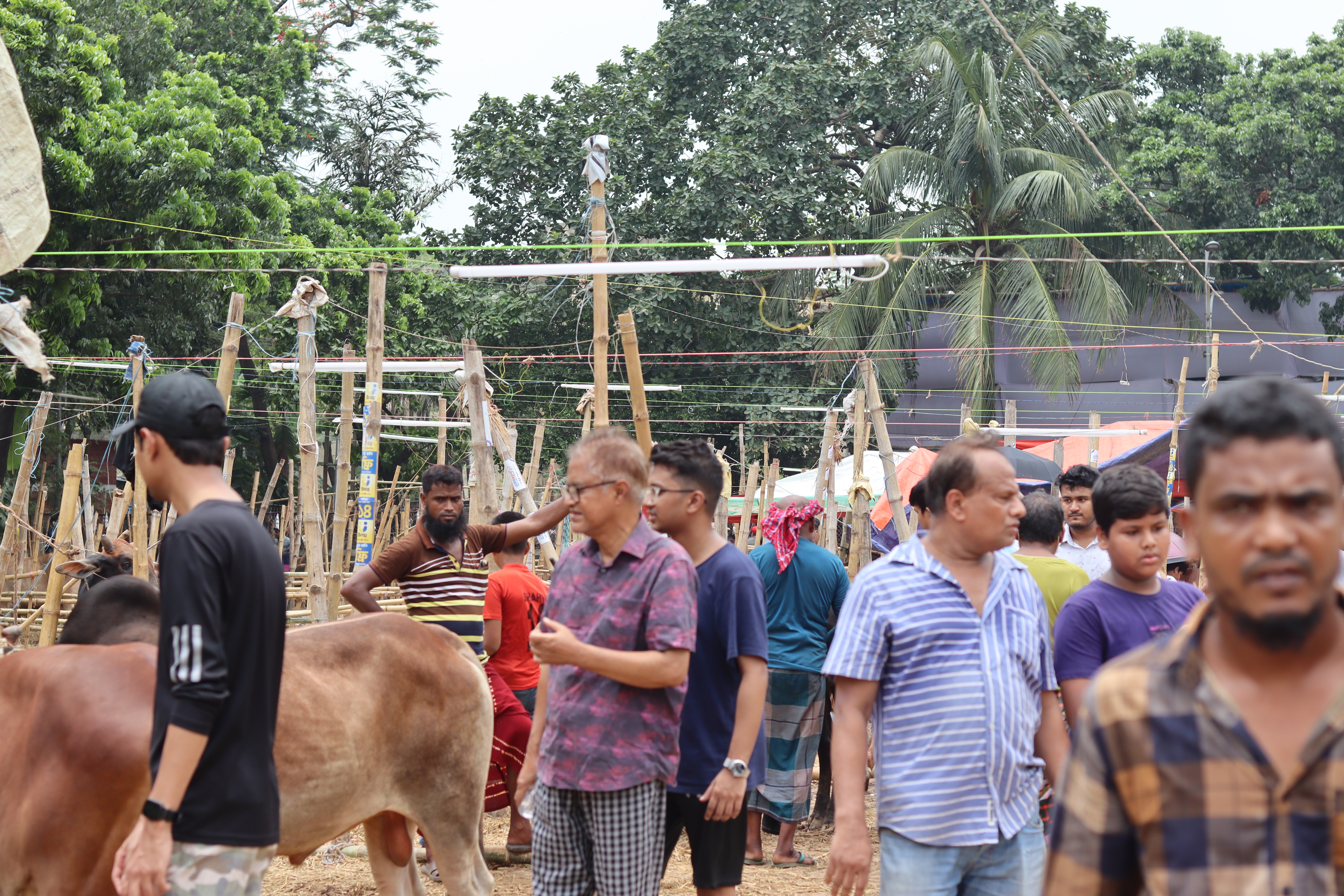
On the morning of Sunday 24 May 2026, trade in sacrificial animals had yet to pick up at the Gabtoli cattle market in Dhaka. Eid-ul-Azha was to be celebrated on 28 May. Animals had already begun arriving in the capital from districts across the country, but buyers were few, a staff reporter for Jagonews24 found on a visit to the market that morning.
Sellers who had brought dozens of cows from Jamalpur, Tongi, Pabna and Sirajganj said they had sold between one and three animals in several days. Goat traders who had brought animals from villages and from Naogaon also reported slow sales. A buyer who had come from Narayanganj said sellers were asking far too much, while a goat trader blamed the rise in animal feed prices.
By the government's count, the country that year had about 2.2 million more animals fit for sacrifice than the expected demand. Even so, in the first days of the market season there was a wide gap between what sellers asked and what buyers offered, a gap that other newspapers also reported that week.
Sellers with full pens, waiting for buyers
Hridoy had come to Gabtoli with 80 cows from Zakaria Farm in Jamalpur. "I came to the market with 80 cows last Wednesday. So far I have been able to sell two or three. There are a few buyers, but most are walking around checking prices. We hope buyers will increase from tomorrow," he told Jagonews24.
Md Khabir Hossain had brought 48 cows from Sarkar Cattle Farm in Tongi. "It has been two days since I came to Dhaka with the cattle, and I have sold one in two days. The market hasn't properly started yet and there are very few buyers. Buyers will increase within the next two days," he said.
Md Barat Ali Sarkar had come with his brother and 31 cows from Pabna and Sirajganj. "We two brothers brought 31 cows from Pabna and Sirajganj, but customers haven't come to the market. We arrived in Dhaka with the cattle this morning. So far no buyer has even looked at the cattle and asked the price," he said.
Other newspapers saw much the same that week. The Daily Observer reported on 23 May that on the previous day, a Friday, traders at Gabtoli, Postogola, the Brothers Union ground and other markets were unloading animals, feeding them straw and water, and pouring water over them to protect them from the intense heat. Trucks and trawlers carrying cows, goats and buffaloes were entering the city every day, but traders told the paper the expected rush of buyers had not begun. At Gabtoli, a trader from Jashore said the cost of raising cattle had risen significantly that year because of higher feed, medicine and transport costs, and a trader from Faridpur said the daily cost of feed, labour and lodging kept climbing.
In its edition of 24 May the same paper quoted another Gabtoli trader who had brought eight cows and had sold only one. High input costs were putting pressure on traders, he said, and without fair prices many would make a loss.
Buyers say the asking prices are too high
Mezbah had come to Gabtoli from Narayanganj to buy a cow for the sacrifice at home. He told Jagonews24 he planned to spend between Tk 1.6 lakh and Tk 1.7 lakh.
He complained that sellers were asking very high prices. "Some are asking a fair price, but because most are asking high, even those who were asking less are now asking more. I have been walking round since 8am to buy a cow, but at these prices I can't. If I can't buy, I will go back and buy in Narayanganj," he said.
The same caution among buyers ran through The Daily Observer's report of 24 May. Traders said rising costs of feed, transport and labour had forced them to raise prices, the paper wrote, while buyers argued that the animals had become increasingly unaffordable. A buyer at the Tejgaon market called the prices "too high" and said he was only watching the market and planned to buy closer to Eid. Many buyers were waiting in the expectation that prices would ease in the final days. Markets were slow in the morning and busier in the afternoon, and traders described the period as one of price discovery.
The reports agreed on which animals buyers wanted. According to the Observer, demand was concentrated on small and medium-sized cattle, and larger animals were drawing fewer buyers. Bangladesh Sangbad Sangstha (BSS) had reported on 15 May, citing farmers, that the market that year was leaning heavily towards small and medium cattle, particularly in cities such as Dhaka. Cattle weighing 200 kg to 500 kg were in the highest demand, farmers said, and buyers with budgets of Tk 50,000 to Tk 250,000 were expected to find a wide range of animals.
Buyers had made the same complaint in earlier years. On 14 June 2024 Prothom Alo reported that although government figures showed more animals than demand, prices at the markets were steep, and buyers who had visited them reckoned prices were at least 30 per cent higher than the year before. The then director general of the Department of Livestock Services (DLS) told the paper that once the markets were in full swing, sellers who were holding out for high prices would bring them down, as there was a tendency to hold prices at the start.
Goat sales were slow too
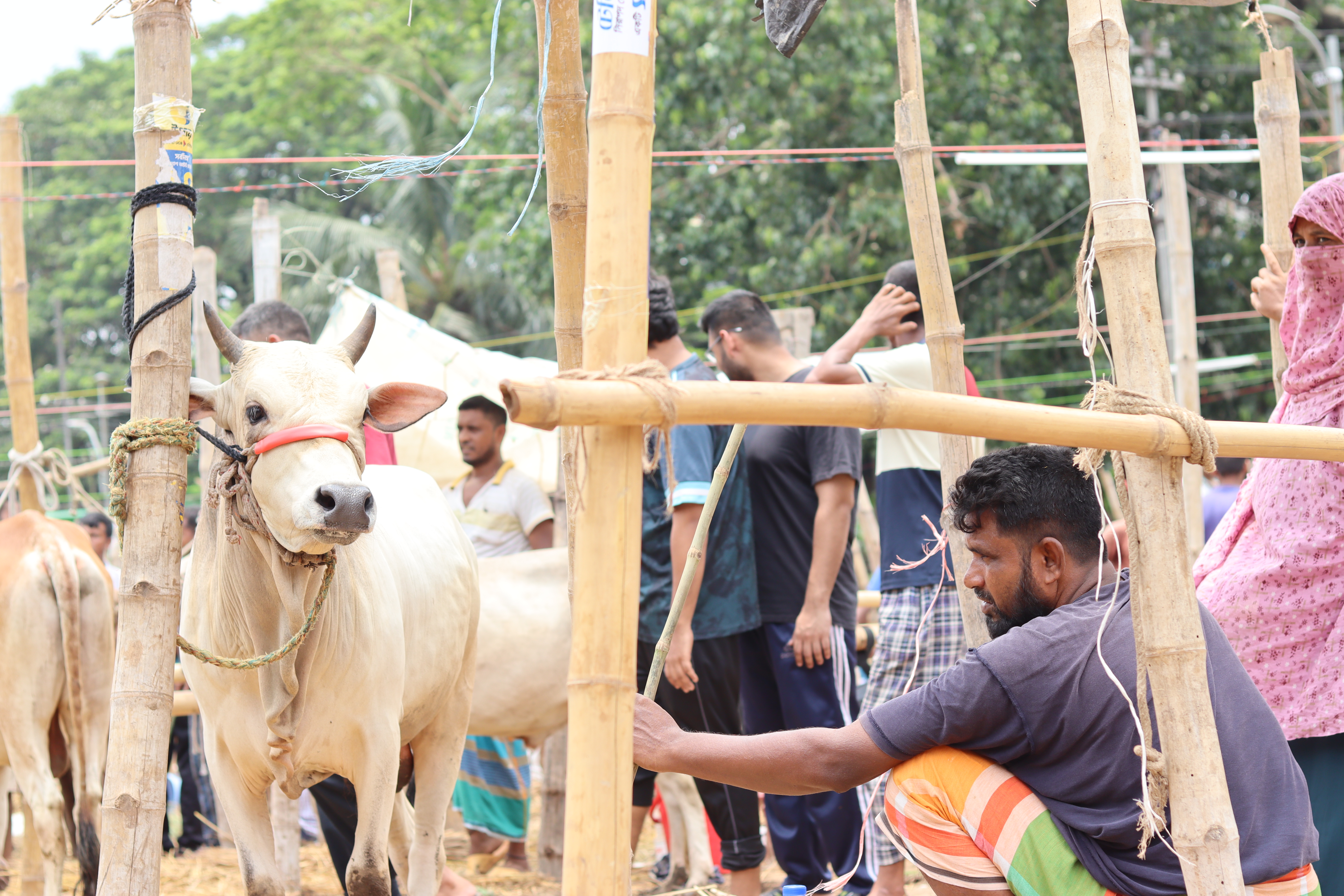
Trade was thin in the goat section of Gabtoli as well. Goat seller Md Farooq told Jagonews24: "We buy goats in the villages and bring them to Dhaka. There are about 120 to 125 goats here now. So far I have sold 10 or 11. The market is not very good. Compared with last time, the market is weaker and prices lower." Demand was highest for medium-sized goats, he said.
Malu Bepari had come to Dhaka from Naogaon with 140 goats. "I am not seeing much trade. Today I sold only 15 goats. The kind of trade there is at Eid-ul-Azha hasn't started yet. Hopefully Eid sales will start from tomorrow. There is no time left," he said.
Asked why buyers' offers and sellers' prices did not match, he pointed to feed. "Feed prices have risen a lot, so the goats also had to be bought at higher prices. But we couldn't even buy the goats at the prices buyers are offering. I bought this goat for Tk 17,000, but a buyer offered up to Tk 12,000 and then walked away. Can I sell a goat at that price?"
Goats and sheep made up the larger share of the country's sacrificial animals that year: 6,632,307 of them, against 5,695,878 cattle and buffaloes, according to DLS figures presented by Fisheries and Livestock Minister Mohammad Aminur Rashid at a press conference at the secretariat on 3 May.
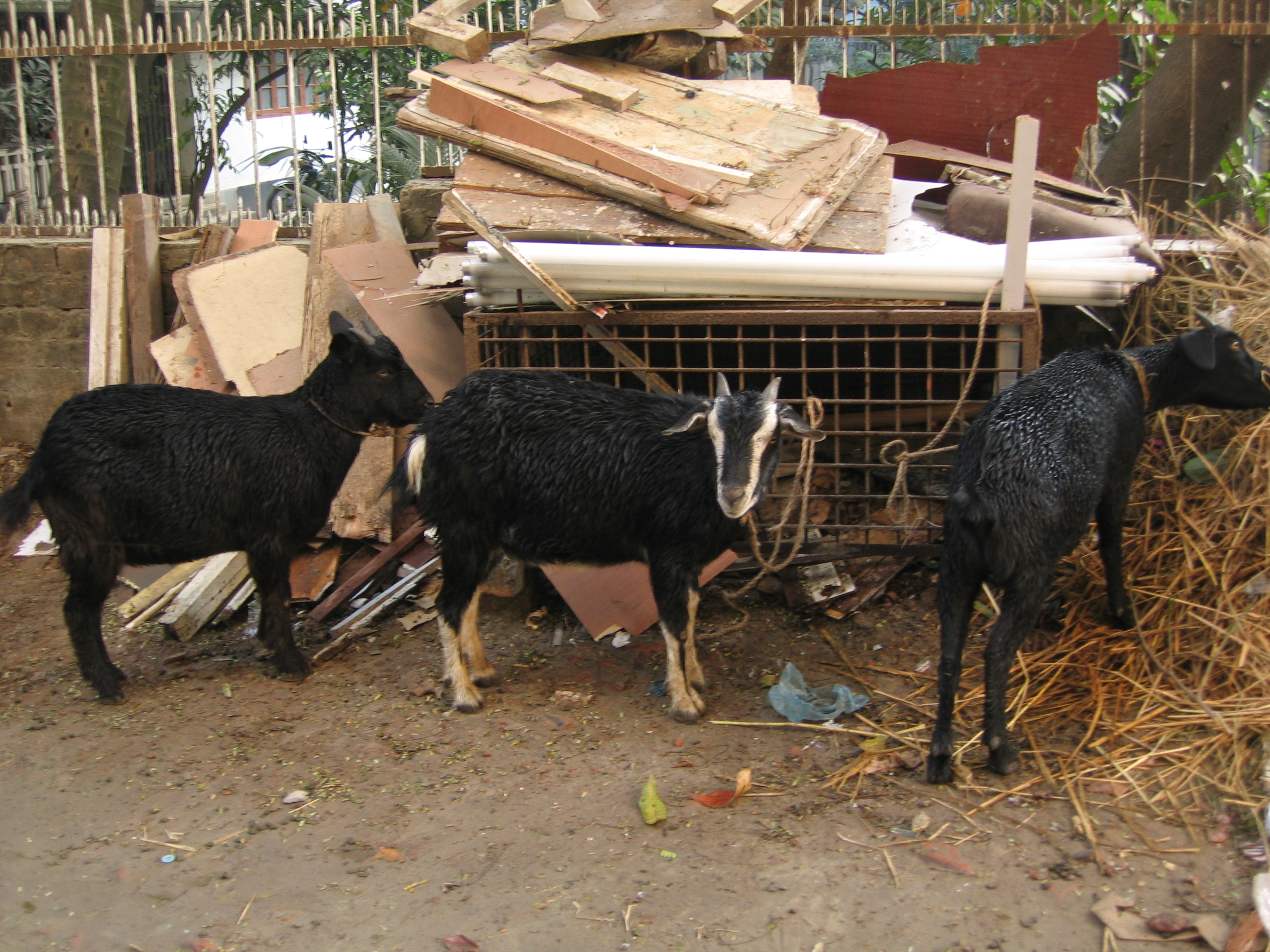
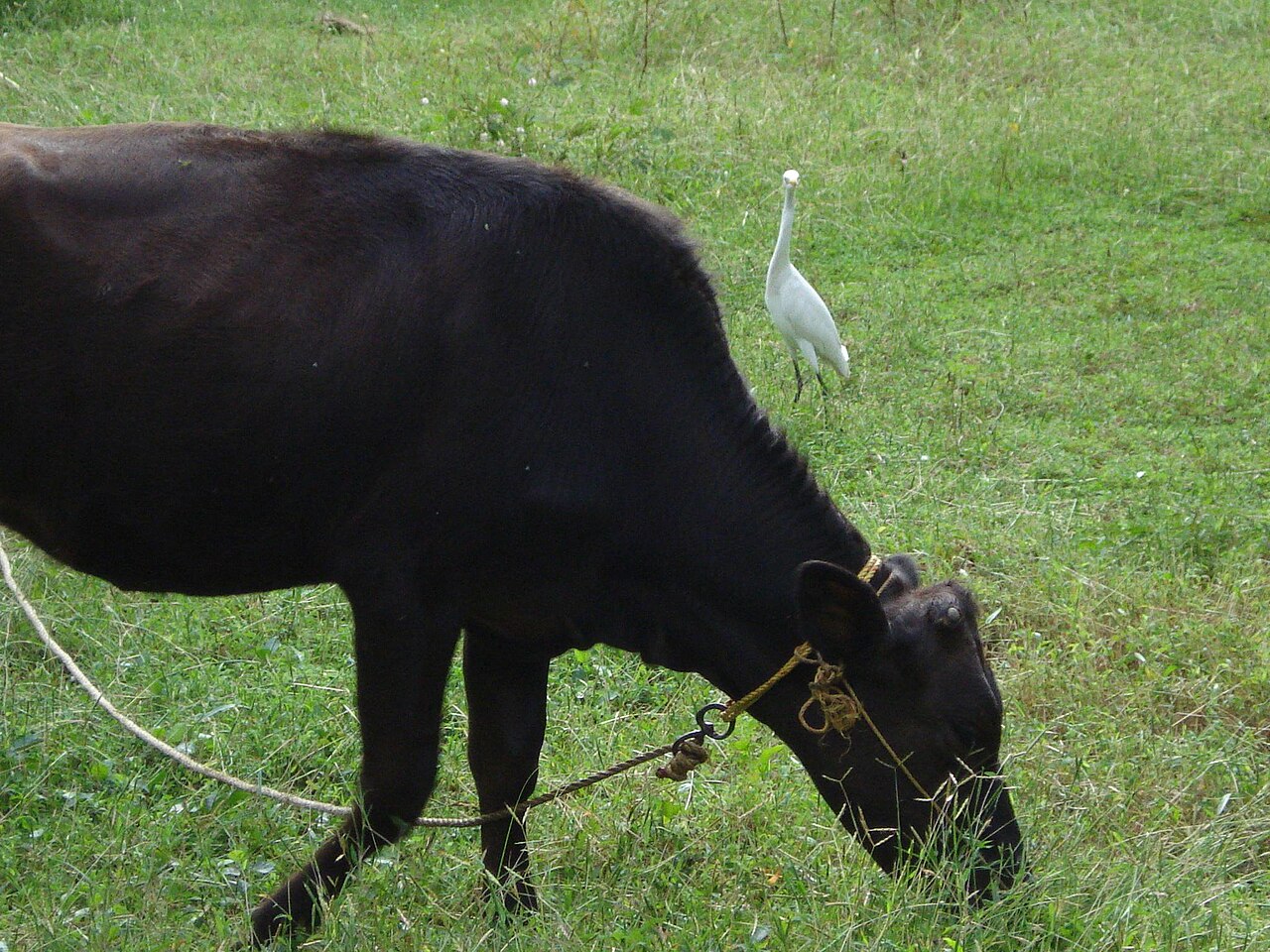
Most of Bangladesh's goats are Black Bengals. According to Banglapedia, the national encyclopaedia, the breed makes up more than 90 per cent of the country's goat population, with Jamunapari goats and their crosses making up the rest. The goats are mostly black, though brown, grey and white animals are also found; their hair is short, soft and glossy and their legs are short. Banglapedia gives an average adult height of about 50 cm, with bucks weighing 16 to 18 kg and does 12 to 14 kg. Does first kid at about 12 months and then kid twice a year, or three times in two years. The breed is found across Bangladesh and in Assam and West Bengal in India.
Wikipedia's article on the breed notes that it produces high-quality meat and skin and is valued for its skin and its high rate of reproduction, though its milk yield is poor. Its low feed needs and its resistance to disease have made it popular in Bangladesh, and researchers at Chittagong Veterinary and Animal Sciences University have sequenced its genome.
Gabtoli, Dhaka's only permanent cattle market
Dhaka North City Corporation (DNCC) has one permanent cattle market that operates all year round, the Gabtoli cattle market, Prothom Alo noted on 20 May 2026; that year its lease had gone to a private firm. In June 2025 the Dhaka Tribune and UNB described Gabtoli as the city's only permanent haat. In May 2024 the Dhaka Tribune, carrying a UNB report, wrote that DNCC used the permanent market at Gabtoli alongside its temporary markets, while Dhaka South City Corporation (DSCC) had its permanent market at Sarulia.
On 20 May the DNCC formally handed work orders to the leaseholders of its markets at a coordination meeting at its headquarters. According to Prothom Alo, DNCC Administrator Shafiqul Islam Khan told the meeting that about 39 conditions had been set for the cattle markets and that any breach would bring immediate action. Pointing to the rule that markets may open only five days before Eid, he said any trading before the set time would be treated as illegal. To avoid accidents, he said, no market had been allowed near railway lines, flyovers or other hazardous places that year. Each market was also told to keep its daily waste at a marked spot so that city vehicles could remove it. By that day the leasing of ten temporary DNCC markets had been finalised and tenders for one more had been opened.
The Business Standard reported on 21 May that 11 temporary markets were being prepared in DSCC and 12 in DNCC, besides the permanent market at Gabtoli, and that the two city corporations had said trading would run for five days. Workers at Gabtoli and other sites were putting up bamboo pens and large awnings, trucks loaded with cattle were unloading, and traders had arrived early to secure good spots. DSCC Administrator Abdus Salam told the paper that no market would be allowed to spill onto roads or spring up at random. At its 3 May press conference, the ministry had spoken of 27 markets in the capital, 16 in the north and 11 in the south.
In a photo report on 21 May, Bangla Tribune described Gabtoli as one of the capital's main and traditional livestock markets and wrote that animals had begun arriving in earnest, brought by traders by truck and by water from different parts of the country, many of whom had already claimed their places.
Reports from the year before show how the market usually fills up. Ahead of Eid in 2024, two Prothom Alo reporters who visited Gabtoli, Hazaribagh, Diabari and Meradia found the biggest crowds and the most sales at Gabtoli. Most of the market was shaded with awnings that year, with fans overhead against the heat, and camels, dumbas, buffaloes and sheep were on sale alongside cows and goats. People involved in running the market said the cattle that sold most that day were priced between Tk 1 lakh and Tk 2.5 lakh.
Demand and supply of sacrificial animals in 2026
At the ministry's briefing at the secretariat on 3 May 2026, the minister said the expected demand for sacrificial animals that year was 10,106,334, against an availability of 12,333,840, leaving a likely surplus of about 2,227,506. The animals available comprised 5,695,878 cattle and buffaloes, 6,632,307 goats and sheep, and 5,655 animals of other species such as camels and dumbas (fat-tailed sheep).
The Dhaka Tribune's report of that day also gave the previous year's figures. For Eid-ul-Azha in 2025, 12,447,337 animals had been available. A surplus of more than 2,068,000 had been forecast at first, but in the event 9,136,734 animals were sacrificed, leaving a surplus of about 33.10 lakh.
The number of animals sacrificed had hovered around 10 million for several years. Citing DLS figures, Prothom Alo reported in June 2024 that 10,614,281 animals had been sacrificed in 2019. After the coronavirus outbreak the number fell to 9,450,263 in 2020 and to a little over 9.093 million in 2021. It rose to 9,954,672 in 2022 and to 10,041,812 in 2023.
A national surplus did not mean every region had enough. The Dhaka Tribune, carrying a Bangla Tribune report on 22 May, cited DLS figures showing that demand in Dhaka stood at 2,158,869 animals against an availability of 1,443,942, and that Chittagong faced a shortage of about 50,000. Rajshahi, Rangpur, Khulna and Mymensingh divisions had large surpluses, Rajshahi alone about 1.9 million above its demand, so much of the livestock in the capital's markets was expected to come from the north. DLS Deputy Director (Farms) Md Shariful Haque said there was no shortage that year.
The districts that supply Dhaka's markets
Most of the districts the Gabtoli sellers had come from were surplus districts. The Daily Observer's report of 24 May listed Kushtia, Sirajganj, Pabna, Meherpur, Manikganj, Chuadanga, Bogura, Naogaon, Joypurhat, Jhenaidah and Chapainawabganj among the districts sending a steady flow of animals to Dhaka's markets.
Jamalpur: The Daily Ittefaq reported on 16 May, citing the district livestock office, that about 12,000 farmers in Jamalpur had 107,065 animals ready for sacrifice against a district demand of about 82,000, so about 25,000 extra animals would be sold in Dhaka and other parts of the country. Farmers were fattening their cattle on straw, grass, bran and maize; one said the price of cattle feed had risen sharply, and another said he was selling cattle online at Tk 500 to Tk 550 per kg of live weight.
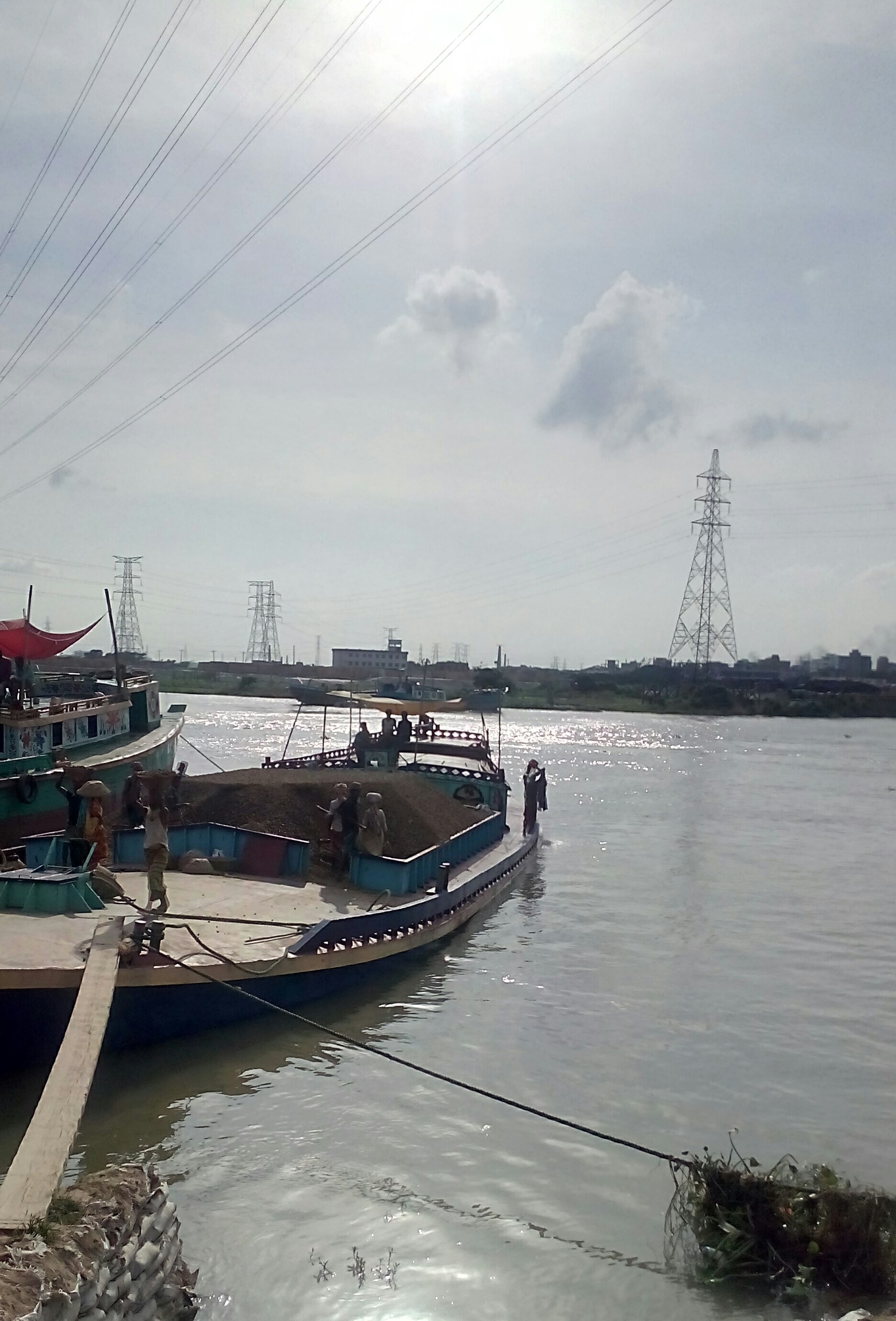
Sirajganj: According to a BSS report of 14 May, the district had 617,723 sacrificial animals against a local demand of 293,676, leaving a surplus of about 324,000. They included 199,924 cattle, 365,850 goats and 47,724 sheep, with Shahjadpur, Ullapara and Sadar upazilas producing the most. District Livestock Officer Dr AKM Anwarul Haque told BSS that medical teams were ready at the district's 37 permanent and temporary markets. The Dhaka Tribune reported on 12 May that the surplus would be supplied to Dhaka and other parts of the country.
Pabna: A year earlier, ahead of Eid-ul-Azha in 2025, The Financial Express reported, citing the district livestock office, that 648,204 animals had been prepared in Pabna's nine upazilas against a district demand of 312,826, leaving a surplus of 335,378. That count included 198,654 cows, 8,480 buffaloes, 372,611 goats and 68,292 sheep, and the paper noted that a large number of cattle went from Pabna to Dhaka and Chattogram every year.
Naogaon: BSS reported on 12 May, citing the district livestock office, that about 38,909 small and large farmers in Naogaon had raised nearly 8 lakh sacrificial animals, including bulls, oxen, cows, buffaloes, goats and sheep. Against the district's estimated demand of 3.87 lakh, more than 4.10 lakh were to be supplied to other districts, including Dhaka and Chattogram. Indigenous breeds were being raised alongside Sahiwal cattle.
The cost of feed and transport
The feed costs the Gabtoli goat trader spoke of were a complaint heard from farmers in many districts that season. Farmers in Naogaon told BSS that the price of grain-based feed had risen by Tk 300 to Tk 500 a sack over three months. One said a 50-kg sack that used to cost Tk 1,800 was selling at Tk 2,000, while feed that had cost Tk 800 was priced at around Tk 1,300. Naogaon Sadar Upazila Livestock Officer Dr Mohammad Aminul Islam said that because most ingredients of granular feed were imported, prices had risen slightly with the global situation; regular deworming and vaccination were being provided at government rates.
A farmer in Shibganj, Chapainawabganj, told the Dhaka Tribune on 15 May that feed which had cost Tk 40 now cost Tk 60, and products once sold for Tk 20 were priced at Tk 30. A farmer in Shahjadpur, Sirajganj, told the same paper that as feed prices kept rising, so did the cost of raising cattle, which could push up prices that Eid.
Not every farmer described the same pressure. A farmer in the Uttar Khan area of Dhaka told Bangla Tribune that feed prices had been stable but transport costs had risen sharply with higher fuel prices; livestock prices were close to the previous year's, with small cattle in strong demand and dearer while large cattle sold for comparatively less. Niloy Hossain, senior vice-president of the Bangladesh Dairy Farmers Association, told journalists that demand for large cattle had fallen that year and that rising feed and transport costs had raised the risks for large farmers. The Dhaka Tribune carried these remarks on 22 May.
Farmers had worried about feed prices in earlier years too. Prothom Alo reported on 19 May 2024 that wheat bran, which had cost Tk 46 to Tk 47 a kg at the start of that year, was then selling at Tk 52 to Tk 55, and gram husk had risen from Tk 52-53 to Tk 62-65. In June 2024 farmers told the paper that feed cost about 40 per cent more than a year earlier. That year, according to the Bangladesh Dairy Farmers Association, live cattle were selling at Tk 500 to Tk 600 a kg depending on size, and the report noted that the meat and bone obtained after slaughter come to about 55 per cent of an animal's live weight.
Veterinary care, security and counterfeit-note checks at the markets
At the 3 May briefing the minister said more than 3,600 cattle markets would be held across the country and that 20 veterinary medical teams would be on duty round the clock at the capital's markets. The government would take a strict stance against extortion from trucks carrying sacrificial animals, he said, and law enforcers, in plain clothes where needed, would be deployed at all times to protect markets, buyers and sellers. A policy decision had been taken to close cattle markets near the border to protect local farmers. No toll or market fee would be charged on animals bought online, and butchers and workers were being trained so that hides would not be spoiled.
On 23 May, the day before the Jagonews24 report, State Minister for Fisheries and Livestock Sultan Salauddin Tuku visited the Gabtoli market. According to BSS, he told journalists that a medical centre had been set up at the market that year for animal health, with immediate treatment for sick animals, fever checks and the necessary medicines, and that DLS officials and vets were on duty round the clock. He urged buyers to purchase sacrificial animals from legal sources rather than smuggled ones. With about 12.3 million animals ready against a demand of about 10.1 million, he said, there was no need to import animals. He also mentioned special arrangements and equipment to detect counterfeit notes. DLS Director General Md Shahzaman Khan was present during the visit.
Earlier, on 14 May, speaking to officials at the Bangladesh Livestock Research Institute (BLRI) in Savar, the minister said the sacrifice would be performed with animals reared by local farmers and that law enforcers had been given strict instructions to stop livestock entering illegally across the border, the Dhaka Tribune reported.
To make cash dealings at the markets safer, Bangladesh Bank issued 10 instructions to scheduled banks on 10 May, Desh Rupantor reported. They included:
- providing free note-checking with counterfeit-detection machines and experienced cash officers at the markets approved by Dhaka North and Dhaka South city corporations, from the first day of the market to the night before Eid;
- giving the chest branches of Sonali Bank the task of assigning banks to approved markets in districts where Bangladesh Bank has no office;
- offering cash counting with note-counting machines at the booths and displaying a banner with the bank's name and the words 'counterfeit note detection booth';
- sending the central bank a compliance report within 30 working days after Eid.
Eid-ul-Azha and the sacrifice
On the evening of Monday 18 May 2026, the National Moon Sighting Committee, meeting at the Baitul Mukarram National Mosque, confirmed that the crescent of the month of Dhul Hijjah had been sighted over Bangladesh. As 28 May, a Thursday, would be the 10th of Dhul Hijjah, Eid-ul-Azha would be celebrated in the country that day, BSS reported. The committee reached the decision after reviewing information from district administrations, Islamic Foundation offices, the Bangladesh Meteorological Department and the Space Research and Remote Sensing Organization (SPARRSO).
In Islam, qurban or udhiyah is the ritual sacrifice of a livestock animal at Eid-ul-Azha. Wikipedia's article on the practice says it may be performed from the morning of the 10th to sunset on the 12th of Dhul Hijjah, or until sunset on the 13th in the Shafi'i school. Camels, cattle, sheep and goats may be offered, but the animal must be healthy and free of disease; one that is blind, one-eyed or missing part of its tail or ears is not acceptable. Several people may share a camel or a head of cattle. The meat is generally divided into thirds: one for the person offering the sacrifice, one for family and one for the poor.
The festival recalls the sacrifice of the Prophet Ibrahim. According to the article, he saw in a vision that he was to sacrifice his son Ismail, and God stopped him and provided a ram to be sacrificed instead. During his visit to Gabtoli the state minister also reminded people that the sacrifice is made to please Allah, and that everyone should take care that it is carried out correctly and in the halal way.
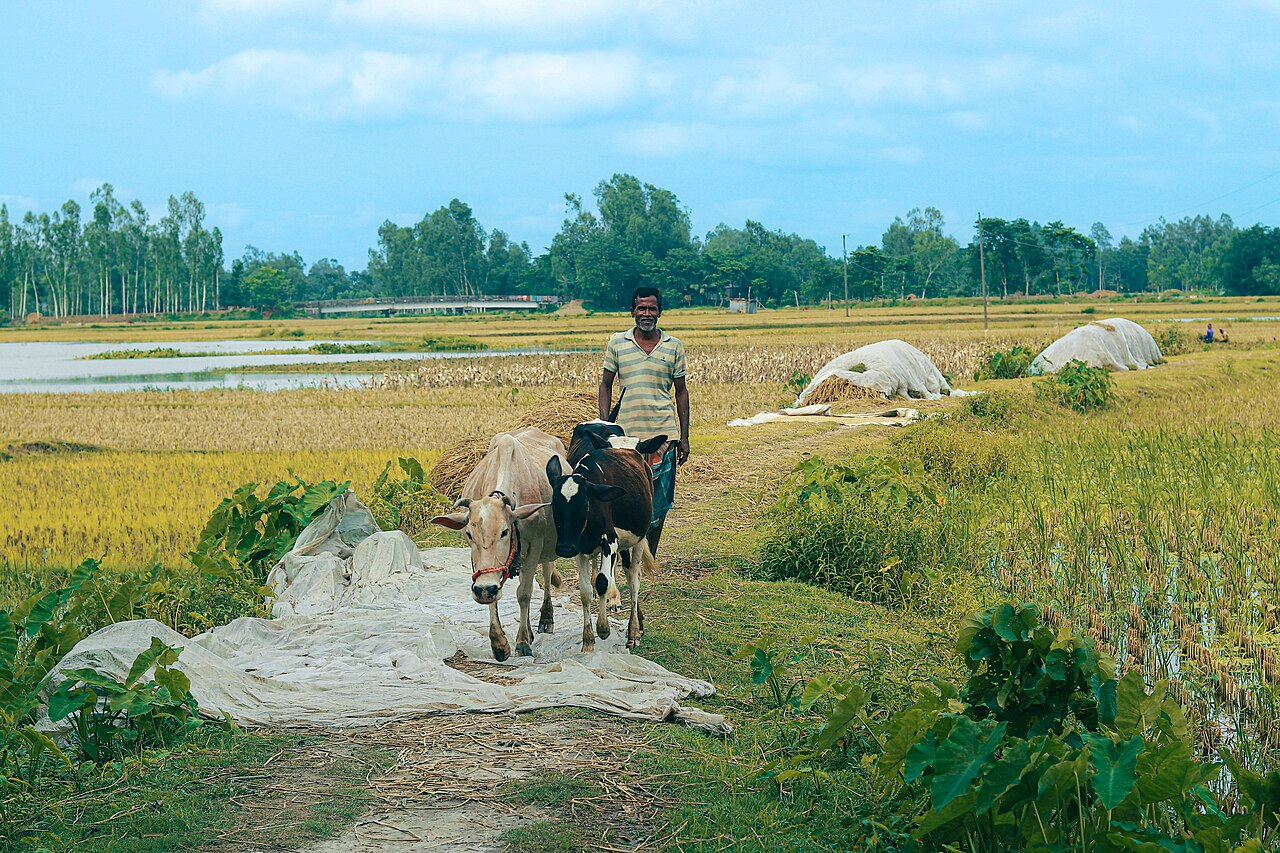
Photo: Wasiul Bahar / Wikimedia Commons (CC BY-SA 4.0)
Sources: Jagonews24, Bangladesh Sangbad Sangstha (BSS), The Business Standard, Dhaka Tribune, Prothom Alo, Bangla Tribune, The Daily Ittefaq, Desh Rupantor, The Daily Observer, The Financial Express, UNB, Banglapedia, Wikipedia
Comments
(0)