
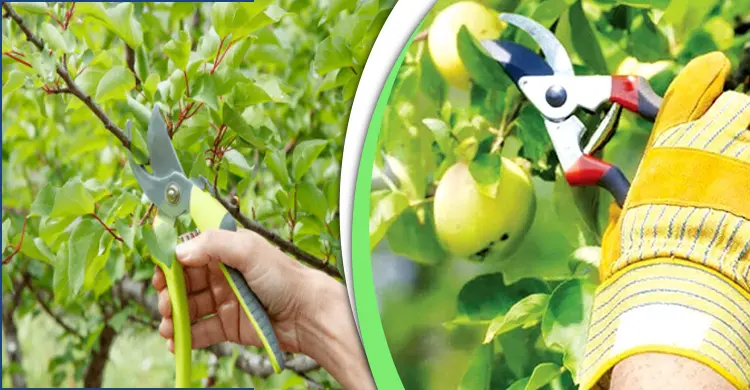
Pruning branches, from planting right through to fruiting, is one of the main jobs in managing fruit trees. The branches of a fruit tree need to be cut back at different ages according to its variety and growth habit.
Ten reasons to prune
- If the tree is a mother tree, to produce more scions in future.
- To increase the number of branches that bear plenty of flowers and fruit, and to improve fruit quality.
- To give the tree a well-shaped, strong framework so it is not easily damaged by storms or strong wind.
- To make care work such as spraying pesticide and collecting scions easier.
- On trees with fruit-setting problems, to encourage new branches that raise their bearing capacity.
- On trees that fruit every other year, to reduce the effect of alternate bearing or to help them fruit.
- To remove branches that grow into other branches or point downwards, keeping the tree from becoming bushy.
- To remove branches growing on the inside of the tree that give no fruit.
- To cut back suckers or new shoots that appear at the base of some fruit trees, which must be done regularly.
- To keep the tree short by cutting back its top, building its structural shape before it starts fruiting.
Pruning raises the chance of a good harvest from healthy, vigorous trees. Everyone should have some idea of how to prune the branches of a few popular and common fruit trees.
Source: Jagonews24. First published in Bengali on The Agro News.

Comments
(0)