
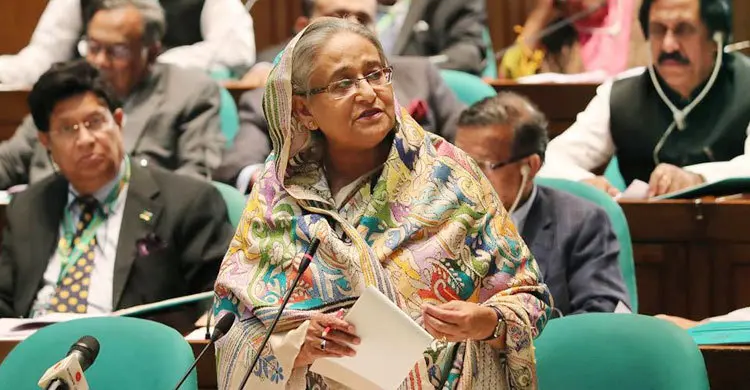
The country currently has 16.27 lakh metric tonnes of food grain in stock (as of 24 May 2023), Prime Minister Sheikh Hasina has said. She gave the figure on Wednesday (7 June) in reply to a question from ruling party MP Kazim Uddin Ahammed during question time in parliament. Question time was tabled with Speaker Dr Shirin Sharmin Chaudhury in the chair.
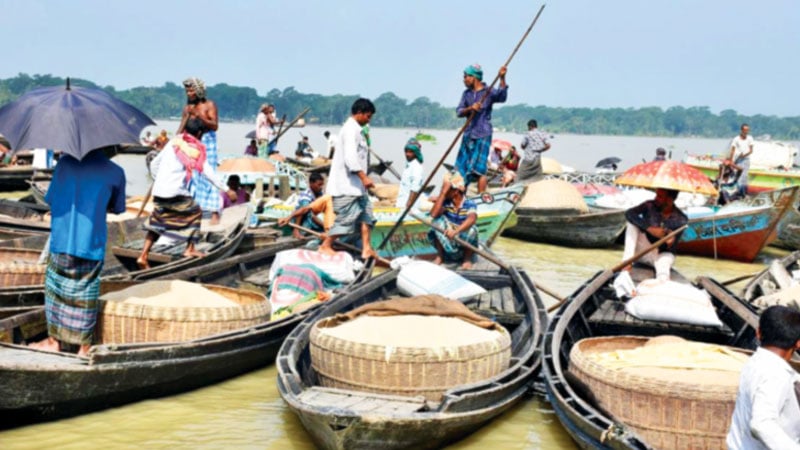
According to the prime minister's figures, the stock comprises rice 12.25 and wheat 3.96, as given in her reply, and paddy 9,000 metric tonnes.
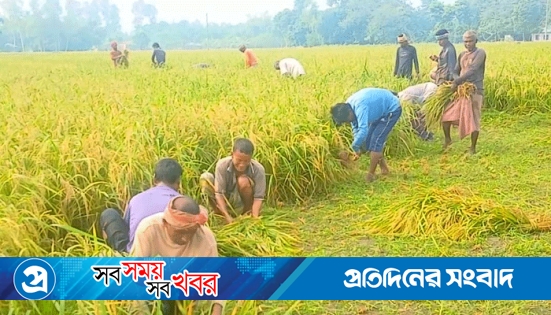
The prime minister said that to build up stocks, the procurement target for the current boro season has been set at 15.10 lakh metric tonnes in rice terms, including 4 lakh metric tonnes of paddy and 12.50 of rice as given in her reply. The domestic wheat procurement target for the 2022-23 financial year has been set at one lakh metric tonnes.
To ensure greater food security, 6.34 lakh metric tonnes of rice and 6.80 of wheat, as given in her reply, have been imported so far this financial year (up to 23 May 2023), the head of government said.
Gas exploration and reserves
Replying to a question from Awami League MP Ali Azam, Leader of the House Sheikh Hasina said geological and seismic surveys have been stepped up in new areas of the country. Since 2009, 32,581 line km of 2D and 6,222 sq km of 3D seismic surveys have been completed. In this period, 74 wells have been drilled, including 20 exploration wells and 54 development wells, and workover has been carried out on 41 wells. As a result, six gas fields have been discovered. About one-fifth of all exploration wells drilled in the country have been drilled under the present government.
Including the reserves of the newly discovered 29th gas field at Ilisha in Bhola, the country's gas reserves now stand at 28.76 trillion cubic feet, Sheikh Hasina said.
Trade with India and expatriate workers
Replying to a question from Mashiur Rahman Ranga, the prime minister said that as Bangladesh graduates from the least developed country list, it will lose duty-free, quota-free access for exports to India after 2026. This could hurt exports to India. With this in mind, an initiative has been taken to sign a Comprehensive Economic Partnership Agreement (CEPA) with India, which is still at the negotiation stage. If CEPA is signed, Bangladesh's exports to India could rise by 190 per cent, and GDP is expected to grow by 1.72 per cent.
Replying to a question from Momtaz Begum, the head of government said 1.2 crore expatriates are currently working in 174 countries around the world.
Source: Jagonews24. First published in Bengali on The Agro News.
Comments
(0)