
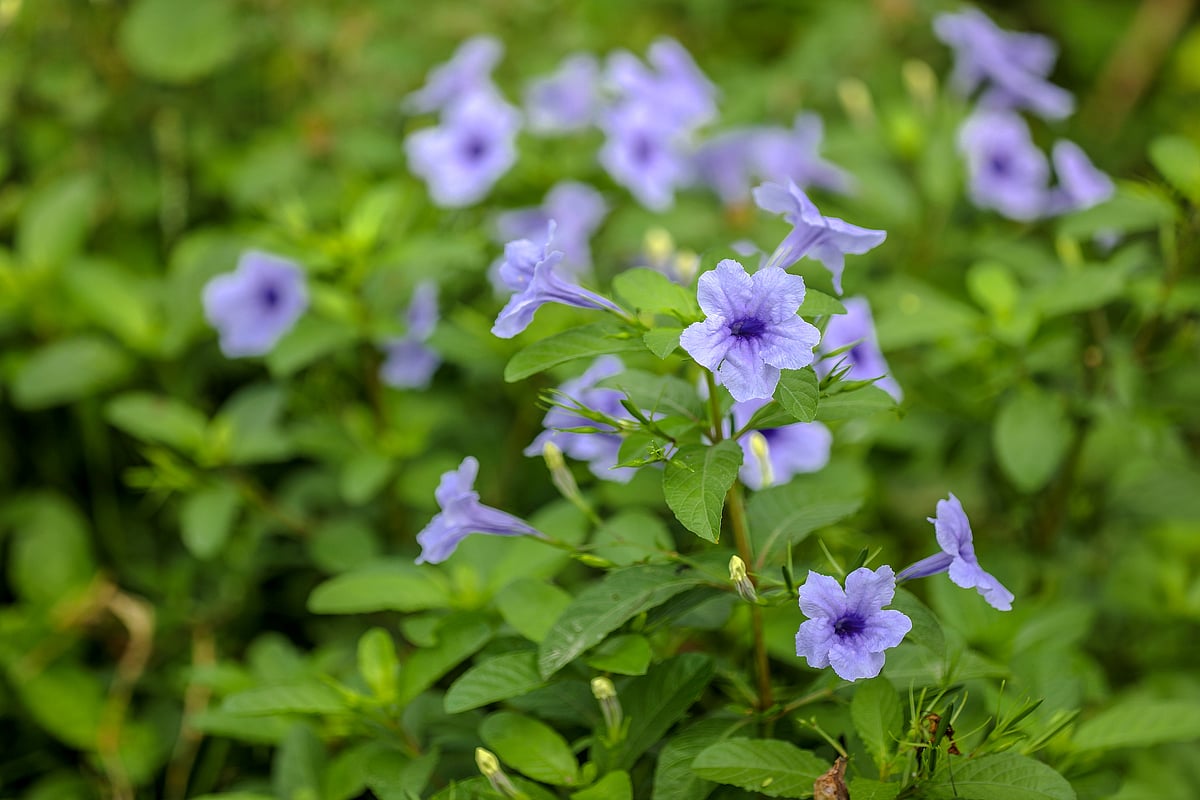
Drawn by a flower's scent, insects crowd around it and pick up its pollen on their bodies. When they move on to another flower, that pollen rubs off there. This is pollination, which plants need to reproduce, and without scent many plants would find it much harder.
Flowers without a noticeable scent tend to have bright colours instead, which draw dragonflies and butterflies from flower to flower to help with pollination. Birds cannot smell, so many flowers that rely on birds are brightly coloured. Some flowers are pollinated by the wind and have little need for either scent or colour.
Scientists have established by experiment that all flowers have a scent. Some are simply too faint for people to detect, so we call those flowers scentless.
Seen through evolution, flowers whose scent helped pollination most spread easily and won their place in the plant world, while those that succeeded through striking colour alone never needed to invest in scent.
Based on an article by Abdul Kaiyum in Bigganchinta. Photo: Hasan Mahmud.
Source: Bigganchinta
Comments
(0)