
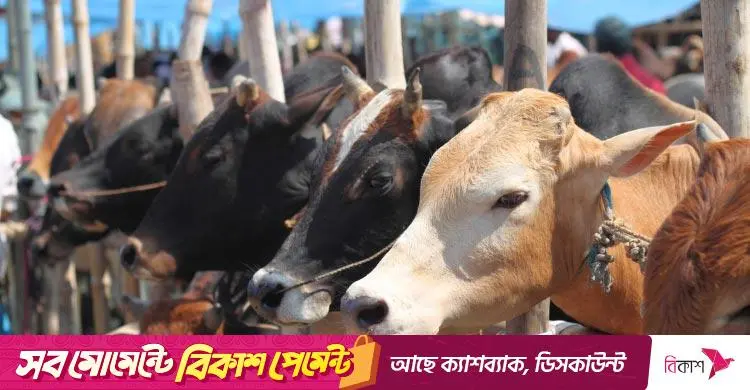
Cattle markets have already opened across the country ahead of Eid-ul-Azha. Every year thousands of Muslims go to the markets to buy the animal of their choice for sacrifice, and some of them go for the first time.
Many went to a market as children, holding a guardian's hand. But going for a look around is not the same as going with the responsibility of buying an animal. Buying an animal for the first time can be exciting, but a small wrong decision or a lack of care can lead to all sorts of trouble. So it is important to know a few things before going to a sacrificial animal market for the first time.
Budget and brokers
Before going, set a fixed budget according to what you can afford, so you can buy a suitable animal without overspending. Keep your money carefully because of pickpockets and muggers: carry it in a separate bag rather than loose in your pocket.
Every year many buyers and sellers at sacrificial markets fall into the hands of brokers, who cleverly take money from both sides. So be wary of broker rings from the start. For this, take someone experienced with you on your first visit. They will help with bargaining and protect you from being cheated.
Health and clothing
The market environment is very dirty, with animal dung and urine all around, and dust, bad smells and germs. So always wear a mask. Many people pull the mask off their nose when talking, and some wear it on the chin with the nose and mouth uncovered. If you do not wear a mask properly you may fall ill.
Because it is very hot at the market, wear thin cotton clothes. Staying in the heat for a long time can cause dehydration, so take safe drinking water, sherbet and saline from home in bottles.
Dung, urine and mud mix together and the whole market is filthy, so keep that in mind as you move around. People with foot wounds or diabetes are better off not going. If you bruise or cut your foot at the market and mud or dung gets on it, wash the foot with soap and apply an antiseptic ointment.
Leave children at home
Cattle markets are usually very crowded. Small children can easily get lost or hurt in the jostling, and they may be frightened by the sudden noise and behaviour of so many animals. Children can also be injured when animals move out of control, with a risk of a serious accident, and the dust and the smell of dung and urine may make them ill. So it is best not to take them. If you do, take a separate person along to keep the child safe. Also, do not take elderly or sick family members.
Choosing a healthy animal
Choosing a sound, healthy animal at the market is very important; a healthy animal is one of the conditions of sacrifice. So be careful when buying. Look at the animal's build, limbs and strength. Watch how it walks or runs, and do not buy a very weak or listless animal.
Also check whether it has been fattened and enlarged with medicine. For this, take the help of the veterinary doctors at the market.
Bargaining and payment
Before going, find out the average prices at nearby markets. Price the animal according to its build and health. Do not rush to make an offer as soon as you like an animal; first hear the seller's price. Do not lose patience while bargaining, and do not decide in a hurry because of the seller's words or the pressure of the crowd. Take the help of the experienced person with you. If a seller is evasive about price or behaves suspiciously, it is better to avoid that place.
Rather than deciding on the first animal you see, look around at several and compare them; this makes bargaining easier. Do not hand over money before the price is final, and when paying, always collect the market authority's receipt.
Transport and feed
Arranging transport to take the animal home safely is very important. Good vehicles are often hard to find at the market, so before buying keep the numbers of acquaintances, a reliable transport company or drivers.
Choose a pickup, truck or van according to the size of the animal. For a large cow an open, spacious truck is better so the animal is not hurt. Also have a place ready at home to keep the animal.
After buying, the most important part of caring for the animal is proper feeding. Balanced, healthy feed will keep it healthy and fresh, so buy feed along with the animal. But first ask the owner what kind of food the animal eats, and consult a vet if needed.
Going to the market with these points in mind, you can buy your sacrificial animal safely and with confidence, and avoid serious problems.
Source: Jagonews24. First published in Bengali on The Agro News.

Comments
(0)