
Sir Fazle Hasan Abed, honoured with the World Food Prize, has said the award is recognition for his staff. Outlining BRAC's plans in education, health, agriculture and other fields, he said the example of development Bangladesh is building together will one day be recognised around the world as a role model.
After the Liberation War, in independent Bangladesh in 1972, BRAC founder Sir Fazle Hasan Abed began a new kind of war. In the war-ravaged country BRAC started out simply as a relief fund. That small organisation went on to become a means of changing the fortunes of 15 crore people, and today Sir Abed has been awarded the World Food Prize.
On the day of this recognition for himself and BRAC, he spoke to Channel i Online. The interview was conducted by Shykh Seraj, director and head of news at Channel i and an agriculture and media personality.
The award and BRAC's plans at home
Shykh Seraj: Congratulations on bringing such glory to the country and on this recognition for the work of getting food into the hands of 15 crore people. When will the award be presented to you?
Sir Fazle Hasan Abed: Thank you very much. The prize is presented around mid-October, on World Food Day, and this year it will be presented at the same time. This recognition will inspire our staff to work much harder, and that is what pleases me most.
Shykh Seraj: BRAC is now an international organisation. As you know, only yesterday Bangladesh was recognised as a lower-middle-income country, and non-governmental organisations have played a large part in that. What more does BRAC plan to do in the country's social development?
Sir Fazle Hasan Abed: We are working to improve the quality of education. We are also working on malnutrition, including on how new mothers can breastfeed for two years. One third of the people in our country are stunted, and we are working to remove that malnutrition too.
We are making arrangements so that bKash can be used not only to send money but also for bank loans and savings.
As you know, there is still a lot of work to be done on health in this country. The number of people with worm infections is not small, and we are working on that too.
We are also working on water and sanitation, trying to ensure that everyone gets hygienic toilets and safe water.
Besides all this we have much more work in hand, such as giving people some training so that we can work together, keeping pace with other countries, and take the country forward.
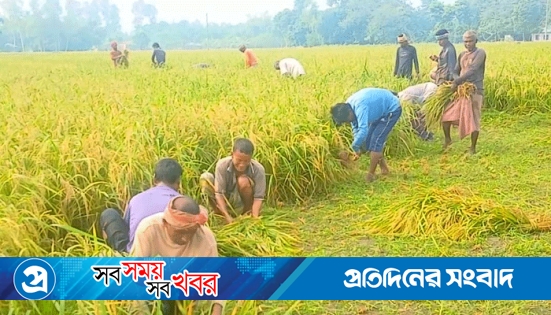
Agriculture also holds great potential for us. We are working to raise food productivity further.
Shykh Seraj: Loans for sharecroppers are one of your big programmes. Where do they stand now?
Sir Fazle Hasan Abed: That continues. The amount of lending grows every year and has now passed Tk 700 crore. I hope it will soon reach Tk 1,000 crore, and perhaps grow further.
Abroad and the goal of ending poverty
Shykh Seraj: That covers your plans at home, education, sanitation and social development. You are also doing a lot abroad, aren't you? Your work is going on in Afghanistan and Uganda?
Sir Fazle Hasan Abed: That is going on too. Bangladesh is working together with those countries. Perhaps at some point we will be able to show that the development model Bangladesh has created can play an effective role in other countries as well.
Shykh Seraj: The country's biotechnology discoveries are now being sent abroad too?
Fazle Hasan Abed: We have built a biotechnology plant in Uganda, which will start production soon. We will take what we have learned here over there, and bring other countries' lessons back to ours. We want to exchange the good lessons.
Shykh Seraj: Alongside the government, NGOs have played a very large role in reducing poverty in this country. When do you think poverty can be eliminated from the country?
Sir Fazle Hasan Abed: I hope by 2030. Around September the United Nations will announce the Sustainable Development Goals. Among the goals to be achieved by 2030, poverty eradication will come first. If that is our first goal, every country will work harder. Nearly a quarter of people are still below the poverty line, and work must begin to lift them up too.
Shykh Seraj: Thank you very much for giving us your time.
Sir Fazle Hasan Abed: Thank you too.
Source: Shykh Seraj. First published in Bengali on The Agro News.
Comments
(0)