
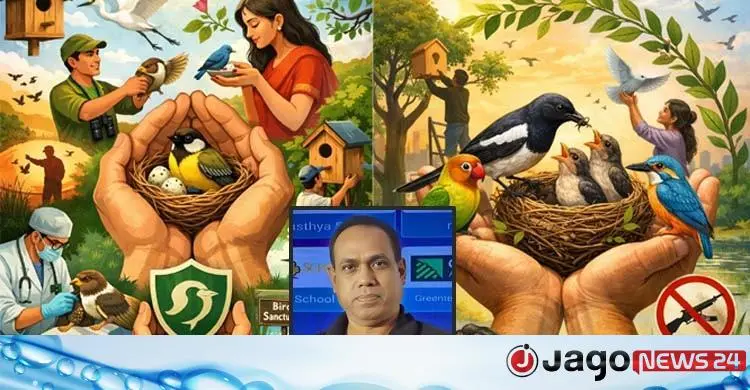
The role of birds in keeping nature in balance is undeniable. The bond between people and birds is not limited to beauty or song; it is one of thousands of years of coexistence, dependence and humanity. The sad reality is that this bond is now close to breaking. Because of many adversities, thoughtless human behaviour and environmental destruction, birds' lives are in deep crisis and their numbers are falling significantly. Egrets, cormorants and many other water and land birds have already been added to the list of endangered wildlife. At such a critical time the question arises: what is the farmer's duty in protecting birds? There is one answer: humanity. Only humanity can revive the fading friendship between people and birds.
A friendship between birds and people
Every morning in rural Bengal begins with birdsong. In the farmer's field birds are natural friends, protecting crops by eating harmful insects. In children's stories, poems and folk songs birds are part of our feelings: sometimes messengers, sometimes good omens, sometimes simply a source of joy. People once planted trees for birds, protected ponds and created shady surroundings. Today greed, neglect and ignorance have taken the place of that humane relationship.
Birds in danger
Human causes are mainly to blame for the rapid fall in bird numbers today. Along with natural disasters, human activity has become the biggest threat to birds' existence.
Poison in the fields
Pesticides and poisons are being applied indiscriminately in the name of protecting crops. These poisons kill not just harmful insects but useful birds too. Birds die after eating poisoned insects, and in many cases birds are killed directly by leaving out food laced with poison.
Death traps in wetlands
Illegal nets, traps and poison in wetlands are killing cormorants, egrets and many other water birds. The pitiful death of birds caught in these death traps set in the name of fishing is now an everyday event.
Severe shortage of food and shelter
Tree felling, deforestation, filling in of wetlands and urbanisation are destroying birds' natural habitat. Birds cannot find safe places to nest or enough food, so they are forced to leave the area or die.
Habitat destruction
Roads, factories and housing projects all ignore nature. Unplanned development is wrecking birds' familiar habitats. Noise, air and light pollution are also disrupting their normal life cycle.
Bird sanctuaries
A bird sanctuary is a defined area where birds can live, breed and find food safely, free from human interference. Hunting, tree felling and the use of poison are completely banned there.
Sanctuaries are needed to conserve endangered bird species, to ensure breeding and reproduction, to maintain the balance of nature and to protect biodiversity for future generations. A sanctuary protects not just birds but the whole ecosystem.
The challenges birds face today
Birds today face many challenges: poison in the fields, death traps in wetlands, shortages of food and shelter, habitat destruction caused by people, the effects of climate change, hunting and illegal trafficking. Laws alone are not enough to meet these challenges; social awareness and a humane outlook are needed.
What farmers should do
Let bird protection begin with humanity. Organic farming and integrated pest management must be introduced. Protecting natural wetlands and planting native trees are essential. A social movement must be built to stop bird hunting, and social resistance must be built alongside the law.
Small areas can be set up to protect birds, and children must be brought up to love birds and nature. Protecting birds does not mean saving just one creature; it is a fight to save nature, the environment and human civilisation. Just as nature is incomplete without birds, so is humanity.
The friendship between birds and people will survive only when we become humane and aware. Humanity is the strongest weapon for protecting birds. The decision is ours today: will we be silent onlookers, or stand beside the birds and speak up for nature?
Source: Jagonews24. First published in Bengali on The Agro News.
Comments
(0)