
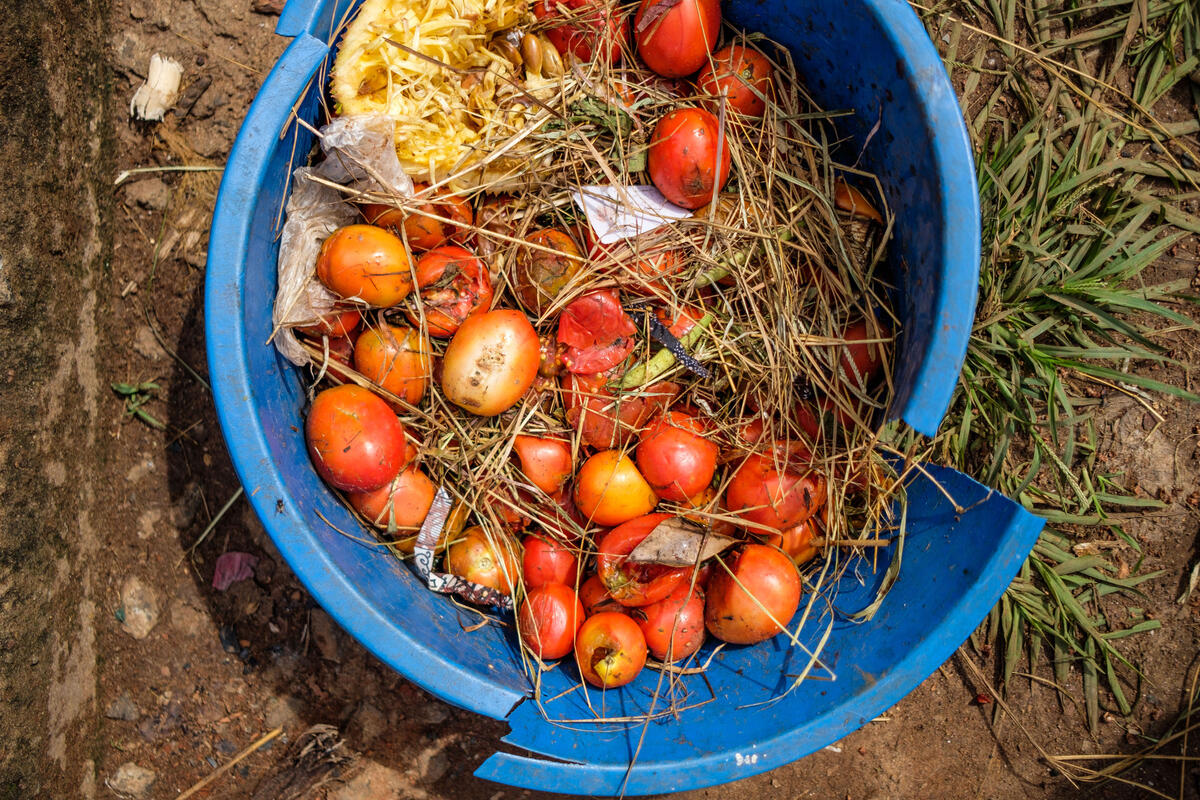
Reducing food loss and waste saves nutrients, natural resources and money and helps ease the pressure on forests, FAO Director-General QU Dongyu said on 29 September at a joint FAO and UN Environment Programme event for the seventh International Day of Awareness of Food Loss and Waste.
According to FAO, 13.4 percent of the food produced worldwide is lost after harvest and before it reaches retail, and 19 percent of the food available to consumers is wasted in shops, food service and homes. Food loss and waste generate around 10 percent of global greenhouse gas emissions, and food that rots in landfills releases methane, a potent short-lived greenhouse gas.
FAO estimates that about 1.4 billion hectares of land are used to grow food that is never eaten. Because agricultural expansion remains the leading driver of deforestation, cutting losses would let farmers make better use of land already cleared. "To protect forests, we must transform agrifood systems; to transform agrifood systems, we must reduce food loss and waste; and by reducing food loss and waste, we help safeguard forests," Qu said.
Fruits and vegetables suffer the highest loss rates, so reducing losses could also make more nutritious food available. Yet despite international pledges, FAO says the world has made no apparent progress in cutting food losses since 2015 and is far off track for Sustainable Development Goal target 12.3, which calls for halving per capita food waste at retail and consumer level and reducing losses along supply chains by 2030.
To mark the day, FAO released an interactive Food Loss Index data map with 2024 estimates by region and subregion. It will stay on FAO's Technical Platform on the Measurement and Reduction of Food Loss and Waste to help countries measure losses and build policy on evidence.
This year's observance was held at FAO headquarters in Rome during the 28th session of the Committee on Forestry and World Forest Week, and included a video message from UNEP Executive Director Inger Andersen.
Source: FAONewsRoom
Comments
(0)