
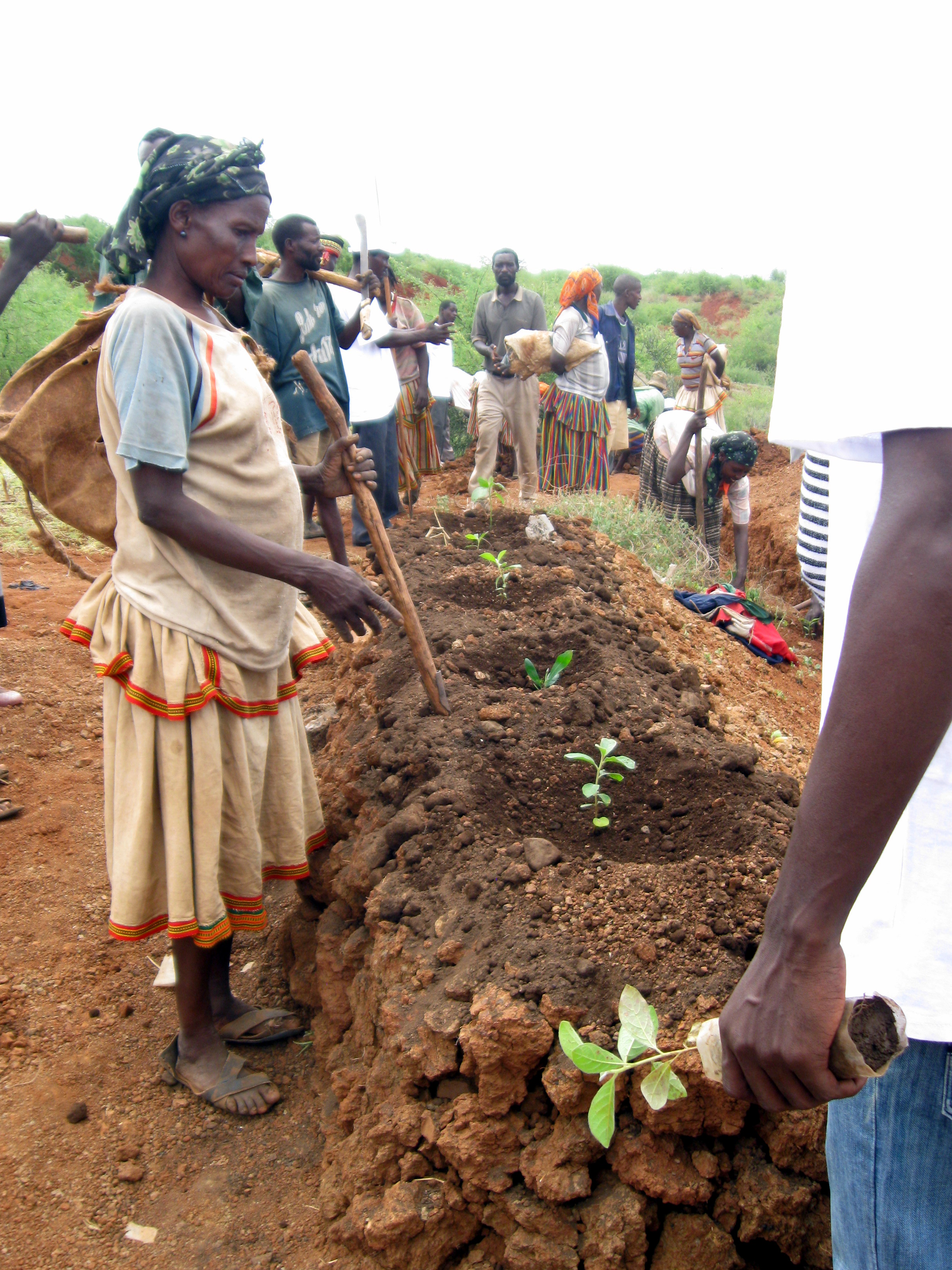
In 2019 Ethiopia undertook a major national reforestation programme with the ambitious target of planting four billion trees in just three months, and at the end of August the government claimed to have just about achieved that goal. In a Reality Check report published on 20 December 2019, the BBC asked whether it is really possible to plant so many trees in so short a time, and what evidence there was that the overall target had been met. Its answer was that the only planting figures available came from the Ethiopian government itself, and that no significant work had been done to evaluate exactly how many trees had been planted that year.
The campaign, known as the Green Legacy Initiative, was championed by the country's Nobel Peace Prize-winning prime minister, Abiy Ahmed. According to Africanews, it was launched in May 2019 under the National Green Development programme, timed to coincide with the start of the rainy season, and began in Arba Minch in southern Ethiopia. The French news agency AFP reported in July 2019 that the tree drive formed part of a broader initiative that also covered cleaning waterways and making agriculture more sustainable, and that the government's deadline for the four billion trees was October.
A single day in July and a record claim
The highlight of the campaign was a single day, 29 July 2019, on which people across the country turned out to help plant tree seedlings. The initial target for that day was 200 million saplings. The government announced that the target had been exceeded, with more than 350 million trees planted over a 12-hour period, and it gave a very precise number: 353,633,660 trees planted that day. Africanews reported that the figure was announced by the minister of innovation and technology, citing the campaign's National Steering Committee, and that the prime minister's office had said after six hours that more than 100 million trees were already in the ground.
The planting drew a wide range of people. Africanews listed government officials, private businesses, United Nations staff, African Union and diplomatic representatives and ordinary residents among the participants, with events at the Gullele Botanical Gardens and in a central park in Addis Ababa, and further trees planted in the compound of the UN Economic Commission for Africa. AFP reported that state employees had been given the day off so that they could take part. The prime minister's office told the Associated Press, as quoted by Al Jazeera, that "specially developed software is helping with the count".
The government had promoted the day as an attempt at an official Guinness World Record. In July, AFP reported that the previous record, of about 50 million trees, was held by the Indian state of Uttar Pradesh, and that Ethiopia had not yet registered its claim with Guinness World Records. Five months later, Guinness told the BBC that it had still not received any evidence. "We would encourage the organisers to get in touch with this for our records management team to review," said spokeswoman Jessica Spillane. The prime minister's office declined to comment to the BBC on the figures and on the status of the record verification, saying the country had already answered most questions around the tree planting.
Running totals were also given out during the season. On 30 July, Al Jazeera quoted agricultural officials as saying that more than 2.6 billion trees had been planted so far across almost all parts of the country. A day later, AFP reported the government's statement that nearly three billion trees had been planted since May. The prime minister's press secretary told AFP that the turnout had shown the capacity of people "to come together collectively and deliver on a shared vision".
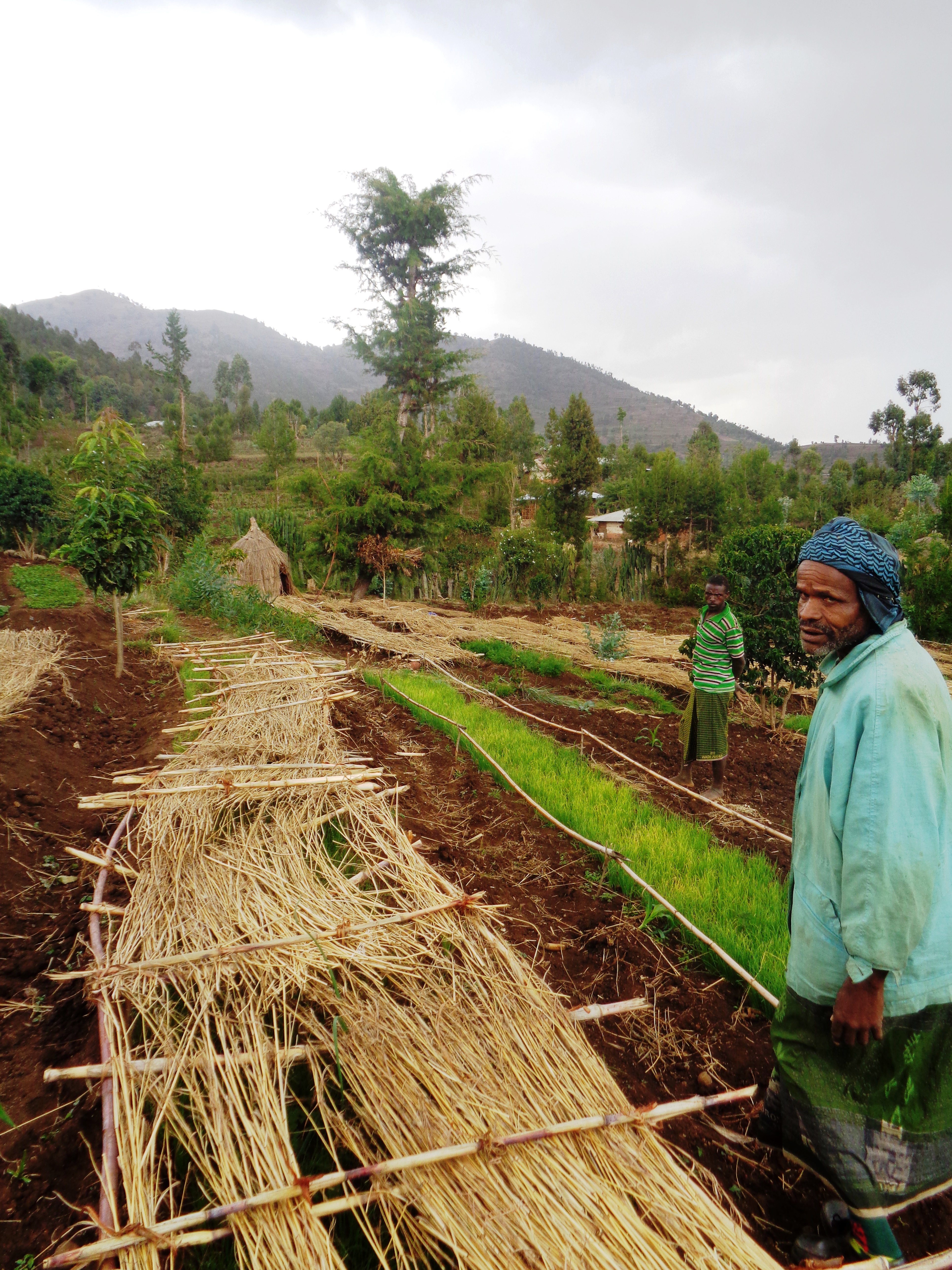
Can four billion trees be planted in three months?
The BBC set out the arithmetic. If you look at the three-month project to plant four billion trees, that is at least 45 million trees planted each day. If you take into account the bumper planting day on which 350 million were claimed to have been planted, the BBC calculated, that still leaves just over 40 million every other day over the period.
Land was not the obstacle. The Ethiopian government's plan was to plant the trees on 6.5 million hectares of rural land, and assuming an average tree density of around 15,000 per hectare, the BBC said, that is certainly enough land to plant four billion trees. But, it added, that does not tell us anything about what was actually planted.
AFP made its own estimates of the effort involved in the July record attempt. It reported that planting 350 million trees would need about 350,000 hectares, an area bigger than Luxembourg, and that a volunteer could realistically plant about 100 trees a day. The agency also reported that nurseries had worked for months to produce the saplings, that some seedlings had been brought from abroad, and that the types of tree planted varied from region to region.
The only planting figures available were provided by the Ethiopian government. According to those figures, just over 3.5 billion trees were planted in the three months from June to August 2019, and a further 1.3 billion seedlings were grown but not planted. By the government's own account, then, fewer than four billion trees were put into the ground, in line with its claim to have "just about" reached the target.
Why the trees are so hard to count
Counting billions of small saplings is not something a newsroom can do. The BBC said it could not count them all itself, but it sent one of its reporters to a newly planted area in the Tigray region in the north of the country, who photographed saplings struggling in the arid conditions there.
The BBC also contacted a satellite imaging company that works with high-resolution images. The company said that the newly planted saplings would be difficult to identify from space, because their small crowns and narrow trunks are largely indistinguishable from scrub or from other cultivated land. Satellite monitoring, which is often used to track the loss of mature forest, therefore offered no quick way to check the government's figures for a season's planting.
Tim Christophersen, a forestry expert at the United Nations, told the BBC that he had been encouraged by Ethiopia's commitment to reforestation, but that he could not give a verdict on its tree planting challenge. "Ethiopia has asked the international community for support with planting, but more importantly with the maintenance and nurturing of the trees," he said. AFP, which interviewed him in July, described him as chair of the Global Partnership on Forest and Landscape Restoration.
The BBC's conclusion was that, while Ethiopia's ambition to plant billions of trees had been praised by environmentalists, there had been no significant work done on evaluating exactly how many trees had been planted in 2019.
How money and local reporting shaped the figures
The BBC suggested that part of the problem may lie in the way the tree planting was paid for. In July 2019, the European Union and the Ethiopian government signed a 36 million euro ($40m; £31m) financing agreement to help the country grow greener.
Local organisations all across Ethiopia were provided with funds to plant a set number of trees. The BBC wrote that it is not too surprising to learn that they had been reporting a high planting rate to local officials, who then collated the figures at the national level. The national totals, in other words, were built up from reports by the same bodies that were being paid to plant a fixed quota, rather than from an independent count of seedlings that had taken root.
The question of verification had been raised from the start. When the July figures were announced, Al Jazeera noted that it was not yet clear whether Guinness World Records was monitoring the effort, and the planting totals in all the reports that summer came from government officials.
Ethiopia's forests in the official figures
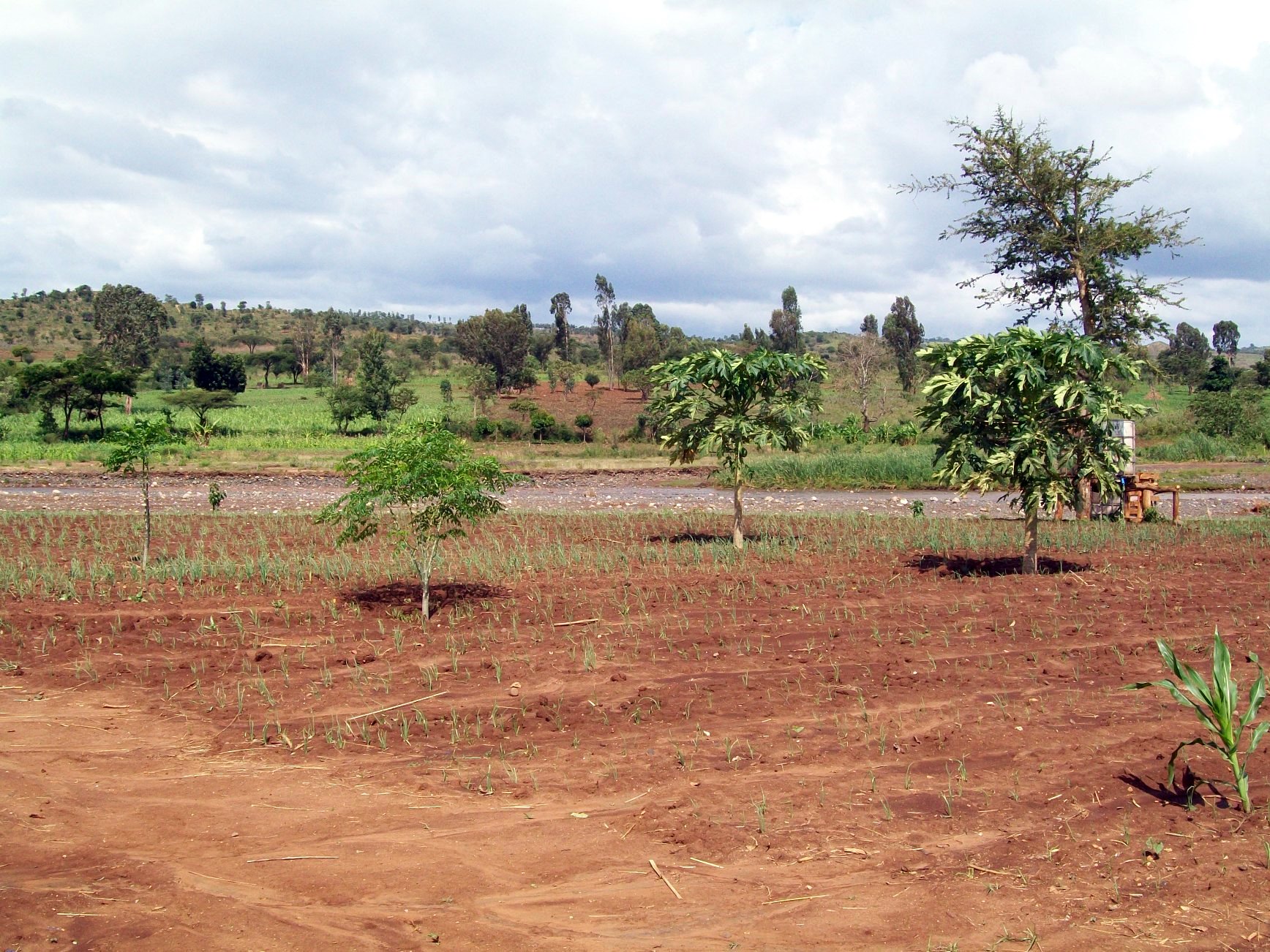
Whatever the actual numbers planted, the BBC said, there was no doubt that the Ethiopian government had made a major effort to tackle very serious deforestation problems. It reported that half a century earlier Ethiopia had around 40% forest cover, and that the figure had fallen to 15%. AFP gave the same figures in July. The director of the Ethiopian Environment and Forest Research Institute told AFP: "Deforestation has become very grave in many parts of Ethiopia."
Estimates of how much forest Ethiopia has vary widely, because they depend on what is counted as forest. Africanews and Al Jazeera quoted Farm Africa, an organisation involved in forest management in Ethiopia, as saying that less than 4% of the land was forested, compared with about 30% at the end of the 19th century. The UN Food and Agriculture Organization (FAO) uses a broader international definition: land of more than 0.5 hectares with trees higher than 5 metres and a canopy cover of more than 10 percent, or trees able to reach these thresholds in place, excluding land mainly under farming or urban use.
Ethiopia's own country report to the FAO's Global Forest Resources Assessment 2010 shows how much the choice matters. It drew on the national Woody Biomass Inventory and Strategic Planning Project (WBISPP), which mapped land cover from satellite images dating from 1986 to 1989 and from 1995. Under the national classification, the project estimated the total area under forest at 4,073,213 hectares in 2000 and 2,699,561 hectares in 2005. Under the FAO definition, the same report gave Ethiopia 13.705 million hectares of forest in 2000 and 13.0 million hectares in 2005.
The FAO's Global Forest Resources Assessment 2015, the most recent global assessment available in 2019, recorded the following figures for Ethiopia:
- Forest area: 15.114 million hectares in 1990, 13.705 million in 2000, 13.0 million in 2005, 12.296 million in 2010 and 12.499 million in 2015.
- In 2015, forest covered 11.4% of Ethiopia's land area of 109.631 million hectares, and other wooded land a further 40.631 million hectares, or 37.1%.
- Forest was lost at 140.9 thousand hectares a year (1.0% a year) between 1990 and 2000, while between 2010 and 2015 the forest area grew by 40.6 thousand hectares a year (0.3% a year).
- Planted forest: 491,000 hectares in 1990, 511,000 in 2010 and 972,000 in 2015, when it made up 7.8% of the forest area; the remaining 11.527 million hectares were classed as naturally regenerated forest.
The 2010 country report described Ethiopia's plantations as mainly eucalyptus, cypress (Cupressus) and pine. It estimated deforestation of natural forest and woodland at 140,000 hectares a year, and explained the model behind that estimate: farming was assumed to expand first into grassland, then into shrubland and woodland, and only then into natural forest, with each farm family clearing the area it needed for crops and an equal amount for settlement and livestock grazing. Al Jazeera, reporting on the July planting, listed rapid population growth and the need for more farmland, unsustainable forest use and climate change as causes of deforestation in Ethiopia.
Water, grazing and the survival of seedlings
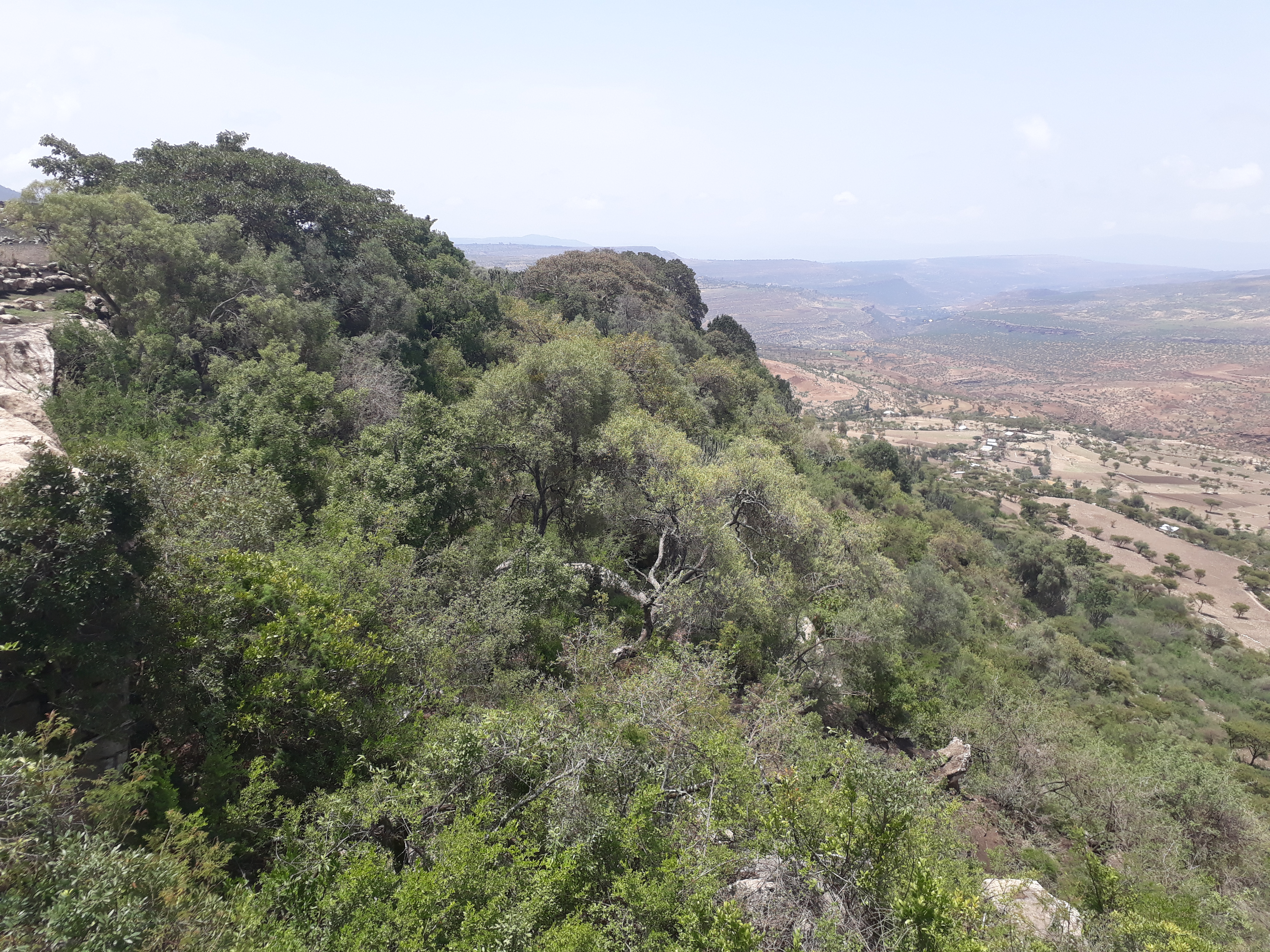
Planting is only the first step. The BBC noted that if the planting programme was to tackle deforestation, the seedlings would have to be watered on a regular basis. That would take a great deal of precious water in a country that already had a significant shortfall, though it could also create an environment better suited to retaining water. Africanews, in its report on the planting day, recalled that more than two million animals had died from drought in Ethiopia in 2017.
Speaking to AFP in July, Tim Christophersen said that the most important factor for young trees is grazing pressure: goats, he explained, will eat young trees before dry grass. "We don't speak so much about planting trees but about growing trees," he said. His remark to the BBC that Ethiopia needed support above all with the maintenance and nurturing of the trees made the same point. None of the reports published in 2019 gave a survival rate for the seedlings planted that year.
The restoration pledges behind the campaign
The Green Legacy Initiative sat within wider commitments. Christophersen told the BBC that Ethiopia had pledged to restore 15 million hectares of degraded forests and landscapes by 2030, as part of a global effort to tackle deforestation. That pledge is listed under the Bonn Challenge, which was launched in 2011 by the Government of Germany and the International Union for Conservation of Nature (IUCN) with the global goal of bringing 150 million hectares of degraded and deforested landscapes into restoration by 2020 and 350 million hectares by 2030.
At the continental level, the African Forest Landscape Restoration Initiative, known as AFR100, aims to bring 100 million hectares of land in Africa into restoration by 2030. Its secretariat is run with the African Union Development Agency (NEPAD) and the World Resources Institute, and it contributes to the Bonn Challenge and to the African Union's Agenda 2063.
AFP also noted that Ethiopia was one of only five countries whose plans under the 2015 Paris climate agreement had been rated "sufficiently ambitious". The July 2019 planting came weeks after Swiss scientists published a study in the journal Science arguing, as Al Jazeera summarised it, that planting a trillion trees would be the most effective way to fight global warming, and that over the decades such trees could absorb nearly 750 billion tonnes of carbon dioxide, roughly the amount humans had emitted over the previous 25 years.
Why other countries pointed to Ethiopia
Politicians around the world pointed to Ethiopia as an example of what could be done to reforest their own countries and to reverse the effects of both damaging farming techniques and climate change. During the campaign for the United Kingdom's December 2019 general election, the BBC noted, the major parties made expansive promises to plant millions more trees and referred to Ethiopia's initiative. Canada, too, had plans to plant two billion trees over 10 years.
Photo: Trees ForTheFuture / Wikimedia Commons (CC BY 2.0)
Sources: BBC Bangla, BBC News (Reality Check, 20 December 2019), AFP via Phys.org (31 July 2019), Al Jazeera (30 July 2019), Africanews (29 July 2019), FAO Global Forest Resources Assessment 2010 Country Report: Ethiopia, FAO Global Forest Resources Assessment 2015 Desk Reference, Bonn Challenge, AFR100
Comments
(0)