
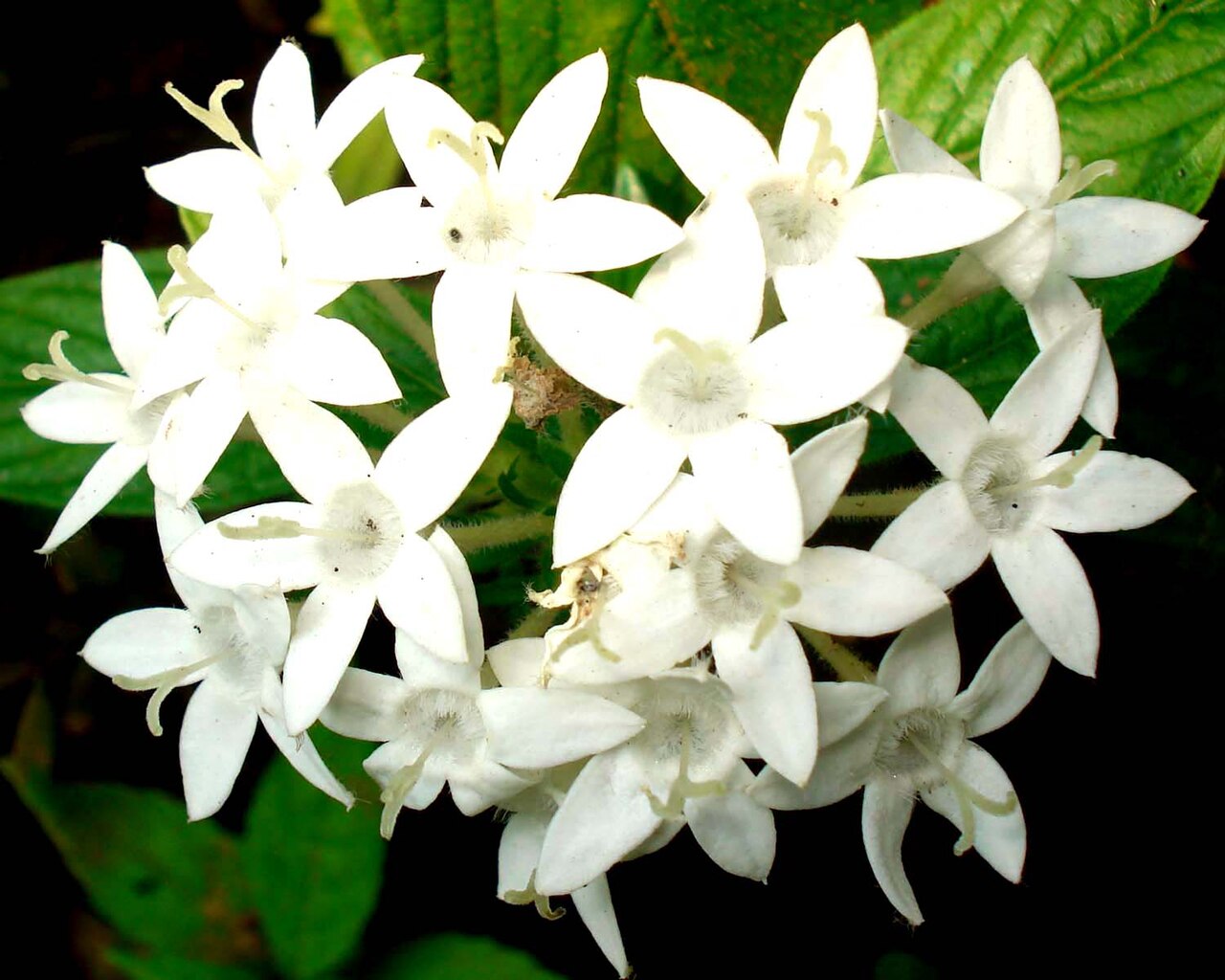
In a row of flower pots set out in front of the Bangladesh-UAE Friendship Complex on Kamal Ataturk Avenue in Dhaka's Banani, one pot held white pentas in full bloom. Professor Choyon Bikash Bhadra, head of the botany department at Muminunnisa Government College in Mymensingh, came across it on 28 July this year, a rainless day in the monsoon month of Shrabon, and wrote about the plant in Prothom Alo.
Pentas, scientific name Pentas lanceolata, is a shrub of the Rubiaceae family. The name comes from the Greek penta, five, after the flower's five petals, and its star-like clusters give it the English name Egyptian starcluster. The plant's native range runs from tropical Africa to parts of the Arabian Peninsula; it is now grown as an ornamental across the tropics and subtropics.
Besides white, pentas comes in red, pink, purple and lavender. It is usually a perennial shrub, growing 1 to 3 feet tall in good conditions and sometimes more, branching from the stem into a bushy shape. The leaves are opposite, oval to lance-shaped and deep green. Many small tubular flowers open together in dense clusters, the number per cluster varying with variety and conditions.
It is an easy plant to grow. In warm weather, the writer says, it flowers for a long time, and with enough light, warmth and care it keeps flowering for long periods in Bangladesh's climate too. A few hours of direct sun a day keep it fresh; it survives partial shade, but heavy shade can cut the number of flowers.
Pentas is more than an ornamental. Its nectar draws butterflies, bees and other insects, and in some regions birds such as hummingbirds visit it too, so a pentas plant in a garden becomes a food source for pollinators.
Garden borders, flower beds, path edges or balcony pots all suit pentas, Professor Bhadra writes. Mixing white with red, pink or purple pentas gives a garden a spread of colour, and the dense foliage and long flowering keep even a small balcony lively.
Photo: Ks.mini / Wikimedia Commons (CC BY-SA 3.0)
Source: Prothom Alo


Comments
(0)